
What Are the Applications of Laminated Glass and Interlayer in 2026? A Comprehensive Analysis of the Application Areas of Laminated Glass and Interlayers

In modern architectural design, glass has long transcended its simple function of "lighting," becoming a core language defining architectural aesthetics and engineering limits. With the continuous improvement of global building safety standards and the surge in demand for high-performance building materials in green buildings, single float glass or tempered glass can no longer meet the stringent engineering challenges.
Modern architecture places comprehensive requirements on glass, including structural safety, acoustic insulation, energy conservation and environmental protection, and design aesthetics. Against this backdrop, laminated glass and its core component, the interlayer, have become indispensable material systems.
This leads to the most crucial question for architects and engineers when selecting materials: What are the applications of laminated glass and interlayer in modern buildings? This article will deeply analyze how different types of interlayers(内链https://www.enevaglass.com/) endow glass with new physical properties and comprehensively review their core application areas in modern architecture.
What are Laminated Glass and Interlayer?
To understand their applications, it is first necessary to break down their physical structure and material classification.
Basic Structure of Laminated Glass
Laminated glass is a composite glass product. It consists of two or more layers of glass sheets with one or more polymer interlayers sandwiched in between. Through a vacuum and high-temperature, high-pressure (or vacuum-heated) lamination process, the glass and interlayer are permanently bonded together. This structure ensures that even if the glass breaks under external force, the fragments will adhere tightly to the interlayer, preventing them from flying and causing injury.
Common Interlayer Types
The material of the interlayer directly determines the final performance and application scenarios of the laminated glass. Currently, the mainstream interlayers on the market include:
EVA interlayer (ethylene-vinyl acetate): Known for its high transparency, excellent flowability, and strong decorative compatibility, it is particularly suitable for scenarios requiring moisture protection and customized colors.
SGP interlayer (ionomer interlayer): Extremely hard and tear-resistant, it is a structural safety film designed to withstand extreme loads.
PDLC film (polymer-dispersed liquid crystal film): A smart dimming interlayer that controls the transparency and fogging states through electric current, giving the glass dynamic privacy functionality.
Interlayer Applications for Building: Core Applications in the Construction Industry
Different material properties lead to vastly different interlayer applications for building. Below is a technical analysis of six core application scenarios.
Architectural Facades & Curtain Walls: Modern high-rise buildings face immense wind pressure challenges with their massive glass curtain walls. The curtain wall glass must not only withstand continuous dynamic loads but also meet stringent impact resistance and fall protection safety standards. In this area, SGP interlayers are recommended. Due to their extremely high shear modulus, SGP can tightly couple two panes of glass, making them behave like a thicker single pane of glass under stress. Even if the glass breaks on both sides due to typhoons or external impacts, SGP interlayers still provide sufficient residual load-bearing capacity to ensure the curtain wall glass does not detach from the frame, making it the preferred choice for the facades of super high-rise buildings and commercial complexes.
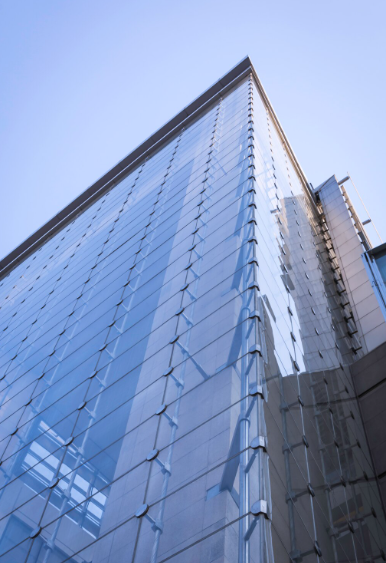
Interlayer for Architectural Facades & Curtain Walls Glass
Sunrooms, Skylights, and Translucent Roofs: Translucent roofs and skylights are constantly exposed to direct sunlight and extreme climates, requiring materials with extremely high UV resistance and weather resistance. High-quality EVA interlayer is ideal for this application. EVA, through thermosetting cross-linking, boasts excellent UV resistance and extremely low yellowing. It not only maintains long-term high transparency but its superior moisture-proof properties effectively prevent delamination at the glass edges after prolonged rain immersion.
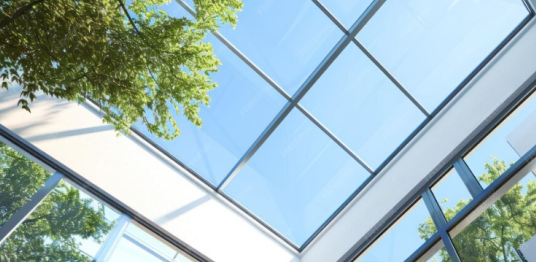
Interlayers for Sunrooms & Skylights laminated glass
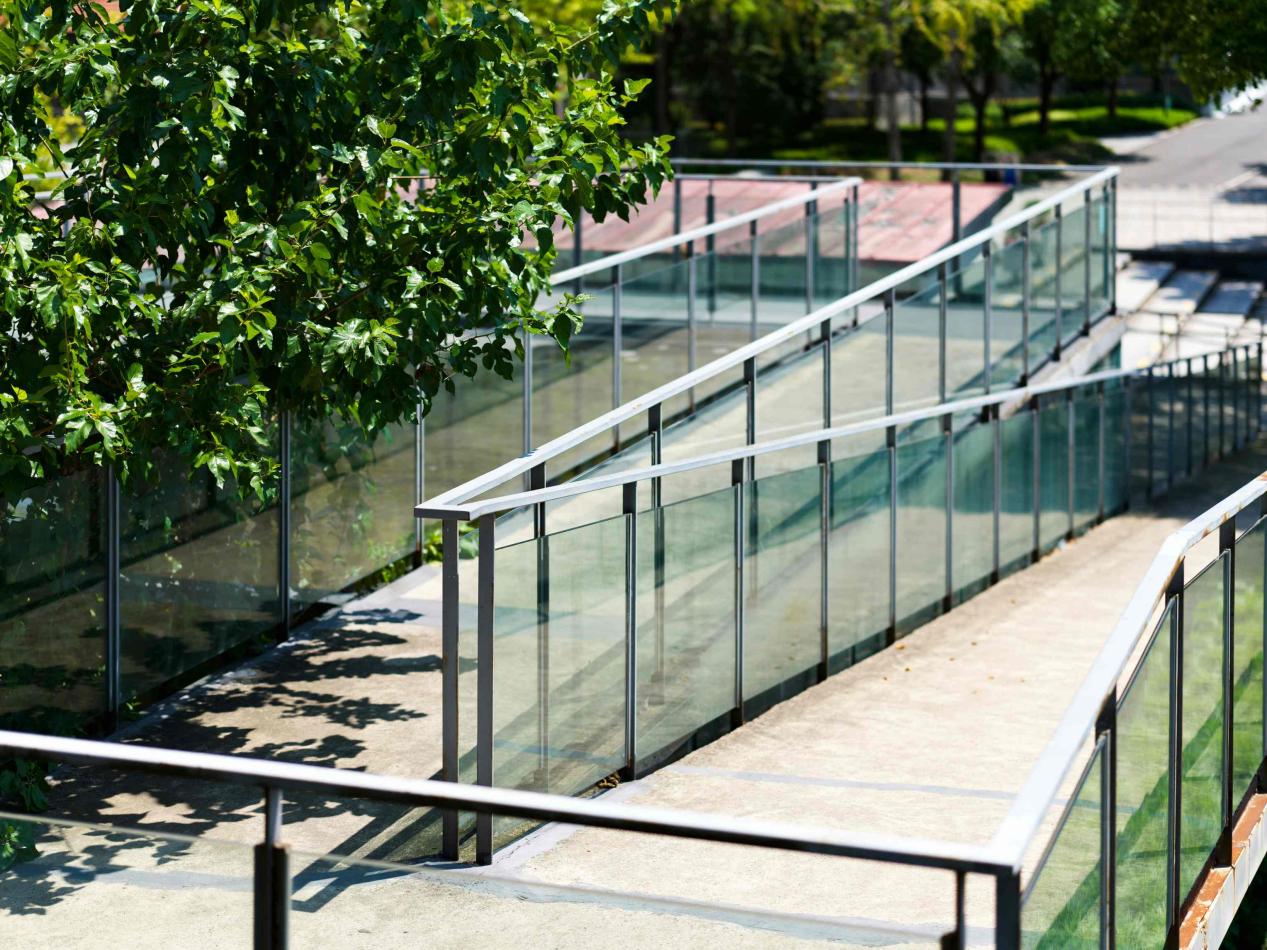
Glass Balustrades and Railings: Frameless glass railings prioritize ultimate transparency but also bear the critical responsibility of preventing fatal falls. In suspended and railing applications, the glass must possess extremely high impact resistance and residual load-bearing capacity. SGP interlayer, with its superior rigidity, remains upright like a solid barrier even after the glass breaks. Finding a professional laminated glass supplier to provide SGP laminated glass that complies with local building codes is crucial to ensuring the absolute safety of balcony and stair railings.
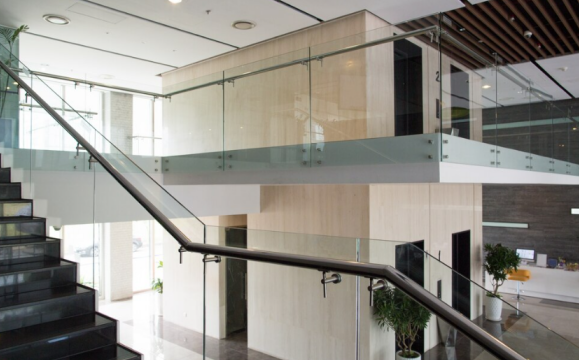
Glass Balustrades and Railings
Interior Partitions and Office Spaces: Modern commercial office spaces emphasize the flexible switching between openness and privacy. Incorporating PDLC film as a functional interlayer into laminated glass perfectly addresses this need. During a power outage at the meeting, the glass instantly fogs up to provide privacy; after the meeting, when power is restored, the glass returns to transparency, maintaining the sense of openness in the space. This intelligent privacy control greatly enhances the technological feel and usability of commercial spaces.
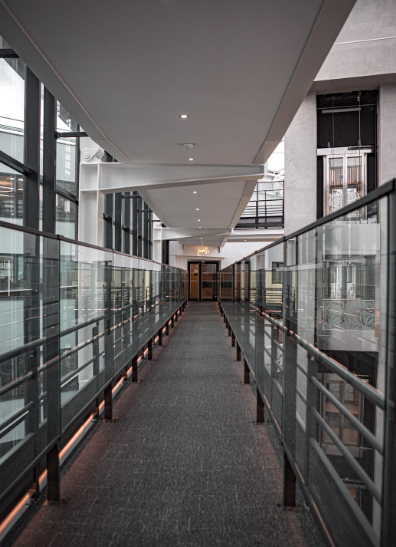
Interlayer & Glass Film for Office Partitions
Shower Enclosures and Home Decor Glass: In home interior design, glass must not only be safe but also meet personalized aesthetic needs. Shower enclosures are constantly in a high-humidity environment, and traditional interlayer films are prone to absorbing water and turning white. The hydrophobic properties of EVA interlayers make them superior in terms of waterproofing and preventing delamination. Furthermore, professional EVA film manufacturers can provide customized films in colors, with high transparency, or with the ability to incorporate silk or metal mesh, perfectly matching the demand for color and optical customization in home decoration.
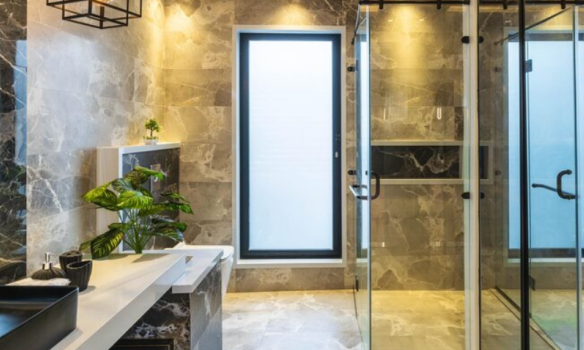
Shower Enclosures and Home Decor laminated Glass
Explosion-proof, Bulletproof, and Specialty Glass: In banking, embassy, or special engineering applications, glass needs to withstand the shockwaves of explosions or bullet penetration. These specialty applications typically employ a thick laminated glass structure composed of multiple layers of glass and multiple layers of high-strength SGP interlayers. SGP's extremely high tear strength can absorb the kinetic energy of a projectile or explosion to the greatest extent, ensuring the safety of occupants and representing the pinnacle of interlayer applications for buildings.
Technical Differences of Different Interlayers in Application Scenarios
Shower Enclosures and Home Decor laminated Glass
To more intuitively demonstrate how different materials match specific building needs, the following table summarizes the technical differences and core advantages of mainstream interlayers.
Table 1: Technical Differences and Recommended Applications of Interlayers
|
Application Scenario |
Recommended Interlayer |
Core Advantages & Performance Focus |
|
Facades & Curtain Walls |
SGP interlayer |
High structural strength, excellent post-breakage load bearing. |
|
Skylights & Sunrooms |
EVA interlayer |
High transparency, superior UV resistance, excellent weatherability. |
|
Balconies & Railings |
SGP interlayer |
Maximum safety level, edge stability, upright post-breakage. |
|
Office Partitions |
PDLC film |
Instant smart privacy control, modern aesthetic integration. |
|
Decorative & Shower Glass |
EVA interlayer |
Highly customizable colors/optics, exceptional moisture resistance. |
How to Choose a Suitable Laminated Glass Supplier?
After clarifying the technology and application, the success or failure of a project often depends on the reliability of the supply chain. Choosing excellent laminated glass suppliers and professional interlayer manufacturers requires considering the following dimensions.
Table 2: Evaluation Matrix for Laminated Glass and Interlayer Suppliers
|
Evaluation Criteria |
What to Look For |
Why It Matters |
|
Comprehensive Product Range |
Offers EVA, SGP, and PDLC options. |
Ensures unbiased material recommendations for your specific project. |
|
Manufacturing Expertise |
Is a dedicated EVA film manufacturer. |
Controls formula quality, ensuring no yellowing or delamination. |
|
Structural Engineering Capability |
Provides complete SGP glass solutions. |
Critical for ensuring facade and railing safety compliance. |
|
Quality & Certification |
Supplies rigorous test reports (SGCC, EN). |
Proves long-term reliability and compliance with building codes. |
|
Global Export Experience |
Proven track record in international logistics. |
Guarantees safe packaging, timely delivery, and global standards. |
Future Trends: Upgrade Directions of Interlayer Technology in Building Applications
Looking to the future, with the advancement of building science, interlayer applications for buildings will move towards more extreme performance challenges: Higher Structural Strength: Developing thinner but higher shear modulus ionomer interlayers to support more exaggerated frameless structural designs.
Longer Weather Resistance: Improved polymer anti-aging formulations extend the design life in extreme climates from 20 to 50 years.
Smart Function Integration: Future laminated glass will not only integrate PDLC film but also incorporate various smart technologies such as transparent photovoltaics and color-changing temperature control.
Lower VOC Environmental Standards: Production of more environmentally friendly interlayer materials meets the indoor air quality certifications of top global green building standards (such as LEED).
Ultra-Large Size Lamination: Breakthroughs in glass sheet manufacturing technology enable the production of ultra-large and ultra-wide laminated glass, eliminating visual seams.
FAQ
Q1: What are the main applications of laminated glass?
Laminated glass is widely used in building curtain walls, frameless railings, skylights, interior partitions, explosion-proof safety glass, and high-end home decoration.
Q2: What interlayer is best for structural glass?
For high-strength structural requirements (such as suspended glass floors and load-bearing curtain walls), SGP interlayer is currently the best choice due to its extremely high stiffness and residual load-bearing capacity after breakage.
Q3: Can EVA interlayer be used outdoors?
Absolutely. High-quality, cross-linked EVA interlayers produced by professional manufacturers possess excellent UV resistance and hydrophobicity. Their outdoor weather resistance even surpasses that of traditional materials in some high-humidity environments.
Q4: What is the advantage of PDLC film in laminated glass?
The biggest advantage of PDLC film is its ability to achieve dynamic and intelligent privacy control. It allows users to switch the glass from transparent to opaque in a second via a switch, remote control, or smart home system, replacing cumbersome physical blinds.
Conclusion
As modern architecture demands increasing safety, energy efficiency, and design freedom, laminated glass and interlayer technology have become core material systems for modern building shells and interior spaces.
Understanding the mechanical and environmental requirements of different application scenarios is the first step in material selection. Different types of interlayer films—whether it's EVA interlayer focusing on decoration and weather resistance, SGP interlayer prioritizing structural safety, or PDLC film controlling smart privacy—fundamentally determine the final performance of laminated glass in terms of strength, transparency, weather resistance, and functionality.
In complex engineering practices, choosing a fully qualified and technically proficient laminated glass supplier and establishing a deep partnership with a professional EVA film manufacturer is crucial to ensuring the safe implementation and long-term performance stability of every building project.
Want more technical support or product selection advice regarding laminated glass interlayer films? Contact our technical experts for customized material solutions.