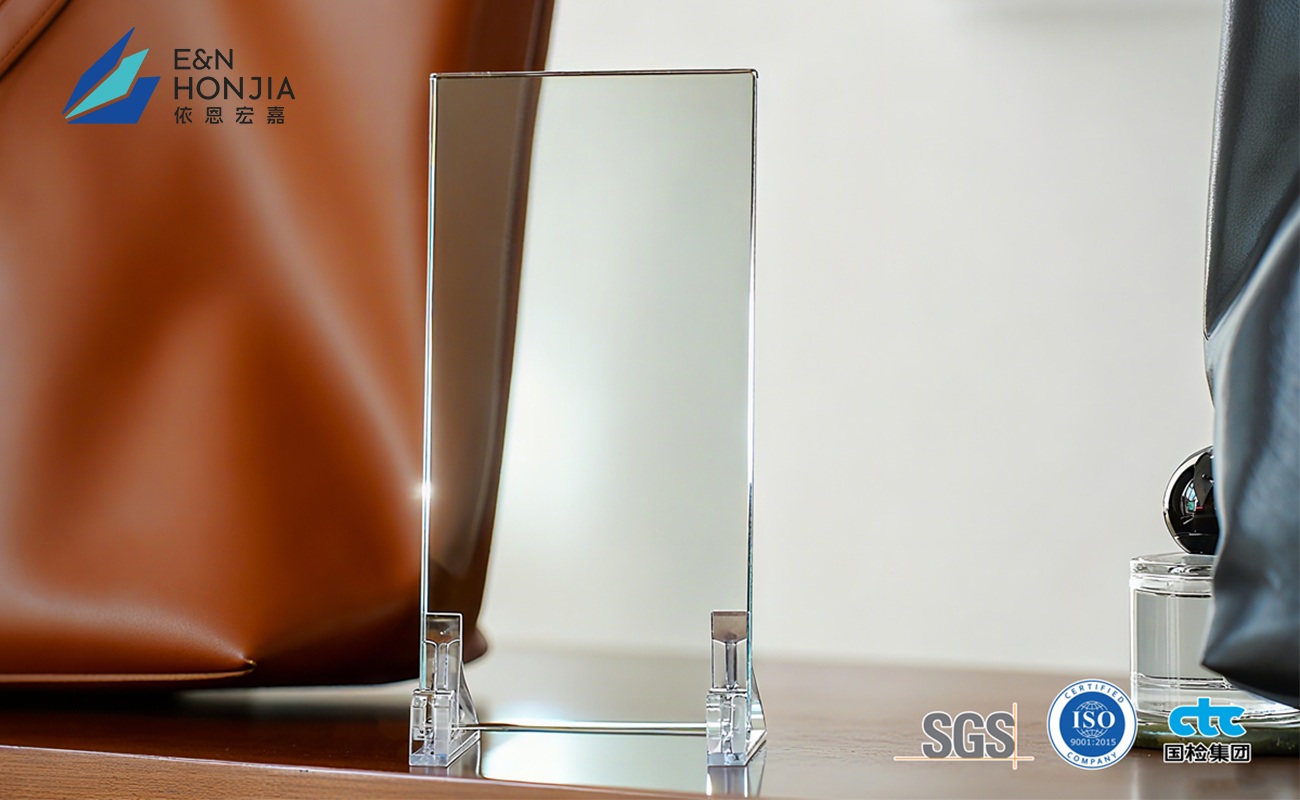
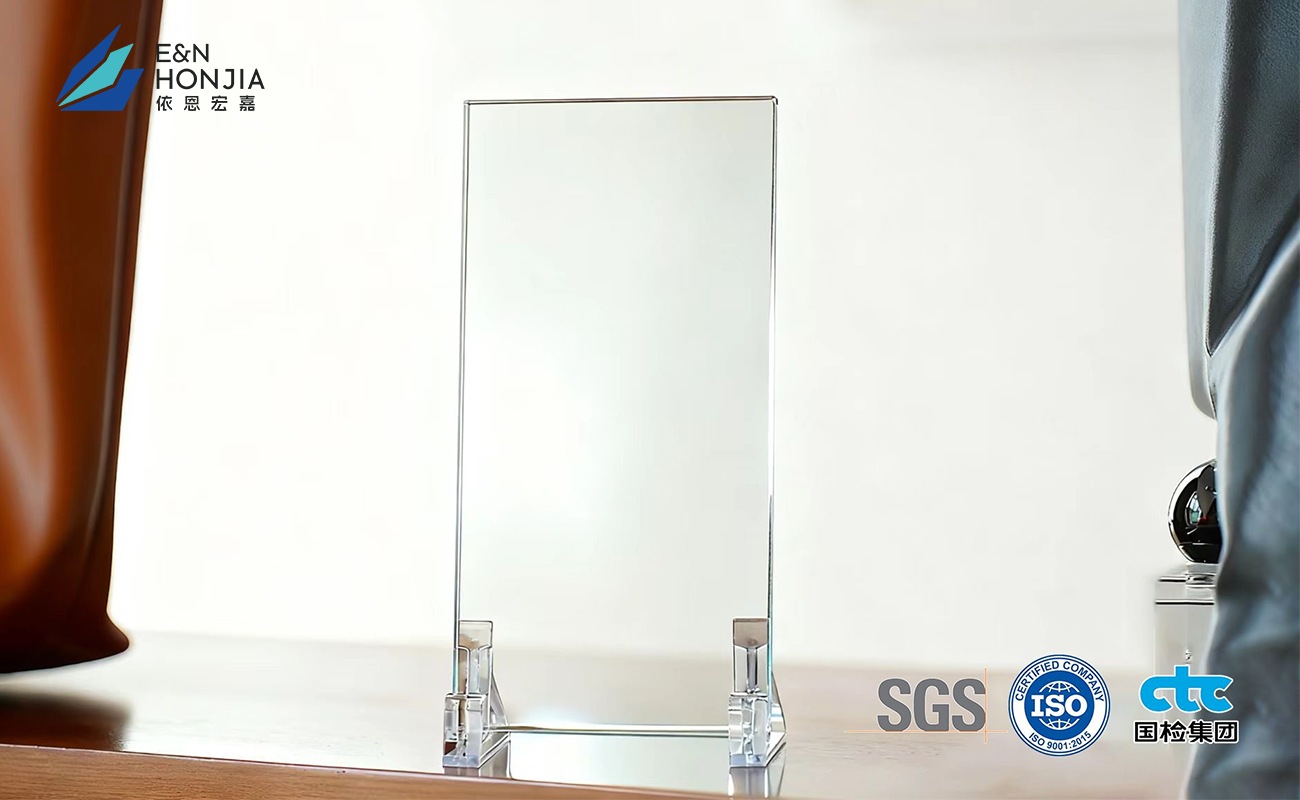
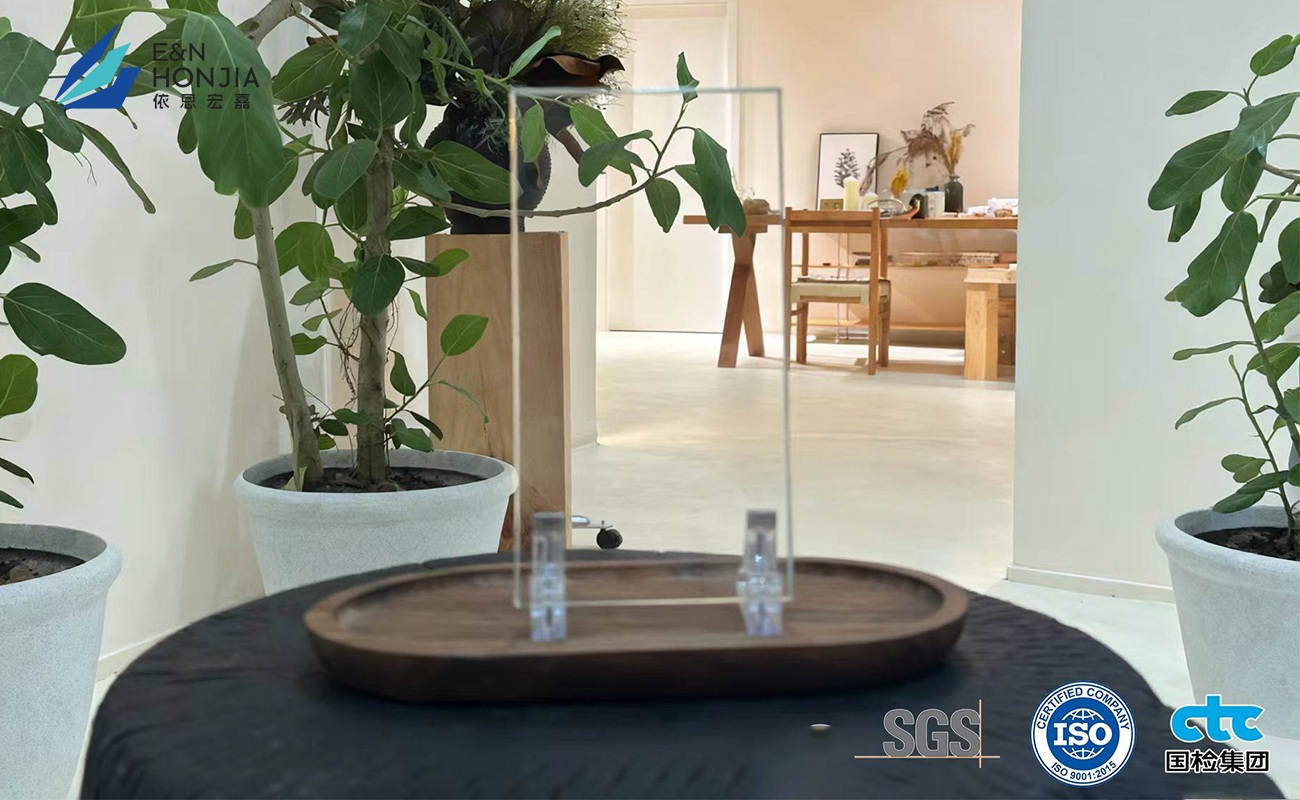
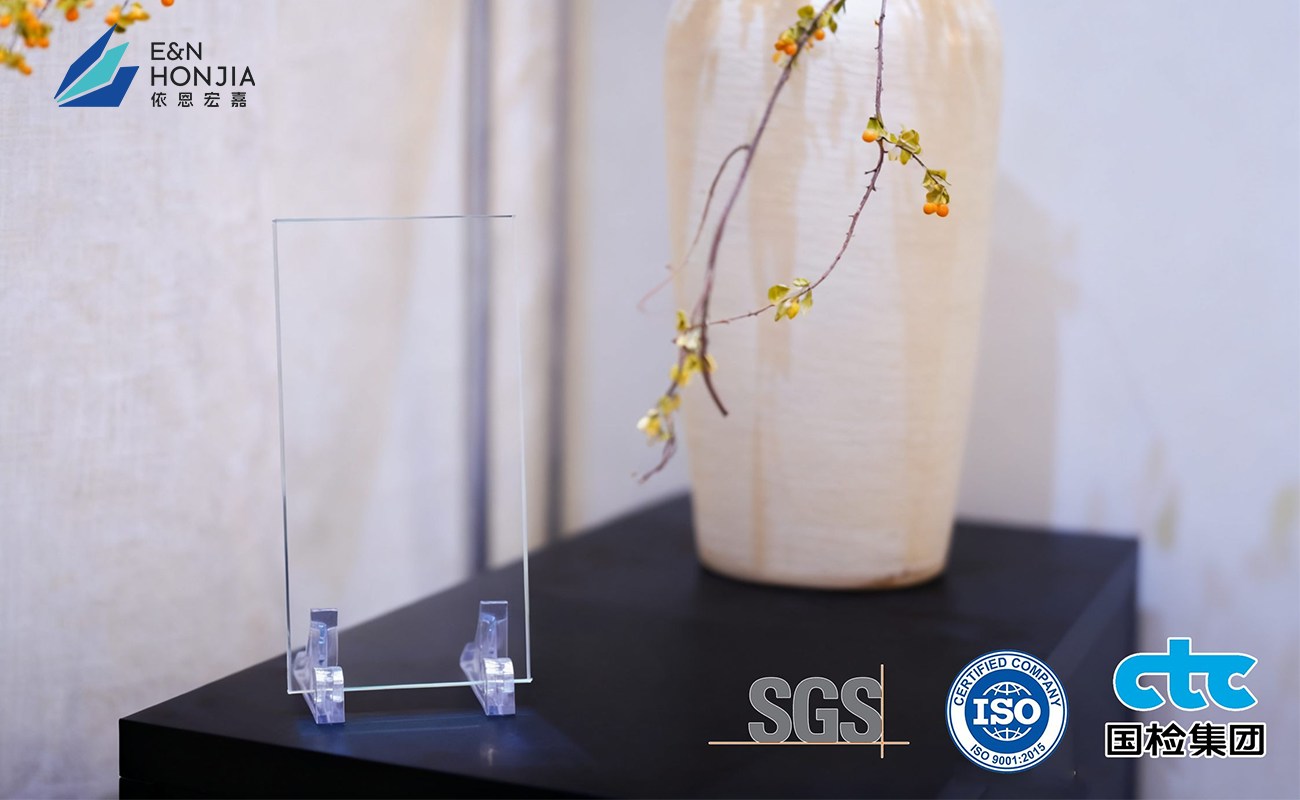
Manufacturing Process of EVA Laminated Glass
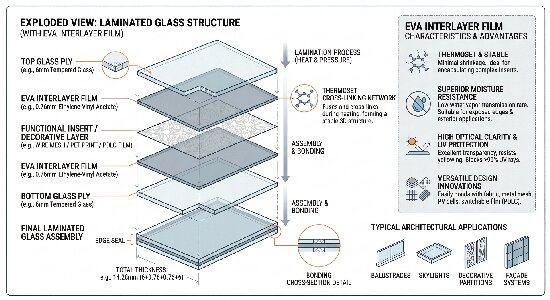
The manufacturing process of EVA laminated glass typically includes the following steps:
Glass Preparation
Glass sheets are cleaned and prepared to ensure a dust-free surface before lamination.
Interlayer Placement
EVA interlayer film is placed between the glass layers along with any decorative materials if required.
Vacuum Lamination
The assembled glass structure is placed inside a vacuum laminating system to remove air and ensure uniform bonding.
Heating and Curing
The glass assembly is heated to activate the EVA interlayer, allowing it to melt and bond with the glass surfaces.
Cooling and Inspection
After curing, the laminated glass is cooled and inspected to ensure optical quality and structural integrity.
This process ensures that EVA laminated glass achieves excellent bonding strength and optical clarity.
Key Features of EVA Laminated Glass
Excellent Transparency
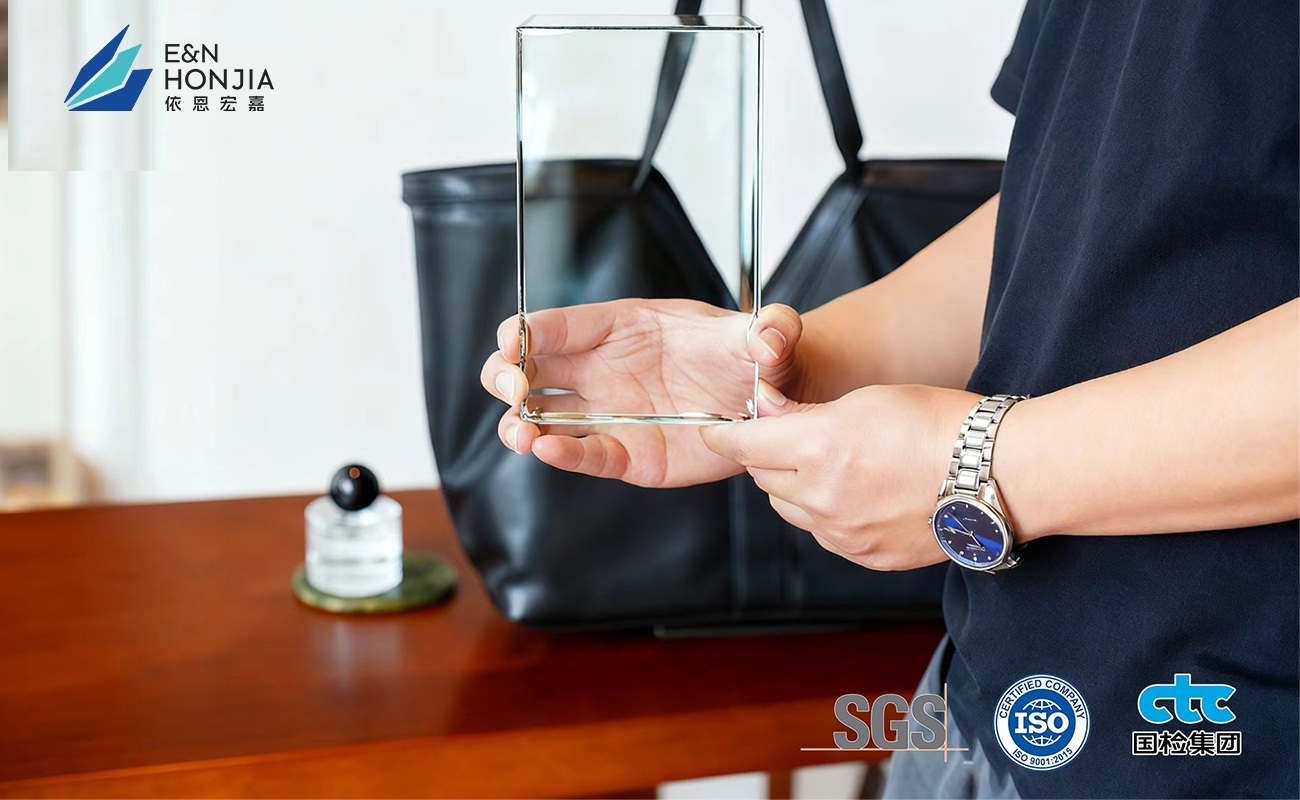
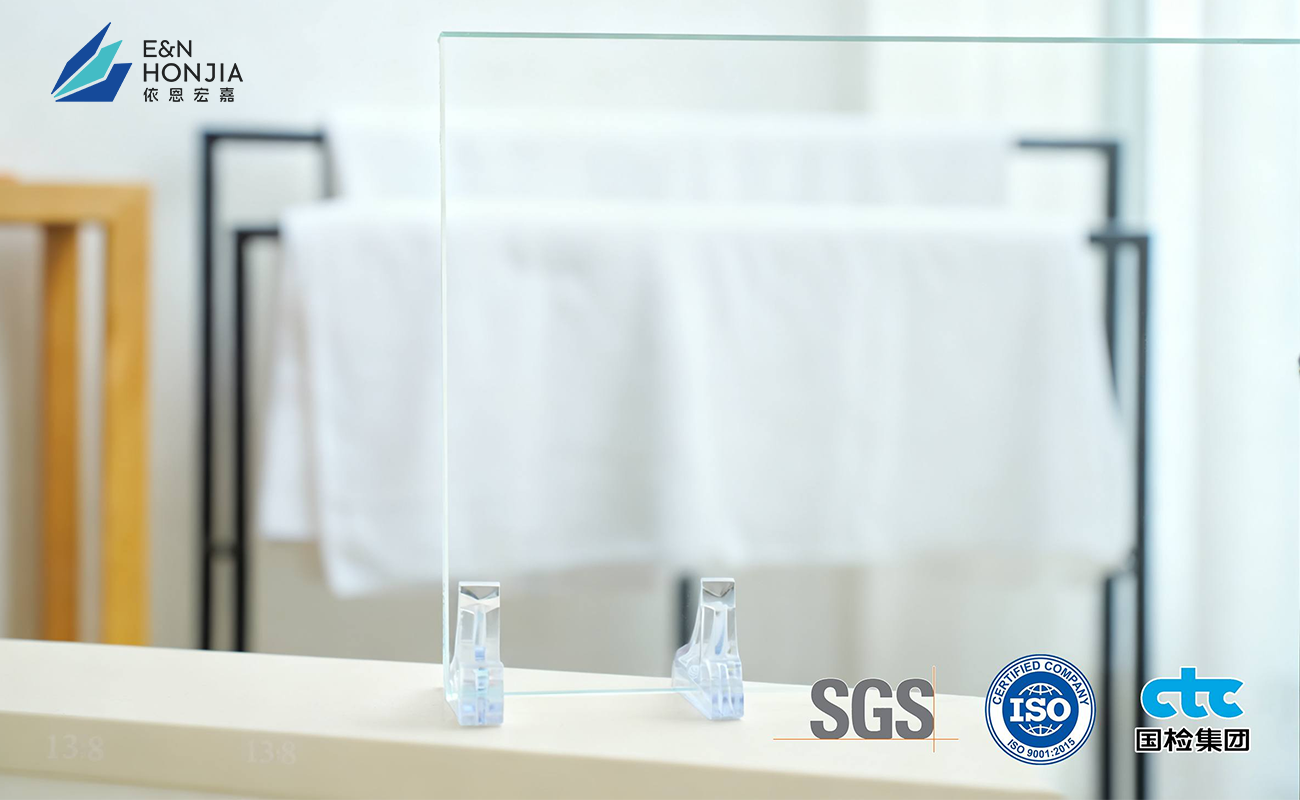
EVA laminated glass offers high light transmission and minimal haze, preserving the natural clarity of glass.
Strong Adhesion
The EVA interlayer forms a strong bond with glass surfaces, ensuring structural stability and long-term durability.
Moisture and Weather Resistance
Compared with some traditional interlayer materials, EVA film offers improved resistance to humidity and environmental exposure.
Enhanced Safety Performance
When glass breaks, the fragments remain attached to the EVA interlayer, preventing dangerous shards from falling.
Decorative Flexibility
Various decorative materials can be laminated between glass layers, enabling unique design possibilities for architectural and interior projects.
Advantages of EVA Laminated Glass
EVA laminated glass offers several advantages compared with conventional laminated glass systems.
Better Moisture Resistance
EVA interlayer film provides strong resistance to moisture, making it suitable for humid environments and certain outdoor applications.
Excellent Optical Clarity
EVA laminated glass maintains high transparency and low haze, making it ideal for decorative glass installations.
Flexible Decorative Applications
EVA laminated glass allows various decorative materials to be laminated inside the glass, providing creative design options.
Durable Bonding Performance
The strong adhesion of EVA interlayer film ensures stable bonding and long-term durability in laminated glass structures.
Applications of EVA Laminated Glass
EVA laminated glass is widely used in both architectural and decorative glass applications.
Common applications include:
- Glass railings and balustrades
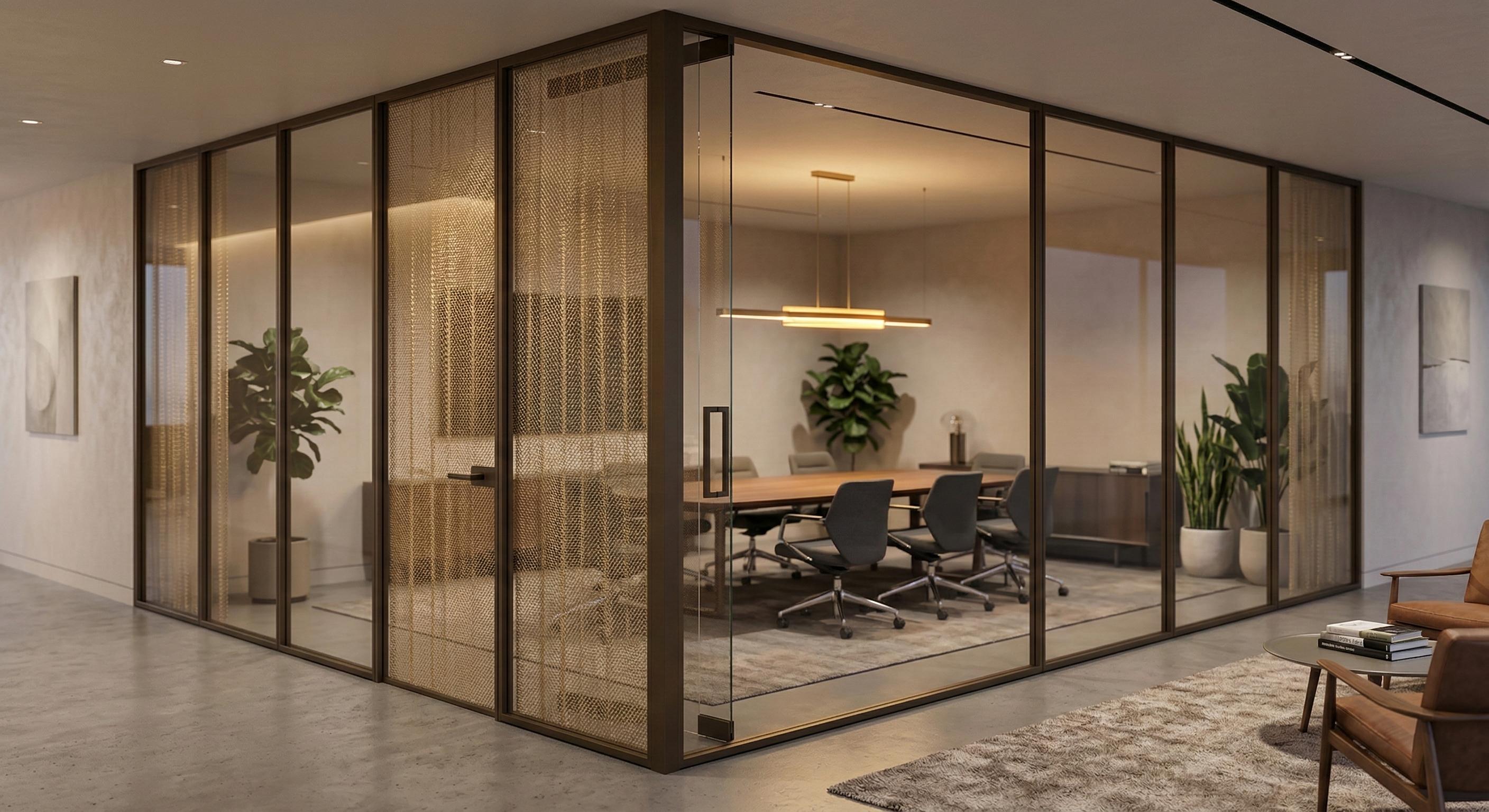
- Interior glass partitions
- Glass doors and windows
- Decorative glass panels
- Glass canopies
- Skylights
- Furniture glass
- Artistic laminated glass installations
- Hotel interior glass decoration
- Retail and commercial glass design
Because of its excellent adhesion and decorative flexibility, EVA laminated glass is widely used in interior decorative laminated glass projects and specialty architectural glass applications.
Decorative Laminated Glass Possibilities
One of the key advantages of EVA laminated glass is the ability to laminate decorative materials inside the glass structure.
Common decorative laminated glass designs include:
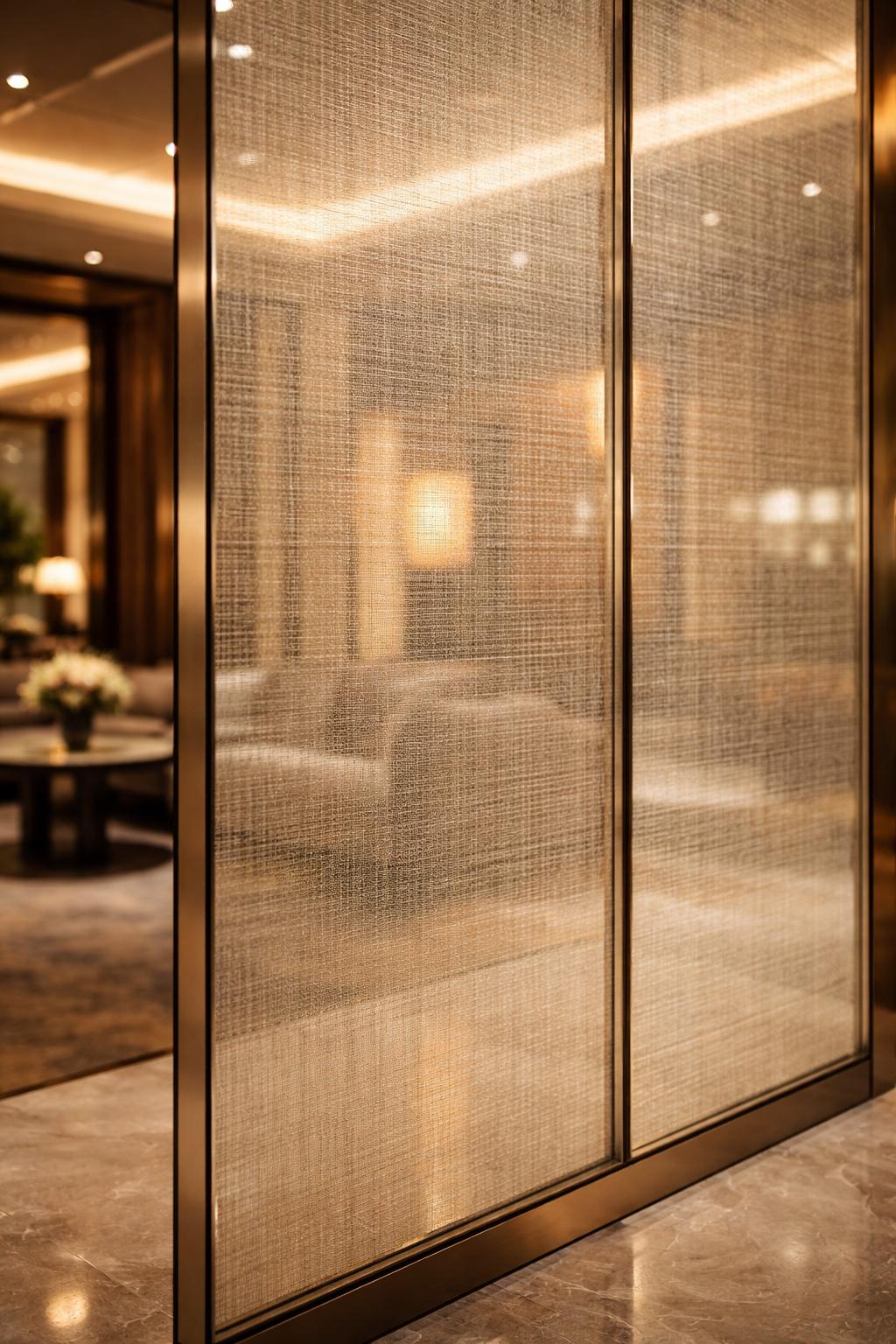
- Fabric laminated glass
- Metal mesh laminated glass
- Printed decorative glass
- Colored laminated glass
- Artistic laminated glass
These decorative laminated glass solutions are commonly used in luxury hotels, office interiors, commercial spaces, and architectural design projects.
Why Choose E&N HONJIA EVA Laminated Glass
Expertise in EVA Interlayer Technology
E&N HONJIA specializes in EVA interlayer film materials and laminated glass technology.
Reliable Product Quality
Our laminated glass solutions are produced with high-quality materials and strict quality control.
Flexible Customization
Different glass types, decorative materials, and laminated structures can be customized based on project requirements.
Global Supply Experience
We supply laminated glass materials and solutions to international glass processors, contractors, and distributors.
Related Glass Products
You may also be interested in our other architectural glass products:
- Float Glass
- SGP Laminated Glass
- Decorative Laminated Glass
- Smart Switchable Glass
These products provide different structural performance and design options for architectural glass applications.
Contact Us
If you are looking for reliable EVA laminated glass suppliers or laminated glass solutions, feel free to contact our team for more information.
E&N HONJIA is committed to providing high-quality laminated glass materials and innovative architectural glass solutions for global customers.