
What Should Be Considered When Selecting Interlayers for Glass Railings?
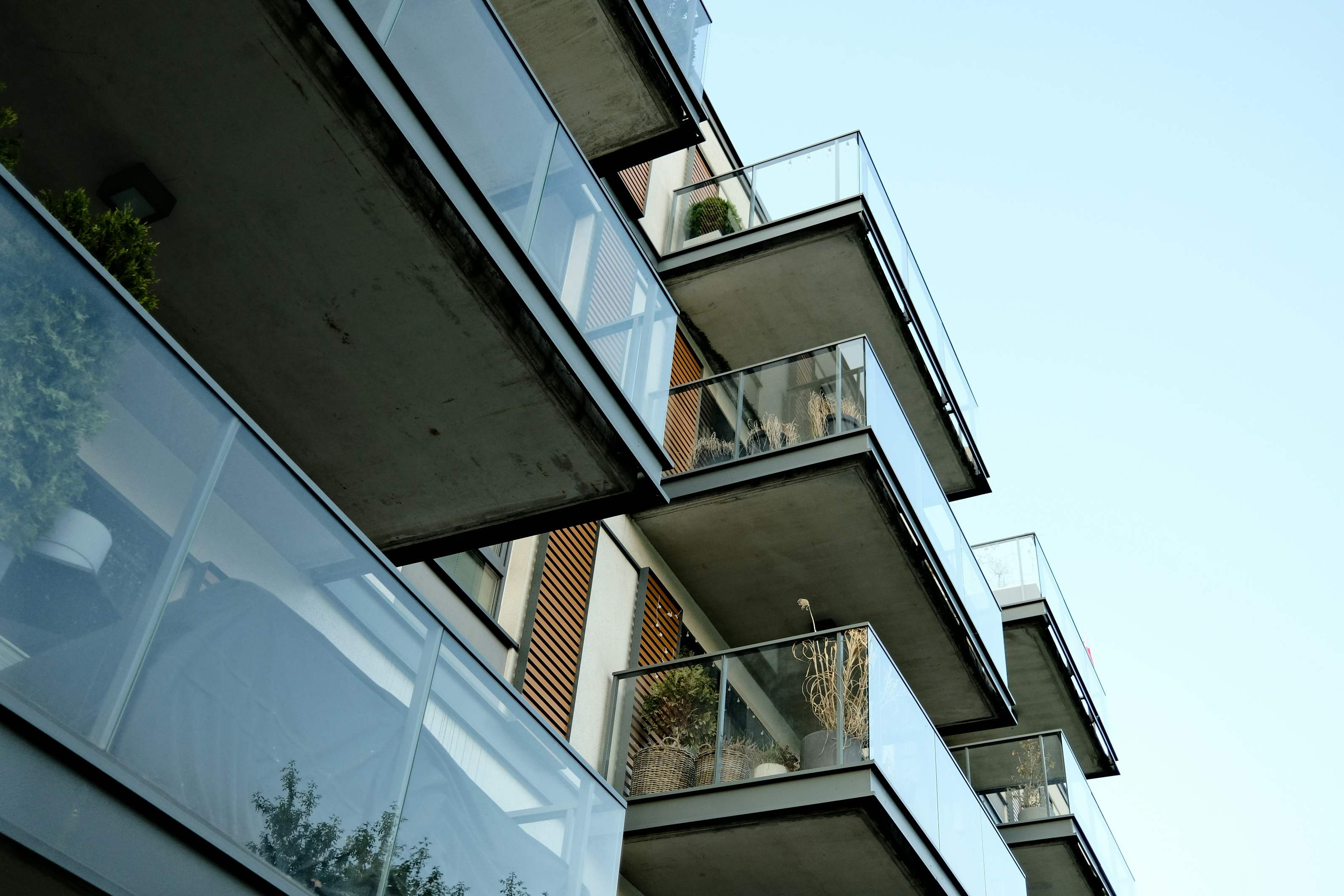
Choosing interlayers for glass railings is not simply a SGP or EVA comparison. The suitable option depends on how the railing is supported, what the glass must do after breakage, where it will be installed, and whether the proposed construction has appropriate test or engineering evidence.
A useful rule for buyers, architects and glass processors is: Select the interlayer as part of the complete railing system. Review the glass, interlayer, panel size, supports, anchors, edges, environment and applicable code together.
Quick Answer: What Factors Should You Check?
Before selecting an interlayer, confirm:
- Railing type and fixing method
- Required behavior after breakage
- Panel dimensions, span and loads
- Indoor, exterior, coastal or poolside exposure
- Glass type and laminate build up
- Edge protection and drainage
- Optical and processing requirements
- Local code and supporting evidence
The interlayer name alone does not answer these questions.
Start With the Railing System
A framed stair infill and a frameless balcony have different load paths. Before choosing the film, document the panel size, supported edges, base shoe or hardware, top rail, holes and notches, substrate, anchors and required loads.
Glass thickness alone is not a reliable selection method. A thicker panel can still perform poorly if the channel, anchors, setting materials or substrate are unsuitable. A stiff interlayer may improve composite action between the glass lites, but it cannot correct a weak connection.
For United States projects, the 2021 International Building Code guard provisions include a 50 lb/ft linear load and a 200 lb concentrated load. These figures belong to a specific code framework. The design team should confirm the edition adopted for the project location and occupancy.
What Should Happen After the Glass Breaks?
Laminated glass uses an interlayer to retain fragments after breakage. This reduces the risk of falling glass, but fragment retention is not the same as maintaining a stable barrier.
Define whether the panel must remain in its supports, continue to close the opening, or resist a stated residual load. Also confirm whether the assessment considers one broken lite or both lites, and whether a continuous top rail is present.
ASTM E2353 addresses static strength, impact performance and post breakage characteristics for permanent railing systems. A raw interlayer certificate does not demonstrate that a complete railing assembly meets these requirements.
Ionoplast and EVA Interlayers Compared
No material fits every railing. Each option should be considered against the support system, environment, appearance and available evidence.
| Interlayer | Where it may fit | What to verify |
|---|---|---|
| Ionoplast, often called SGP | Frameless, exterior, larger or more demanding panels | Product identity, temperature data, effective thickness, fixing design and assembly testing |
| EVA | Clear, decorative, curved, special insert and selected exterior applications | Indoor or outdoor grade, flow, curing, adhesion, weathering, edges and compatibility |
Published ionoplast data often cites about five times the tear strength and up to 100 times the stiffness of conventional PVB. These are material comparisons under stated test conditions, not finished railing ratings. Panel dimensions, temperature, loading time and fixings still matter.
How Environment Changes the Selection
Exterior glass barriers face rain, heat, UV radiation, temperature cycling and cleaning chemicals. Coastal balconies add salt exposure, while pool surrounds add humidity and chlorinated water.
Review edge polishing, glass alignment, drainage, protective capping and the compatibility of sealants, gaskets, grout and setting blocks. Do not use a moisture resistant interlayer as a substitute for drainage. Water trapped in a base shoe can affect edges, hardware, anchors and setting materials.
How to Evaluate EVA Interlayers for Glass Railings
Start with the EVA product grade rather than the general material name. Request the TDS, storage instructions, processing window, test method and batch information.
E&N publishes these values for selected clear EVA interlayers:
- Light transmission above 90%
- Haze below 0.3%
- Cross linking of at least 85%
- Stated UV resistance of 99%
- Adhesion above 75 N/cm in E&N laboratory data
Before using them in a specification, confirm the current TDS, product code, specimen construction and test method.
Flow also matters. E&N offers high flow and less flow Extra Clear Architecture EVA, plus Super Clear Safety EVA with standard and low flow choices.
High flow material may help fill around some fabrics, wires or textured inserts. Lower flow may provide better edge and dimensional control in other constructions. Use the actual glass and insert in a trial laminate.
Processing can change the finished result. Cleaning, vacuum quality, temperature, holding time, cooling and cross linking may affect bubbles, haze, adhesion and edge appearance. The laminator should record the approved recipe and inspection criteria before production.
Selection Examples by Application
| Project situation | Main concern | Selection direction |
|---|---|---|
| Interior framed staircase | Retention, clarity, decoration and cost | Compare a suitable PVB or indoor EVA grade |
| Exterior balcony with protected edges | Weathering, load and maintenance | Compare approved exterior EVA, structural PVB or ionoplast |
| Frameless balcony without a top rail | Deflection and post breakage stability | Prioritize structural evidence for the exact assembly |
| Coastal or poolside railing | Moisture, hardware, seals and drainage | Select the interlayer and corrosion resistant system together |
| Decorative or smart glass railing | Insert compatibility and curing | Test the actual EVA and insert construction before production |
What Should Be Written in the Specification?
Avoid descriptions such as "laminated safety glass" or "code compliant glass" without construction details. Identify:
- Glass type, heat treatment and lite thickness
- Interlayer manufacturer, grade and nominal thickness
- Panel size, edges, holes and notches
- Support system, top rail and fixings
- Interior or exterior exposure
- Applicable standard and load cases
- Impact and post breakage evidence
- Optical acceptance criteria
- Compatible sealants and setting materials
- TDS, batch traceability, processing instructions and warranty
An interlayer thickness such as 1.52 mm often appears in railing specifications, but it is not a universal minimum. The build up still depends on the glass, supports, loads and adopted code.
Common Mistakes to Avoid
Common purchasing errors include:
- Choosing only by film price
- Copying another project's glass thickness
- Ignoring the substrate and anchor design
- Allowing water to remain in the base channel
- Using a raw film certificate as railing evidence
- Changing the interlayer after testing without a new review
- Accepting "exterior grade" without weathering data
E&N Options for Glass Railing Projects
E&N HONJIA supplies EVA interlayers and ionoplast interlayers, allowing project teams to compare materials according to the railing design.
Relevant options include:
- HJ AT Extra Clear Architecture EVA, high flow, for selected exterior laminated glass
- HJ HT Extra Clear Architecture EVA, less flow, for greater flow control
- HJ WA Super Clear Safety EVA for outdoor safety glazing
- HJ WH Super Clear Safety EVA, low flow, for exterior constructions requiring edge control
- Ionoplast Interlayer for projects requiring higher stiffness
- HJ PL Ultra Clear EVA for compatible smart and decorative glass
Product selection should be confirmed with the E&N technical team and the glass processor. Send the panel size, glass build up, fixing method, edge condition, climate, target standard, quantity and schedule. These details make a sample or product recommendation more useful.
View the complete E&N interlayer solutions for glass railings and balustrades.
FAQ
Q1. Can EVA interlayers be used for exterior glass railings?
A: Some exterior EVA grades may be considered when supported by relevant weathering, adhesion, edge and processing data. Confirm the exact product rather than relying on the general term EVA.
Q2. Is ionoplast required for every frameless railing?
A: Not automatically. Frameless systems often require greater stiffness and stronger post breakage evidence, which makes ionoplast a common candidate. The decision still depends on engineering, support conditions and local requirements.
Q3. Does a thicker interlayer make a railing safer?
A: Not by itself. Interlayer thickness is one variable among glass thickness, panel size, temperature, support geometry, anchors and required breakage behavior.
Q4. Can the same EVA be used for indoor and outdoor railings?
A: Not necessarily. Indoor and exterior EVA grades may have different weathering, flow and processing characteristics. Check the specified product code and intended application.
Q5. What should I send when requesting a sample or quotation?
A: Send the glass construction, panel dimensions, railing system, location, edge details, required standard, inserts, quantity and destination.
Conclusion
Before approval, confirm the load path, breakage requirement, environment, edge design, exact glass build up, product grade, processing method and complete system evidence.
A suitable interlayer does more than hold fragments. It fits the way the railing is designed, manufactured, installed, inspected and maintained.