
What is EVA Film Interlayer and Its Applications and Benefits
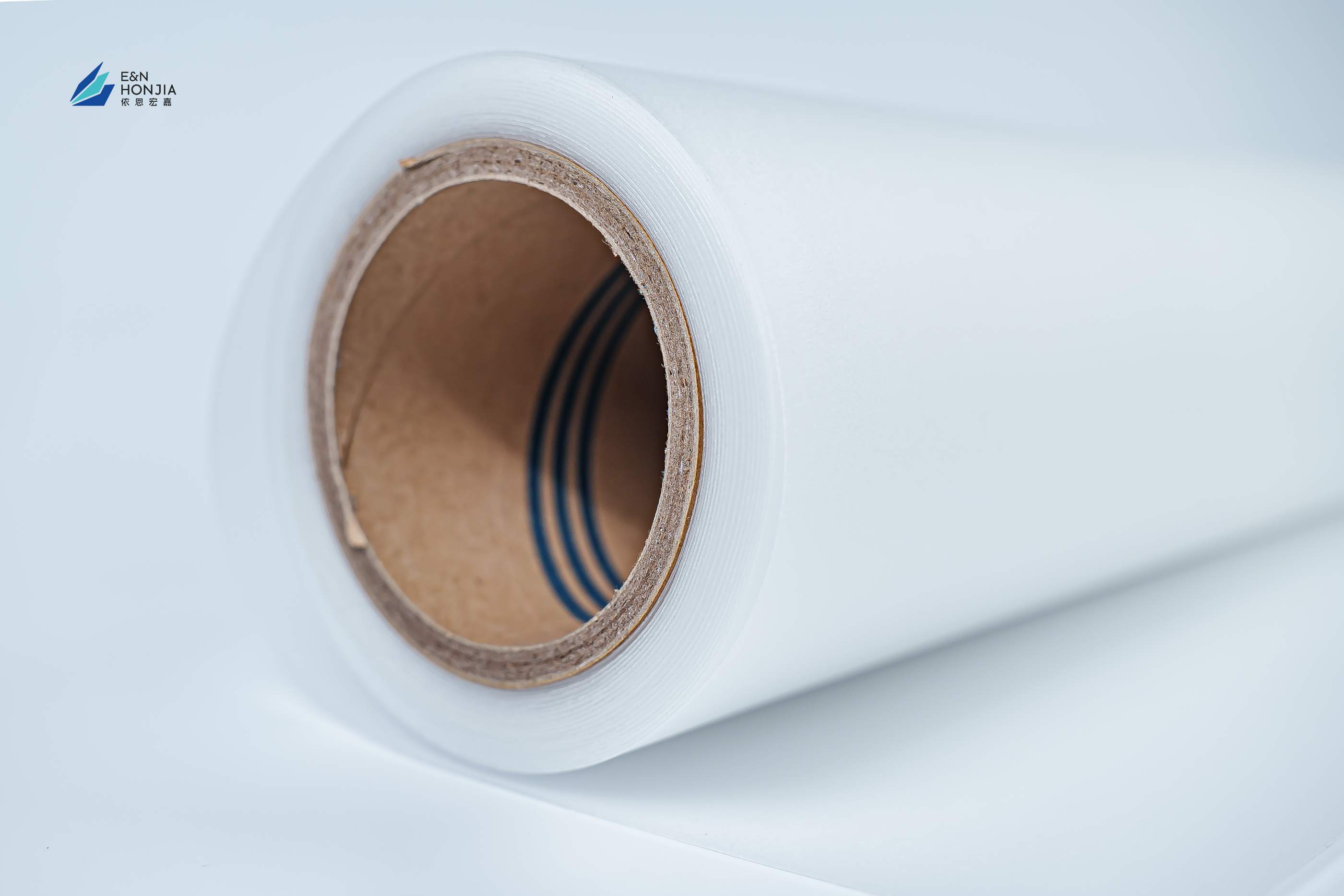
EVA film interlayer is an ethylene-vinyl acetate bonding film placed between two or more sheets of glass. During lamination, heat and vacuum remove air, bond the assembly, and in cross-linkable grades cure the EVA into a stable network. The result is laminated glass that can retain fragments after breakage while adding clarity, color, privacy, or compatibility with decorative and electronic inserts.
EVA is especially useful when a project needs low moisture uptake, good adhesion to varied inserts, flexible decorative options, or vacuum-oven processing. However, the right choice depends on the EVA grade, glass build-up, exposure, required certification, and the film manufacturer's processing instructions.
EVA film interlayer at a glance
| Question | Short answer |
|---|---|
| What is it? | A film based on ethylene-vinyl acetate that bonds glass plies during lamination. |
| What does it do? | It holds the glass assembly together, retains many fragments after breakage, and can add optical, decorative, privacy, or weathering functions. |
| Where is it used? | Decorative and architectural laminated glass, partitions, doors, canopies, smart glass, furniture, displays, and selected specialty glazing. Purpose-designed EVA is also used to encapsulate photovoltaic cells. |
| Why choose it? | Low moisture uptake, strong bonding to many materials, clear and colored options, insert compatibility, and autoclave-free vacuum processing for many systems. |
| What is the main caution? | EVA is a material family, not one universal specification. Exterior life, UV performance, structural behavior, curing temperature, and certification vary by grade and finished construction. |
What is EVA interlayer made of?
EVA stands for ethylene-vinyl acetate, a copolymer made from ethylene and vinyl acetate. The formulation not the name alone determines how the film behaves. Vinyl acetate content, stabilizers, coupling agents, curing chemistry, pigments, and other additives affect clarity, flow, adhesion, processing temperature, UV response, and long-term durability.
Many EVA films designed for architectural glass contain a cross-linking system. As the laminate is heated through the specified cycle, the film softens, flows into small surface irregularities, bonds to the glass and inserts, and then cross-links. Once correctly cured, the network is more dimensionally and thermally stable than an uncured film. Some indoor or specialty grades use different chemistry, so processors should never apply a generic temperature or cure assumption to every EVA product.
This grade dependence explains why two products both labeled "EVA interlayer" can perform very differently outdoors, around exposed edges, in a PDLC panel, or with a textured decorative insert.
How does EVA laminated glass work?
The interlayer changes both the intact and broken behavior of the glass assembly. Before breakage, EVA bonds adjacent plies into one laminate and can provide clear, translucent, colored, or opaque effects. It may also encapsulate decorative materials or electronic films.
After impact, one or more glass plies may crack, but a correctly designed and processed interlayer can retain many fragments and help the opening remain covered. This reduces the risk of loose shards compared with monolithic glass. It does not mean every EVA laminate automatically meets safety or structural requirements. Compliance belongs to the complete tested construction, including glass type, glass and interlayer thickness, panel size, edge condition, support system, and fabrication quality.
Seven key benefits of EVA film interlayer
1. Low moisture uptake and good edge stability
EVA generally absorbs less moisture than conventional PVB and can be a strong candidate for humid environments or designs with exposed edges. That advantage is valuable in bathrooms, coastal interiors, decorative panels, and selected exterior installations.
Open-edge suitability is still not automatic. The film must be an exterior-qualified grade, fully cured, compatible with adjacent sealants and hardware, and supported by relevant weathering data. Drainage and glazing design remain important.
2. High optical clarity in the correct grade
Super-clear EVA can produce high light transmission and low haze for display glass, showcases, partitions, railings, and other visually demanding work. Optical results depend on the film, glass substrate, cleanliness, de-airing, cure profile, and laminate thickness.
For a clear project, request measured visible light transmission, haze, yellowness index, and aging data for the proposed build-up. E&N's product selection includes clear EVA interlayers for different laminated-glass requirements; final values should be confirmed on the applicable technical data sheet.
3. Adhesion to glass and many decorative inserts
EVA's flow and bonding behavior make it useful with materials such as fabric, metal mesh, printed films, paper-like decorative media, and selected plastics. This is one reason it is widely used for custom interior glass.
Every insert should be tested before production. Inks, coatings, plasticizers, residual solvents, surface treatments, and moisture can interfere with bonding or create bubbles, discoloration, or delamination.
4. Broad aesthetic range
Clear, translucent, frosted, white, black, and colored films can turn safety-oriented lamination into a design system. Designers can control privacy, light diffusion, color, pattern, and visual depth without relying only on surface-applied films.
Because the decorative element is protected inside the laminate, it is less exposed to scratching and routine cleaning than a surface decoration. Long-term color stability still depends on the pigment, film formulation, insert, and exposure.
5. Compatibility with smart-glass constructions
Selected low-temperature or optical EVA grades can laminate PDLC switchable film between glass plies. EVA can bond the assembly and add fragment retention while the PDLC layer changes between transparent and privacy states.
The processor must match the EVA cure profile to the electronic insert's temperature limit and wiring design. See E&N's ultra-clear EVA interlayer for switchable-glass constructions and PDLC smart-film solutions for system-specific options.
6. Vacuum-oven processing without an autoclave in many systems
Many EVA laminates can be produced in a vacuum bag or silicone bag inside a laminating oven. This can lower equipment investment and make small batches, custom sizes, decorative assemblies, and frequent product changes practical.
The absence of an autoclave does not remove the need for process control. Actual interlayer temperature, vacuum level, heating uniformity, hold time, cooling under vacuum, and cure verification all affect quality.
7. Functional options by formulation
Depending on the grade, EVA film can be optimized for UV screening, outdoor durability, lower-temperature curing, higher or lower flow, color, opacity, or optical bonding. This lets a processor match the film to the job instead of treating one roll as a universal solution.
Common applications of EVA interlayer
Decorative laminated glass
This is one of EVA's strongest application areas. Common products include:
- hotel, retail, office, and residential partitions;
- colored or frosted doors and wall panels;
- glass with fabric, wire mesh, botanical elements, or printed inserts;
- furniture, cabinets, shelves, and tabletops;
- branded or custom-art panels.
High-flow EVA can help wet out textured inserts, while lower-flow formulations can improve edge control or reduce movement in precision assemblies. The appropriate choice depends on insert thickness, porosity, panel geometry, and oven cycle.
Architectural safety glazing
Correctly designed EVA laminated glass may be used in doors, windows, facades, canopies, skylights, balustrades, railings, and other architectural elements. The intended use determines the required glass type, interlayer thickness, post-breakage behavior, support system, and certification.
For exterior or overhead use, specify an exterior-grade product and require evidence for the finished construction. Do not substitute a generic "impact-resistant" claim for engineering review or code compliance.
PDLC smart glass
EVA can encapsulate PDLC film for switchable privacy partitions, meeting rooms, healthcare spaces, hotel rooms, retail displays, and residential interiors. Key controls include low haze in the on-state, compatible curing temperature, clean busbar and wiring details, uniform pressure, and bubble-free edges.
Display, museum, retail, and specialty glass
Clear or UV-screening grades may be considered for showcases, artwork displays, retail fixtures, signage, and optical assemblies. The required spectral transmission should be verified rather than assumed; "UV blocking" can refer to different wavelength ranges and test conditions.
Transportation and automotive applications
EVA can appear in selected transportation or specialty glazing, but conventional automotive windshields commonly use qualified PVB systems with established regulatory and acoustic performance. Use EVA only where the exact film and complete glass construction have the approvals, durability data, and production controls required for the vehicle or transport application.
Photovoltaic modules
EVA is widely used as a photovoltaic encapsulant around solar cells. This is related chemistry but a distinct product category with requirements for electrical insulation, light transmission, adhesion, potential-induced degradation behavior, curing, and long-term module reliability.
Do not assume that architectural glass-lamination EVA and solar EVA encapsulant are interchangeable. Select a purpose-designed material for the specific module construction and qualification standard.
EVA vs ionoplast: which interlayer should you choose?
There is no universally best interlayer. Choose the material that fits the performance, process, certification, and design requirements of the project.
| Decision factor | EVA | Ionoplast / SGP-type film |
|---|---|---|
| Typical strength | Decorative, custom, smart-glass, and selected architectural laminates | Structural and demanding post-breakage applications |
| Processing | Often vacuum bag or silicone bag in an oven; many systems are autoclave-free | Typically uses controlled lamination and autoclave processing |
| Moisture behavior | Generally low moisture uptake; exterior suitability is grade-dependent | Strong edge and weathering performance in qualified systems |
| Decorative inserts | Particularly versatile; flow grades can fill textured inserts | Not usually the first choice for highly decorative insert work |
| Optical options | Clear, colored, frosted, opaque, and smart-glass grades | High clarity and selected specialty options |
| Structural stiffness | Depends strongly on grade and temperature; do not assume ionoplast-like behavior | Generally selected when high stiffness and post-breakage capacity are priorities |
| Industry track record | Strong in decorative and specialty fabrication; growing architectural use | Established in engineered structural glazing |
| Main caution | Performance varies widely by formulation and cure quality | Higher material/process cost and less suited to some decorative insert workflows |
How EVA glass lamination is processed
Always follow the technical data sheet for the selected product. A typical vacuum-lamination workflow is:
1. Confirm the build-up: Define the glass type, EVA grade, total interlayer thickness, inserts, panel size, edge condition, and required test standard.
2. Prepare the materials: Store film in its original packaging under supplier-specified conditions. Condition glass, film, and inserts as required.
3. Clean and inspect the glass: Remove dust, oil, fingerprints, water, chips, and residues. Contamination can become permanently visible or weaken adhesion.
4. Assemble the laminate: Cut the EVA cleanly, position it without wrinkles, place approved inserts, manage electrical connections where applicable, and trim or tape the edges as specified.
5. De-air under vacuum: Use a vacuum bag or silicone bag to remove trapped air before and during heating. Confirm seals, hoses, valves, and vacuum stability.
6. Heat and cure to the validated recipe: Track the temperature at the laminate core, not only the oven-air temperature. Use the film supplier's ramp, hold, and cure requirements for the thickest build-up in the load.
7. Cool under vacuum and inspect: Maintain the specified vacuum while the interlayer cools enough to resist edge movement. Inspect optics, bubbles, edges, alignment, adhesion, and cure; record the batch and cycle.
Generic internet recipes are not production specifications. Oven design, load density, glass thickness, panel size, insert mass, bag construction, and thermocouple position can all change the actual cycle.
How to select the right EVA film
Ask these questions before requesting a quotation or running a production batch.
Is the project indoor or outdoor?
Use an indoor grade only in conditions covered by its data sheet. For exterior, high-humidity, open-edge, coastal, or high-temperature exposure, request an exterior-qualified formulation and accelerated-weathering evidence relevant to the project.
What optical result is required?
Specify visible light transmission, haze, color, yellowness, privacy level, and whether the glass or insert affects the measurement. A "super clear" label is not a substitute for test data.
Does the laminate contain an insert?
Identify the exact fabric, mesh, ink, PET film, PDLC film, coating, or other material. Run a compatibility laminate and aging test before full production.
How much flow is appropriate?
Higher-flow EVA can fill textured or uneven interfaces and help reduce voids. Lower-flow EVA can give better edge control, maintain position, and suit assemblies where excessive movement is undesirable. Choose by construction, not by a general preference.
What interlayer thickness is required?
Common nominal EVA layers include 0.38 mm and 0.76 mm, with thicker builds created for some applications. Thickness must be selected from the panel design, insert thickness, glass treatment, size, support, impact or structural requirement, and applicable test evidence. Read E&N's EVA interlayer thickness guide for an initial specification checklist.
What must the finished glass comply with?
Depending on the market and application, requirements may include a laminated-glass quality specification, human-impact safety glazing, overhead glazing, railing, hurricane, security, acoustic, or optical tests. In the United States, examples commonly discussed for laminated or safety glazing include ASTM C1172, ANSI Z97.1, and CPSC 16 CFR 1201. Other markets use different standards.
Ask for reports that match the exact glass construction or confirm with the project engineer and local authority. A raw-film certificate alone does not certify the finished panel.
Quality checks buyers should request
A credible EVA supplier should be able to discuss more than price and roll dimensions. Depending on the application, request:
- product grade, batch traceability, shelf life, storage requirements, and technical data sheet;
- visible light transmission, haze, color, and yellowness data;
- peel or adhesion results and the test method used;
- cross-linking or cure-verification method for cross-linkable grades;
- heat, humidity, UV, weathering, and edge-stability evidence;
- compatibility information for sealants, coatings, frits, inks, inserts, and PDLC films;
- recommended vacuum, temperature, hold, and cooling parameters;
- finished-laminate impact or application-specific certification;
- sample rolls and support for trial laminates.
E&N lists multiple clear, outdoor, indoor, high-flow, low-flow, colored, and smart-glass EVA options. For any published threshold or performance value, identify the applicable product code, test method, specimen construction, and report date so buyers can compare like with like.
Common EVA lamination defects and how to reduce them
Bubbles or voids
Likely causes include trapped air, insufficient vacuum, a leaking bag, fast heating, moisture or solvent in an insert, contamination, inadequate flow, or a recipe that does not match the load. Validate the vacuum system, dry or condition compatible inserts, use core-temperature measurement, and adjust only within the supplier's processing window.
Edge bubbles after cooling
Releasing vacuum while the laminate is too hot can allow air to disturb the still-soft edge. Cool to the supplier's specified release temperature while maintaining vacuum, and confirm that edge materials and tape do not trap gases.
Haze or poor transparency
Possible sources include the wrong film grade, contaminated glass, incomplete de-airing, under-curing, over-curing, incompatible inserts, or distortion from tempered glass. Compare the result with a controlled sample using the same glass and cycle.
Delamination or weak adhesion
Investigate glass cleanliness, coating compatibility, cure level, storage history, surface treatment, sealants, edge exposure, and mechanical stress. Do not assume moisture is the only cause.
Yellowing or color change
UV exposure, heat, formulation, cure error, insert migration, or incompatible chemicals can contribute. Use a grade qualified for the exposure and review aging data for the complete construction.
FAQ
Q1. What is EVA film interlayer used for?
A: EVA film interlayer is used to bond glass plies in decorative, architectural, safety, privacy, smart-glass, furniture, display, and selected specialty laminates. Purpose-designed EVA also encapsulates photovoltaic cells, but solar and architectural grades are not automatically interchangeable.
Q2. Is EVA interlayer better than PVB?
A: Not in every application. EVA is often attractive for low moisture uptake, decorative inserts, smart glass, and flexible vacuum-oven production. PVB has a long record in mainstream architectural and automotive safety glazing, while ionoplast is frequently selected for higher structural stiffness. The best choice depends on the tested performance required.
Q3. Can EVA laminated glass be used outdoors?
A: Yes, when the EVA is an exterior-qualified, UV-stabilized grade and the complete laminate is correctly designed, processed, glazed, and tested for its exposure. Indoor grades should not be assumed to have the same durability.
Q4. Does EVA block UV radiation?
A: Some EVA formulations are designed to screen a high proportion of UV radiation, while others prioritize UV transmission or different optical behavior. Ask for the transmission curve, wavelength range, test method, and aging data for the exact grade.
Q5. Does EVA lamination require an autoclave?
A: Many EVA systems are laminated in a vacuum or silicone bag inside an oven and do not require an autoclave. The process still requires validated vacuum, core temperature, hold time, cure, and cooling control.
Q6. What thickness of EVA interlayer is common?
A: Nominal 0.38 mm and 0.76 mm layers are common, and multiple or thicker layers are used in some constructions. The correct total thickness depends on glass type, panel size, insert, support, exposure, and the safety or structural requirement.
Q7. How should EVA film be stored?
A: Keep it sealed in the original packaging, clean, dry, and protected from heat and direct sunlight. Temperature, humidity, stacking, shelf life, and conditioning limits should come from the specific supplier's data sheet because requirements differ by formulation.
Q8. How do you choose between high-flow and low-flow EVA?
A: High-flow film is useful when the resin must fill texture or irregular gaps around an insert. Low-flow film provides greater positional and edge control. Trial the exact glass-and-insert build-up before production.
Conclusion
EVA film interlayer is a versatile platform for laminated glass—not a single universal product. Its most compelling advantages are low moisture uptake, adhesion to diverse materials, optical and color options, insert compatibility, and practical vacuum-oven processing. Its performance, however, depends on choosing the correct grade and proving the complete laminate against the real application.
When sending an inquiry, include the panel size, glass type and thickness, total EVA thickness, indoor or outdoor exposure, edge condition, inserts, optical target, required standard, and available laminating equipment. E&N HONJIA can then recommend a suitable EVA interlayer, provide processing guidance, and support sample-lamination evaluation before mass production.