Top 10 FAQs About Smart Glass in 2026
As we step into 2026, the global sectors of smart architecture and high-end interior design are witnessing a revolution in "transparency." From the modern headquarters of multinational corporations to the luxury suites of five-star hotels, and extending to privacy-sensitive, top-tier medical and commercial spaces, a material capable of instantly altering its transparency status is rapidly gaining widespread adoption: Smart Glass (also known as switchable privacy glass).
In the past, designers had to rely on heavy curtains or fixed frosted glass to address privacy concerns—solutions that often came at the cost of a space's sense of openness and natural illumination. Today, thanks to the maturity of switchable glass technology—specifically PDLC (Polymer Dispersed Liquid Crystal) technology—glass materials have been imbued with a dynamic, interactive vitality. Through millisecond-fast electronic switching, a space can seamlessly transition between a state of "complete openness" and "absolute privacy."
Faced with this cutting-edge technology, many architects, engineering contractors, and property owners still harbor numerous questions. This article delves into the forefront of the industry to provide authoritative answers to the top 10 core questions regarding smart glass in 2026, helping you make the most informed decisions when selecting materials for your projects.
What Is Smart Glass?
Before diving into the frequently asked questions, we must first clarify the fundamental physical structure of this technology.
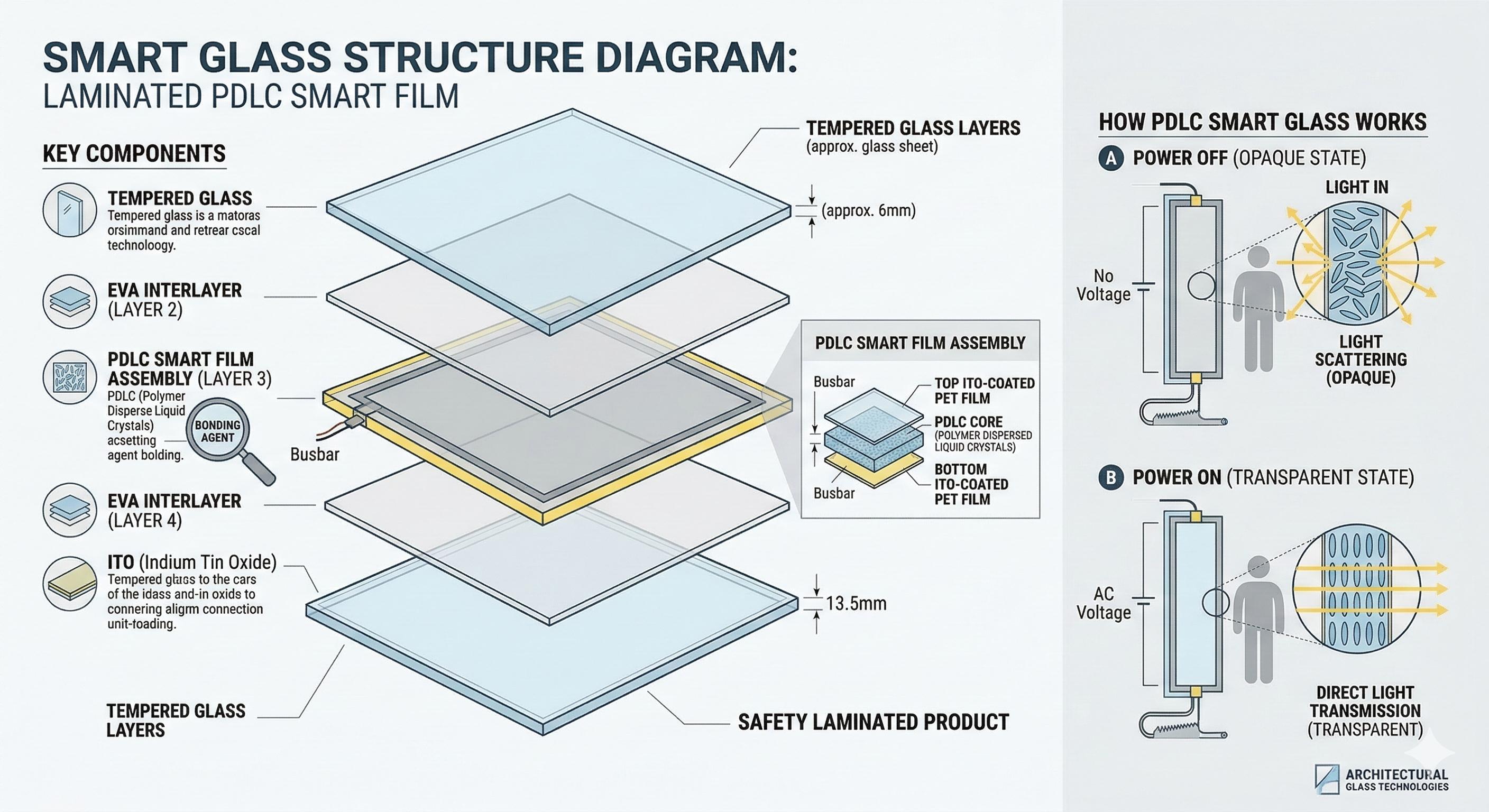
Essentially, high-quality smart glass is a specialized form of laminated glass. Its core structure consists of two layers of high-strength glass panes, between which lies a PDLC film (privacy film)—a layer exhibiting electro-optical properties—encased within a highly transparent interlayer (such as an EVA film).
Its operating principle is remarkably ingenious:
1. Power OFF Mode: When no electric current is flowing through the glass, the liquid crystal molecules within the privacy film are arranged in a disordered, scattered pattern. As light enters the glass, it is strongly scattered by these microscopic liquid crystal particles; consequently, the glass appears—at a macro level—as an opaque, milky-white frosted surface, thereby perfectly safeguarding privacy.
2. Power ON Mode: When an AC power source is connected, the electric field compels the liquid crystal molecules to align neatly in a uniform direction. Light can then pass through the film smoothly and unimpeded, causing the glass to instantly transform into a highly transparent state. This product—a perfect fusion of electronic film technology and modern glass processing—is redefining the future of architectural glass.
Top 10 FAQs About Smart Glass in 2026
Below are the top 10 core questions we most frequently encounter in our engineering projects, along with our expert answers:
How long does smart glass last?
This is the question of greatest concern to project investors. Under the manufacturing standards of 2026, high-quality dimmable products demonstrate exceptional longevity.
Typically, standard adhesive dimming films (applied directly to the surface of existing glass) have a lifespan of approximately 8 to 12 years. However, dimmable glass manufactured using a professional high-temperature, high-pressure lamination process—encapsulated within a laminated glass structure—benefits from the dual protection of the outer glass and the internal interlayer. This completely seals off the internal components from air, moisture, and physical abrasion, allowing the product to easily achieve a lifespan of 10 to 15 years, or even longer.
The core factors influencing lifespan primarily include: the quality of the anti-aging formulation within the internal PDLC film, the frequency of daily switching cycles, and the voltage stability of the power supply transformer system.
Table 1: Expected Lifespan Factors of Smart Glass Products
| Product Configuration | Expected Lifespan | Key Influencing Factors |
| Self-adhesive PDLC Film | 8 - 12 Years | Edge sealing quality, physical scratching, room humidity. |
| Premium Laminated Glass (PDLC) | 10 - 15+ Years | Interlayer formula, UV exposure, power supply stability. |
| Automotive/Aviation Grade | 15+ Years | Advanced protective coatings, extreme temperature resistance. |
Can you see through smart glass at night?
This is a critical consideration regarding privacy design.
During the day, because outdoor light is significantly brighter than indoor light, dimmable glass provides excellent privacy protection when in its powered-off, frosted state; it is completely impossible to see into the interior from the outside.
At night, however, the situation changes. If the interior is brightly lit while the exterior is pitch black, and a person inside approaches the glass, an observer outside—while unable to discern specific details—may be able to perceive blurred silhouettes or moving shadows (similar to a shadow puppet effect).
Solution: If the glass is to be installed in locations with extremely high requirements for nighttime privacy (such as a street-facing ground-floor bedroom), we recommend incorporating a dual-layer curtain design or, during the interior lighting design phase, avoiding the placement of strong light sources that shine directly onto the dimmable glass.
Does smart glass block heat?
The answer is: It offers a certain degree of thermal insulation, but it cannot fully replace specialized heat-insulating glass. When dimmable glass is in its power-off (opaque) state, the internal polymer materials and liquid crystal particles scatter and block a portion of solar infrared radiation and thermal energy, thereby reducing the amount of heat entering the interior. Furthermore, the interlayer within the laminated structure can absorb over 98% of harmful ultraviolet rays.
However, if your project is located in a hot climate zone and involves large-scale application on building facades, relying solely on dimmable glass may not be sufficient. We recommend adopting a composite configuration—specifically an "Insulated Glass Unit (IGU) + Low-E Coating + Dimmable Glass" combination—to achieve the ultimate dual effect of superior thermal insulation and privacy.
What is PDLC film in smart glass?
The PDLC film serves as both the "brain" and the "heart" of the entire smart glass unit.
PDLC stands for Polymer Dispersed Liquid Crystal. It is an optoelectronic film created by uniformly dispersing micron-sized droplets of nematic liquid crystals within a solid, transparent polymer matrix. Both sides of the film are coated with an extremely thin, transparent conductive layer (typically an ITO conductive film). It is precisely the change in the physical orientation of this film—triggered by the application of an electric field—that endows switchable glass with its magical ability to instantly transform its appearance.
Is smart glass laminated?
In modern, high-end architectural applications, the answer is a resounding yes.
Most professional-grade smart glass products must utilize a laminated glass structure. During the manufacturing process, the PDLC film is positioned as a functional core interlayer between two sheets of EVA film, which are then sandwiched between two panes of glass and laminated together to create a sealed unit.
This structure offers significant advantages: even if the glass is subjected to a violent impact and shatters, the fragments remain firmly adhered to the flexible interlayer, preventing them from scattering and causing injury. Thus, it functions not only as a smart dimming solution but also as a premium safety glass that complies with rigorous building codes.
How is smart glass manufactured?
This process involves precise and rigorous glass processing techniques. First, within a Class 10,000 cleanroom environment, workers precisely cut the ITO conductive film to size and route the electrodes.
Next comes the "lamination" stage: Glass + EVA Film + PDLC Film + EVA Film + Glass.
Subsequently, this "sandwich" assembly is transferred into a vacuum lamination furnace. Under precisely controlled high temperatures (approximately 120°C) and vacuum pressure, the EVA film melts and cross-links, permanently bonding all the materials together tightly and without any air bubbles.
Finally, the finished product emerging from the furnace must undergo rigorous insulation testing, optical transmittance testing, and continuous switching/aging tests before it can be packaged and shipped.
Is smart glass energy efficient?
From the perspective of comprehensive energy management, it is an energy-efficient material that ranks in the upper-middle tier.
On one hand, smart glass does indeed consume a minuscule amount of electricity when powered on (in its transparent state)—typically around 4 to 5 watts per square meter, which is extremely low. However, it consumes no electricity at all when powered off (in its frosted state).
On the other hand, it optimizes indoor natural lighting, thereby reducing the reliance on artificial lighting during the day. In the summer, switching it to the frosted state helps block a portion of solar thermal radiation, thereby lowering the cooling load on the air conditioning system. When all these factors are weighed together, it contributes to enhancing the overall energy efficiency of the building.
Can smart glass be customized?
Its high degree of customizability is precisely why it is poised to shine so brightly in 2026.
• Dimensions and Shapes: Thanks to advanced glass processing technologies, beyond standard rectangular shapes, it can be fabricated into circles, triangles, or even irregular shapes featuring cutouts or holes.
• Colors and Optics: In addition to the classic milky-white finish, it can now be customized in various colors—such as gray, black, or blue—with different grades of light transmittance and haze levels available to choose from.
• Control Methods: It integrates seamlessly with modern smart home control systems, supporting control via wall switches, wireless remotes, mobile apps, and voice commands; it can even be linked with light sensors to achieve fully automated operation.
Is smart glass better than traditional privacy glass?
This represents a paradigm shift—a "dynamic" solution delivering a decisive advantage over "static" alternatives.
While traditional privacy glass (such as frosted, patterned, or film-laminated glass) is inexpensive, its visual state is rigid and fixed; it permanently obstructs the line of sight.
In contrast,
switchable glass endows a space with immense flexibility and a sense of openness. It allows architects to instantly toggle—with the touch of a button—between a "transparent, expansive visual environment" and a "closed, secure, and private setting" within the very same space. In modern commercial and urban environments where real estate is at a premium, this creates immeasurable added value for the space.
Table 2: Smart Glass vs. Traditional Privacy Glass
| Feature | Switchable Glass (PDLC) | Traditional Frosted Glass |
| Privacy Control | Dynamic (Switchable instantly) | Static (Permanent opacity) |
| Light Transmission | High (in clear state) | Diffused / Lower light entry |
| Space Perception | Expands space when clear | Constricts space permanently |
| Maintenance | Easy to clean (smooth surface) | Harder to clean (if textured) |
| Initial Cost | Premium / Higher investment | Low / Budget-friendly |
What are the main applications of smart glass?
Its application scenarios are expanding endlessly:
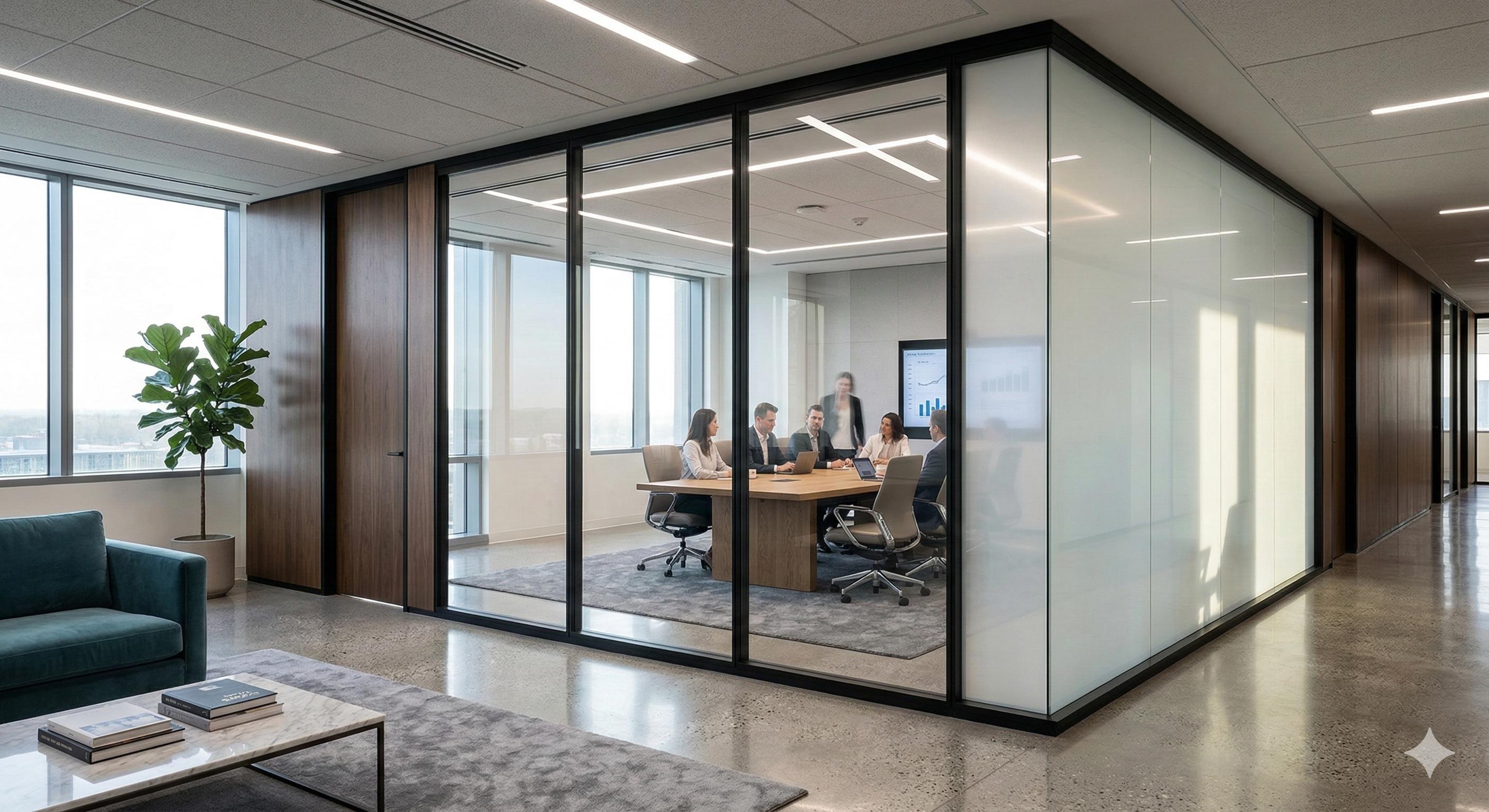
• High-End Office Partitions: Conference rooms remain transparent when unoccupied, then instantly turn opaque with a single button press during meetings, enhancing the company's high-tech image.
• Luxury Hotels & High-End Residences: Used for bathroom partitions, it alleviates the cramped sensation often associated with small spaces while simultaneously ensuring privacy during bathing.
• Healthcare Facilities: It serves as a superior alternative to traditional ward curtains—which are prone to harboring bacteria—and allows ICU observation windows to switch between visitor visibility and patient privacy during critical procedures with the push of a button, significantly elevating the sterile standards of the medical environment.
• Commercial Displays & Projection: In its opaque state, smart glass functions as an excellent high-definition rear-projection screen, ideal for storefront advertising displays that capture consumer attention.
Smart laminated Glass Development Trends in 2026

Looking to the future, the evolution of switchable glass technology shows no signs of slowing down:
• Lower Power Consumption: New low-voltage PDLC technology is gaining widespread adoption; requiring lower driving voltages, it is not only safer but also further reduces overall energy consumption.
• Enhanced Transparency: Leading manufacturers in the industry are actively working to overcome the challenge of "off-angle haze." Future generations of switchable glass, when powered on, will achieve a level of transparency that closely rivals that of standard clear glass. • Extended Lifespan: The incorporation of specialized polymers with exceptional UV resistance pushes the boundaries of durability, aiming for a service life of 15—or even 20—years in harsh outdoor environments.
• Deep Intelligent Integration: Seamlessly integrated into a building's central Internet of Things (IoT) control system, enabling imperceptible, environment-adaptive adjustments.
Conclusion
In the architectural blueprints of 2026, smart glass is no longer a lofty, futuristic concept; rather, it has emerged as a core modern building material that genuinely resolves spatial pain points and elevates the caliber of a project.
By seamlessly fusing sophisticated PDLC films, high-strength laminated glass structures, and superior interlayer technologies, it successfully strikes an optimal balance between dynamic privacy, spatial intelligence, and an enhanced visual experience. For any glass processing enterprise aspiring to serve the high-end market, mastering and delivering high-quality smart glass solutions is an imperative step toward securing a competitive edge in the future.
If you are seeking a stable, optically clear, and long-lasting smart dimming solution for your next modern architectural or interior design project, we invite you to explore the premium smart product series offered by E&N. Backed by years of expertise in materials R&D and rigorous control over our lamination processes, we are dedicated to providing clients worldwide with an unparalleled visual transition experience.