Top 10 EVA Interlayer Film Manufacturers for Laminated Glass in 2026
Entering 2026, the global construction and glass processing industry is undergoing a profound transformation. With the mandatory upgrade of global building safety standards and the explosive growth of Building Integrated Photovoltaics (BIPV), the market's performance requirements for laminated glass have reached unprecedented heights. Traditional interlayer films are no longer sufficient for all scenarios, while EVA interlayer films for laminated glass, with their high transparency and weather resistance, are rapidly becoming the industry's new favorite.
In this process, the technological gap between manufacturers is widening dramatically. Whoever can solve lamination bubble issues and resist UV yellowing for more than ten years will win the market.
For glass processors and architects, the core question is: Who are the Top 10 EVA interlayer film manufacturers for laminated glass in 2026? Today, we will provide an in-depth overview from a professional perspective, helping you accurately identify the most reliable partners in a market rife with varying quality.
What is EVA Interlayer? Why is it widely used in Laminated Glass?
Basic Structure of EVA Interlayer
EVA (ethylene-vinyl acetate copolymer) is a hot-melt copolymer. When used as an interlayer in glass processing, it undergoes a cross-linking reaction under heating and vacuum conditions, forming a three-dimensional network structure. This property endows it with extremely high transparency, excellent adhesion, and extremely strong tensile strength.
Differences between EVA and PVB/SGP
In the world of laminated glass, EVA, PVB, and SGP each have their advantages, but EVA has an overwhelming advantage in certain specific areas:
- Lower Moisture Absorption: PVB is extremely sensitive to moisture, easily leading to delamination (separation) at the glass edges. Cross-linked EVA, on the other hand, has natural hydrophobicity, making it a perfect choice for high-humidity environments such as bathrooms and awnings.
- Suitable for Complex Decorative Glass: EVA has excellent flowability, allowing it not only to bond glass but also to perfectly wrap wire mesh, fabric, metal mesh, and even PDLC dimming films.
- Greater Processing Flexibility: EVA film for glass lamination can typically be completed in a vacuum laminator, eliminating the need for expensive autoclaves and significantly lowering the production threshold.
How to Judge an Excellent EVA Interlayer Film Manufacturer?
To break into the global Top 10, price wars alone are not enough. Our core criteria for evaluating an EVA interlayer film manufacturer are as follows:
Technological Strength
True top manufacturers must possess their own formulation system. They can not only provide standard Clear EVA interlayer but also adjust the crosslinking speed and melt flow index according to customer needs.
Product Stability
This is the biggest pain point for laminated glass processing plants. Excellent films must possess superior resistance to yellowing (passing long-term weathering tests) and exhibit excellent venting properties during high-temperature lamination, completely eliminating the risk of bubbles and delamination.
Production Scale and Cleanroom Standards
Even a tiny speck of dust can ruin an expensive piece of architectural glass. High-standard Class 10,000 or even Class 1,000 cleanrooms are the entry threshold for top manufacturers.
International Certifications
No matter how advanced the product description, without authoritative certifications such as EN (Europe), SGCC (USA), and ANSI, it's impossible to enter the mainstream construction engineering market.
Global Supply Capability
Stable delivery times, rapid after-sales response, and extensive international export experience.
Top 10 EVA Interlayer Film Manufacturers in 2026
Under stringent selection criteria, the following ten companies represent the highest level in the global EVA interlayer field in 2026.
- E&N – A Global Leader in Integrated Solutions for High-End Architectural and Decorative Glass
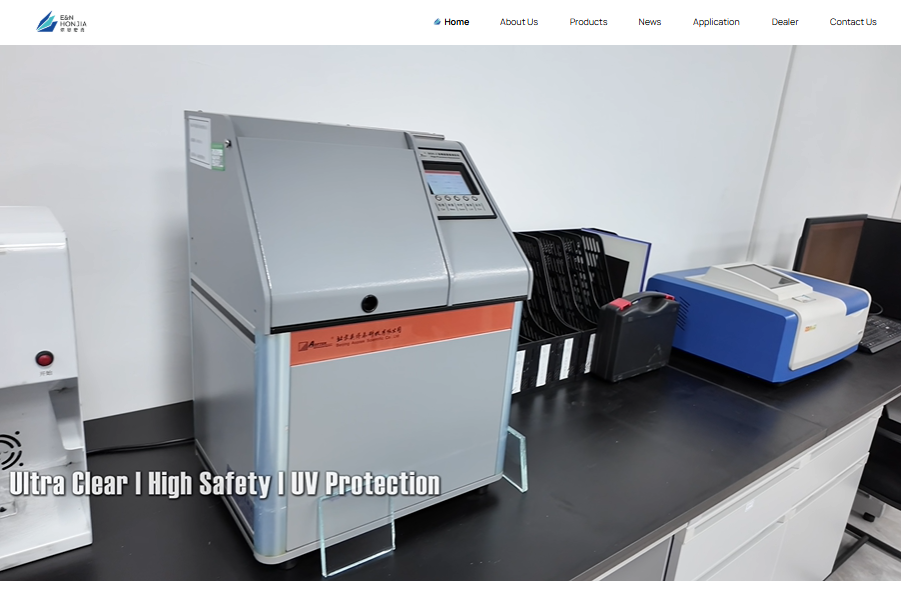
Company Introduction: E&N is a high-polymer new material manufacturer with over 20 years of industry experience. They sell more than just films; they are a professional supplier of interlayer films and glass solutions for the global high-end architectural and decorative glass industry. With a Class 10,000 cleanroom and strong R&D capabilities, E&N is committed to becoming a trusted high-performance brand in the international market.
Core Products: Top-tier Clear EVA interlayer, Ionoplast Interlayer (SGP), PDLC Smart Film, and related consumables for laminated glass, including high-temperature tapes and silicone vacuum bags.
Technological Advantages: Perfectly solves customer pain points. For processing plants, E&N's formulations ensure extremely high high-temperature lamination compatibility, resulting in exceptionally high finished product yields and completely eliminating bubbles and yellowing. For architects, its products have passed stringent certifications such as EN and SGCC, ensuring absolute project compliance.
Main Markets: High-end markets globally, including China, Europe, and North America.
Application Areas: Curtain walls, skylights, smart dimming partitions, and custom glass for high-end furniture.
- Kuraray (Trosifol®) – Germany
- Eastman (Saflex®) – USA
- Folienwerk Wolfen (evguard®) – Germany
- Sekisui Chemical (S-LEC™) – Japan

- Bridgestone (EVASKY) – Japan
- Evalam (Pujol Group) – Spain
- First Applied Material (FOSTER) – China
- GaoRen – China
- Kingboard – Hong Kong, China
Three Core Process Variables Affecting EVA Lamination Yield
Even when using EVA interlayer film from a top 10 global manufacturer, a lack of understanding of the material's physical changes during heating can still lead to mass rejects. In the context of high-end manufacturing in 2026, the following three variables determine the final yield rate of EVA laminated glass:
The "Golden Window" of Vacuum Degree and Cold Vacuum Hold Time
EVA transitions from a solid to a molten viscous state during the initial heating phase. Insufficient cold vacuum hold time will trap residual air between the glass panes, forming permanent bubbles.
Expert Recommendation: Before heating, ensure a vacuum level of at least -0.090 MPa and maintain cold vacuum hold for at least 15-20 minutes. This is the physical basis for resolving bubbles in EVA interlayer lamination.
Step-Heating Curve and Crosslinking Reaction Kinetics
The curing of Clear EVA interlayer is essentially a chemical crosslinking process. Excessive heating can result in the outer layer being crosslinked while the inner layer remains fluid, creating internal stress and delamination risks.
Key Technologies: Reputable EVA film suppliers for glass lamination (such as E&N) provide precise temperature gradients. Exhausting trapped air and maintaining temperature in the 90°C-110°C range (molten flow stage), followed by complete crosslinking in the 130°C-140°C range, ensures the material's weather resistance exceeds 20 years.
Pressure Equalization and Glass Flatness Compensation
In the production of large-size laminated glass, the corrugation of the glass can create localized pressure differences.
Selection Strategy: For decorative glass with uneven inserts or large-size architectural glass, EVA film for laminated glass with a higher melt flow index should be selected. High-quality film can compensate for physical gaps through its own fluidity, ensuring uniform pressure distribution and preventing delamination later.
Requirements for EVA Interlayer in Different Types of Laminated Glass
No single film is universally applicable. Different applications place different requirements on EVA interlayer film for laminated glass:
Laminated Glass for Architectural Curtain Walls
It must possess extremely high weather resistance and UV resistance. The film needs to withstand wind and sun exposure without yellowing or becoming brittle, and must comply with safety certifications such as SGCC.
Laminated Glass for Interior Decorative Glass
Whether used in shower rooms or office partitions, the requirements for high transparency (low haze) of the Clear EVA interlayer are extremely stringent. Furthermore, environmental friendliness and odorlessness (low VOC) are also key concerns for interior furniture manufacturers.
Photovoltaic Laminated Glass
Laminated glass used in BIPV (Building Integrated Photovoltaics) must not only be safe but also maintain light transmittance to sustain power generation efficiency; therefore, long-term anti-aging performance is a core consideration.
Global EVA Interlayer Technology Trends
In the coming years, interlayer technology will advance rapidly in the following directions:
Higher Transparency: Developing more advanced resin formulations to reduce haze to a level almost invisible to the naked eye.
Stronger Resistance to Yellowing: Combining new antioxidants and UV absorbers to achieve up to 20 years of outdoor warranty.
Better Adaptability to Larger Laminated Glass: As architectural glass sizes increase, the film must maintain extremely high thickness uniformity even at wide dimensions.
How to Choose a Reliable EVA Film for Laminated Glass Supplier?
Faced with a complex market, buyers can avoid pitfalls by considering the following:
Determining if it is a genuine manufacturer (not a trading company)
A genuine EVA interlayer film manufacturer should have its own R&D laboratory and large-scale cleanroom. For example, E&N has 20 years of manufacturing experience and can control formulation and quality from the source.
Technical Support Provided?
Lamination bubbles and delamination are often not just film issues, but also related to equipment temperature profiles. Excellent suppliers provide comprehensive glass processing guidance to help processing plants improve yield rates.
Certifications and Project Support Engineering contractors require material performance data during the design phase. Can the supplier provide official test reports such as EN certificates? Can they provide small-batch trial production support for research institutions? These all test a brand's overall soft power.
Manufacturer Evaluation Criteria
|
Criteria |
Basic Trader |
Professional Manufacturer (e.g., E&N) |
|
Production Facility |
Outsourced / Unknown |
Cleanroom environment, internal quality control |
|
Certifications |
None or Local only |
EN, SGCC, ANSI |
|
Product Consistency |
Varies by batch |
Extremely stable (Haze, Adhesion, UV resistance) |
|
Technical Support |
Sales only |
Process guidance, lamination troubleshooting |
|
Product Range |
Single EVA type |
Clear EVA, SGP, PDLC, Vacuum Bags, Accessories |
FAQ
Q1: What is EVA interlayer used for?
It is mainly used as the interlayer in laminated glass. Through a heated vacuum process, it tightly bonds two or more layers of glass, significantly improving the safety, explosion-proof performance, and bonding stability of the glass.
Q2: Is EVA better than PVB for laminated glass?
Both have their strengths. However, EVA has a clear advantage in terms of low moisture absorption (preventing edge delamination), ease of processing (no autoclave required), and compatibility with complex decorative materials (such as fabric or PDLC film).
Q3: How long does EVA interlayer last?
High-quality EVA interlayer film for laminated glass (such as architectural-grade products with anti-aging formulations) can last 10–20 years or even longer under normal outdoor use conditions.
Q4: How to choose the best EVA interlayer film manufacturer?
Focus on three key aspects: long-term stability of the formulation (anti-yellowing, anti-delamination), whether it possesses international authoritative certifications (EN/SGCC), and whether it has the capability for global supply and rapid after-sales technical support.
Conclusion
With the increasing demands for global building safety standards and innovative design by 2026, the market share of EVA interlayer film for laminated glass is continuously expanding globally.
For glass processing companies and construction contractors, choosing a professional EVA interlayer film manufacturer like E&N, with its strong technical foundation, comprehensive product line, and complete international certifications, not only completely solves production pain points such as bubbles and yellowing, significantly improving finished product yield, but also endows the final building project with long-lasting weather resistance and indestructible safety performance. In the future competition of laminated glass, a high-quality interlayer film is your strongest asset.