PDLC Smart Film and Switchable Privacy Glass: Product Types, Lamination, Electrical Design, Applications and Cost
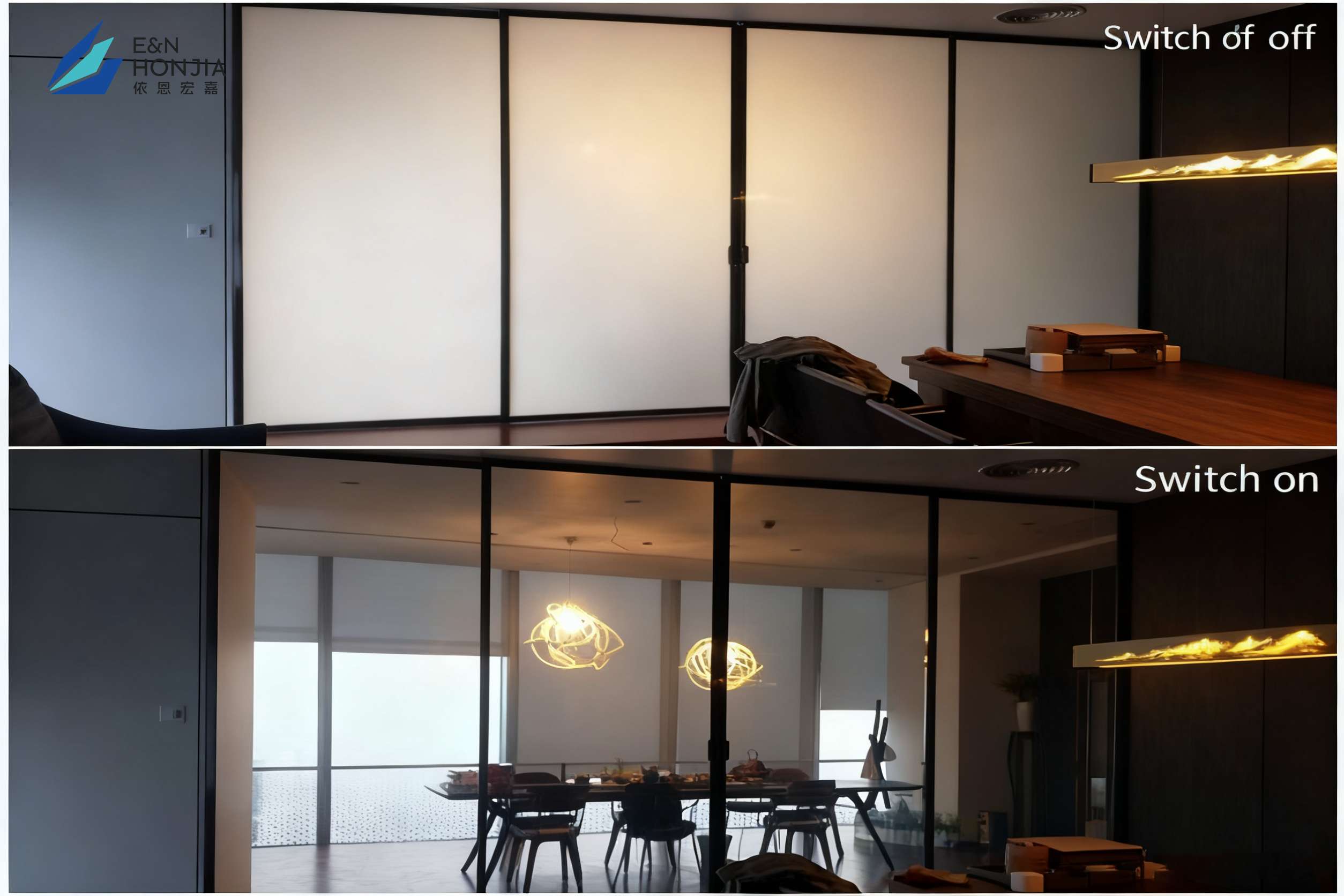
Glass makes interiors brighter, cleaner and more open. The problem is privacy. Curtains and blinds block views, but they collect dust, interrupt design and reduce daylight. Fixed frosted glass solves privacy, but removes flexibility. PDLC smart film and switchable privacy glass give project owners a better option: keep the glass open when visibility is needed, and switch to a frosted privacy state when the space requires separation.
For architects, glass processors, contractors, hotels, clinics and commercial buyers, the key question is not only "What is smart glass?" It is: which PDLC solution fits the project, how should it be laminated or installed, what electrical design is required, and what affects cost?
What Is PDLC Smart Film?
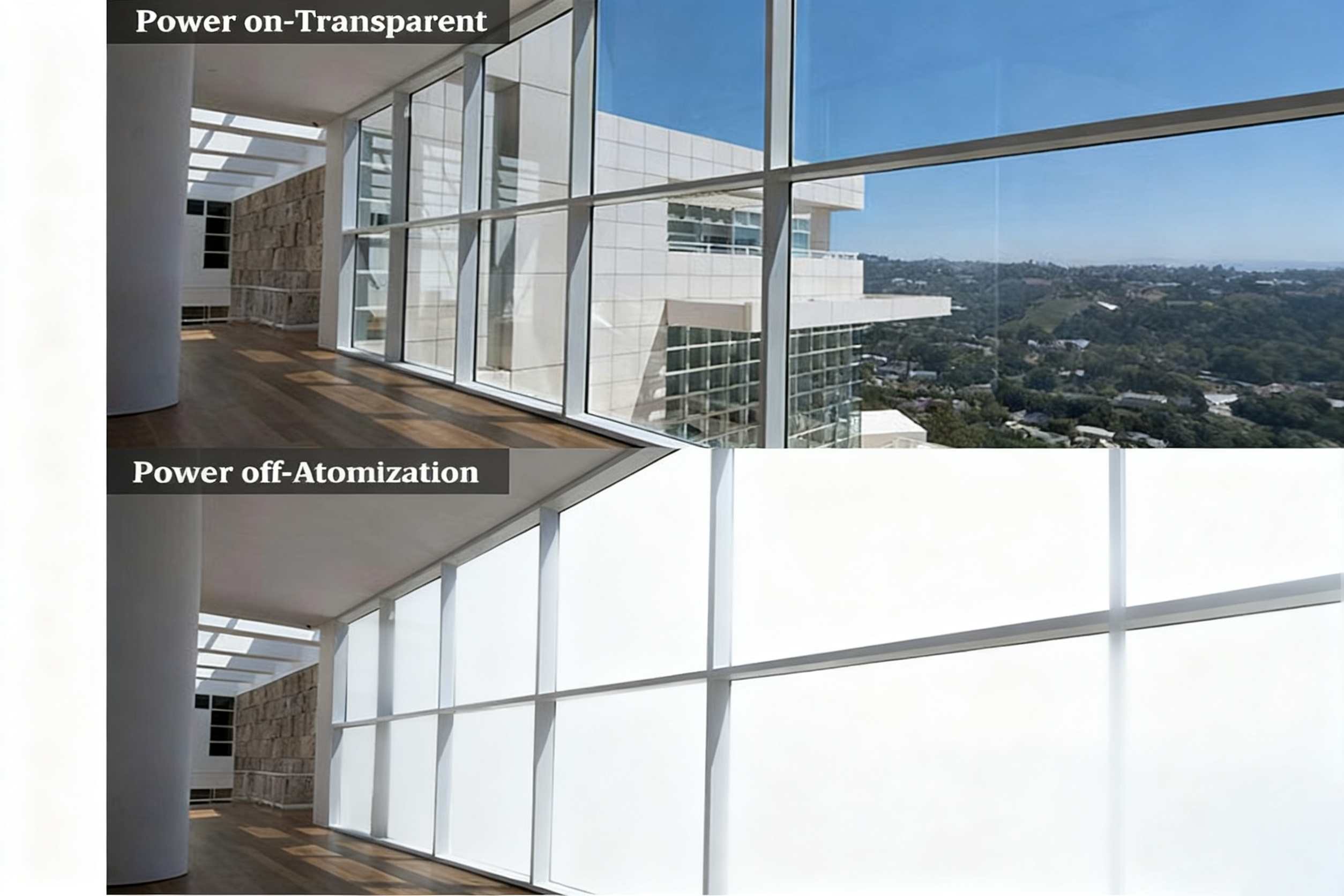
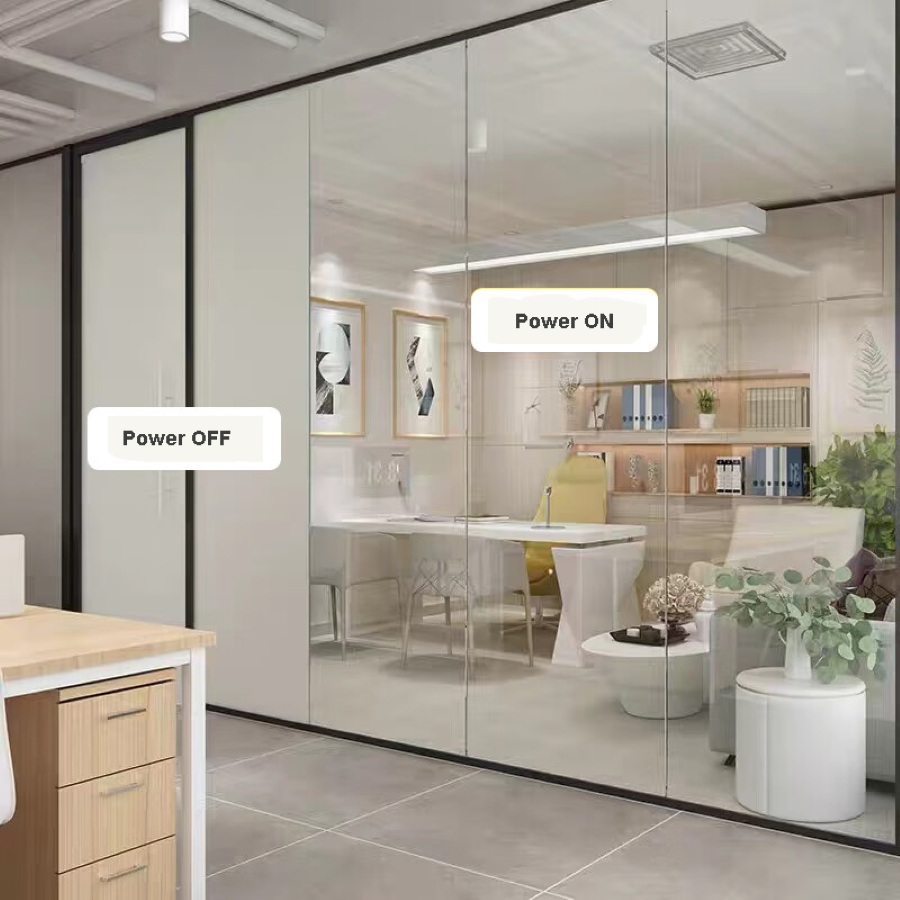
PDLC stands for Polymer Dispersed Liquid Crystal. Liquid crystal molecules are dispersed inside a polymer film. When power is off, the molecules are randomly arranged and scatter light, so the glass appears frosted. When AC power is applied, the molecules align and allow light to pass through, making the glass transparent.
PDLC glass is privacy glass, not blackout glass. In the frosted state, it blocks visibility but still allows daylight to enter. That is why it works well for meeting rooms, hotel bathrooms, clinics and offices where privacy and natural light are both important.
Main Product Types
Self-Adhesive PDLC Film
Self-adhesive PDLC film is designed for retrofit projects. It can be applied directly to existing glass without removing the panel or sending it for lamination. This makes it suitable for offices, homes, retail displays, clinics and hotel renovations where the glass is already installed.
E&N self-adhesive PDLC film offers visible light transmission of about 84% in the ON state and about 5% in the OFF state. The ON-state haze is about 5%, while the OFF-state haze is about 90%, creating a strong privacy effect. It operates at AC 60V, switches from OFF to ON in about 10 ms, and has an indoor service life of more than 50,000 hours.
Choose self-adhesive film when speed, lower disruption and existing glass compatibility matter most. Plan for surface cleaning, edge protection, wire hiding and power access.
PDLC Smart Film for Lamination Glass
PDLC smart film for lamination glass is non-adhesive film designed for glass processors and laminated glass manufacturers. It is placed between glass layers and bonded through autoclave or vacuum lamination, usually with EVA interlayers. This creates a more protected and integrated smart glass structure.
E&N PDLC film for lamination glass has about 70% light transmission in the ON state, about 5% in the OFF state, ON-state haze around 4.5%, OFF-state haze around 92%, and a viewing angle of about 150°. It operates at AC 36V, consumes about 3 W/m², and is designed for temperatures from –20°C to +100°C.
Choose lamination film when a glass factory, facade contractor or OEM supplier wants to produce finished smart laminated glass locally. This option gives more control over thickness, size, interlayer selection and edge finishing.
PDLC Smart Film For Lamination Glass
Smart Glass / Switchable Privacy Glass
Finished switchable privacy glass integrates PDLC smart film between two pieces of glass. It is supplied as laminated safety glass and installed like a finished glass panel. This is often the best choice for new construction, replacement glass, hotel bathrooms, hospitals, office partitions and premium interiors.
E&N switchable privacy glass can reach up to 90% transparency when powered on, while power-off haze is above 95%. It operates at AC 48–65V, consumes around 4–5 W/m², switches in less than 0.2 seconds, blocks more than 99% of UV rays, and can be customized in 5+5 mm, 6+6 mm or other glass thicknesses. Maximum size can reach up to 1800 × 3500 mm.
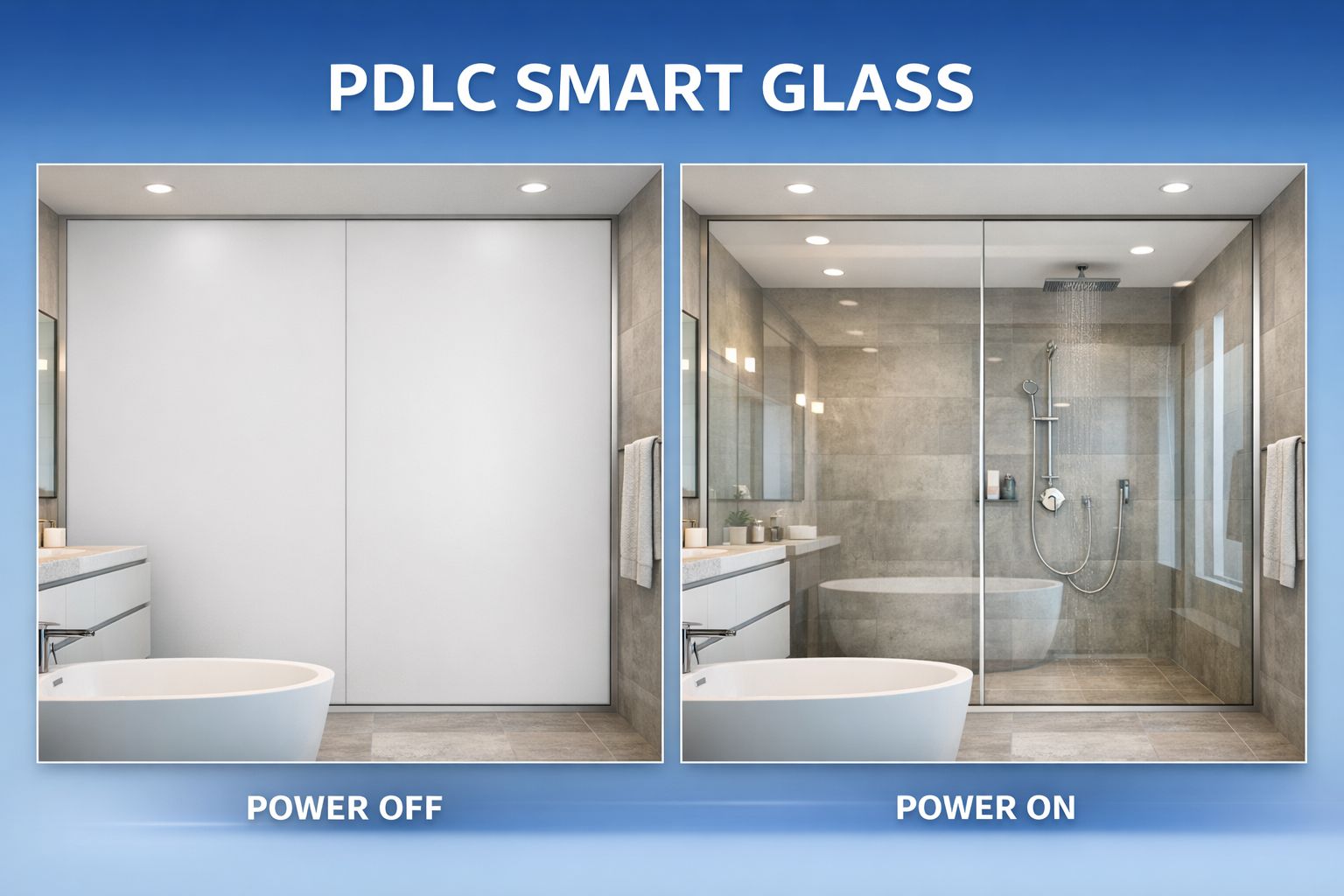
Smart Glass (Switchable Privacy Glass)
How to Choose Between Film and Glass
The right choice depends on the project stage. For installed glass, self-adhesive PDLC film is usually practical. For new laminated glass production, non-adhesive PDLC film provides better integration. For finished safety glass with a protected PDLC layer, switchable privacy glass is the most complete solution.
| Option | Best For | Main Advantage | Key Planning Point |
|---|---|---|---|
| Self-adhesive PDLC film | Existing glass retrofit | Fast installation | Clean surface, edge protection, wiring |
| PDLC film for lamination | Glass factories and OEM production | Integrated laminated glass | Lamination process, interlayer compatibility |
| Switchable privacy glass | New projects and premium interiors | Finished safety glass | Size, thickness, wiring route, frame |
Lamination Design: Why the Structure Matters
For laminated smart glass, the structure is more than a sandwich. A typical structure may include glass, EVA interlayer, PDLC film, another interlayer and glass. The interlayer must bond well and protect the PDLC layer over time.
Before lamination, confirm final glass size, PDLC film direction, busbar side, wire exit point and edge sealing method. Small design mistakes can create visible wires, poor edge finishing or difficult electrical maintenance later.
For larger panels, trial lamination is recommended before bulk production. Check transparency, haze, bubble control, edge bonding, switching consistency and insulation performance. For hotel bathrooms or humid areas, edge protection is especially important.
Electrical Design: Plan It Before Production
PDLC products need electricity to stay transparent. When power is off, they return to the frosted privacy state. This is a useful fail-safe privacy feature, but wiring should be planned early.
The basic electrical system includes the PDLC film or glass, busbar, lead wires, transformer, switch or controller, and optional remote, dimmer, app control or smart building system. Different products use different working voltages, so the transformer must match the product specification. E&N self-adhesive PDLC film uses AC 60V, lamination film uses AC 36V, and switchable privacy glass uses AC 48–65V.
A good electrical plan answers these questions before production: Where should the busbar be placed? How many panels will be controlled together? Will the system use wall switch, remote, dimmer, app or building automation? Where will the transformer be hidden? Can it be accessed later?
For a clean installation, the busbar should usually be on the side nearest power route. In offices, wires can often be hidden inside the frame or ceiling channel. In bathrooms, edge sealing and insulation are more important.
Applications by User Need
Office partitions and meeting rooms: PDLC smart film keeps glass walls open most of the day and turns them private during meetings. In the frosted state, the glass can also serve as a projection surface.
Hotels and bathrooms: Switchable privacy glass creates a modern guest experience without curtains or blinds. For wet zones, finished laminated smart glass is often preferred because the PDLC layer is protected inside the glass.
Healthcare and clinics: Clinics, laboratories, dental rooms and hospitals benefit from fast privacy control and easier cleaning compared with fabric curtains.
Residential spaces: Homeowners use PDLC film and glass for bathrooms, balconies, room partitions and street-facing windows.
Retail displays: In showrooms and shopfronts, PDLC glass can switch between product visibility and frosted projection, giving retailers a flexible surface for display, privacy and advertising.
Cost: What Affects the Final Price?
PDLC smart film and switchable glass pricing varies widely. Market pricing for smart film is often quoted from about $20 per square foot upward, while complete smart glass systems can rise above $100 per square foot depending on glass type, panel size, order quantity, control system and installation conditions.
For buyers, real project cost includes film or glass size, custom cutting, waste rate, glass thickness, lamination, transformers, controls, busbar position, installation, packaging, shipping and after-sales support.
A low material price can become expensive if the transformer is mismatched, wiring is not planned, or the film edge fails after installation. A reliable quotation should include product type, dimensions, quantity, voltage, accessories, control method, packaging and lead time.
What to Send When Requesting a Quote
To get an accurate quotation, prepare project type, product choice, panel size and quantity, indoor or outdoor use, dry or wet environment, glass thickness, busbar side, control method, destination country, drawings or photos, order quantity and delivery schedule.
Common Mistakes to Avoid
1. Do not choose smart film only by price. Optical clarity, haze level, voltage stability, adhesive quality, edge protection and after-sales support all affect long-term results.
2. Do not order film before confirming wiring. Busbar location and transformer position should be decided before cutting or lamination.
3. Do not expect PDLC to work like blackout curtains. It provides privacy by scattering light, but it does not fully block daylight.
4. Do not ignore sample testing. A sample helps buyers check transparency, frosted uniformity, switching speed and color tone under real lighting conditions.
Why Work with a High-Quality PDLC Smart Film Manufacturer?
A good manufacturer should do more than sell film rolls. For project buyers, technical support is often as important as the material itself. E&N provides self-adhesive PDLC film, PDLC smart film for lamination glass, switchable privacy glass and related accessories, giving buyers a complete route from retrofit installation to factory-laminated glass.
For glass processors, stable film quality and lamination support matter. For contractors, wiring position and transformer matching reduce risk. For owners and designers, optical clarity, reliable switching and long service life protect the investment.
Final Buying Advice
Start with the project condition. If you already have glass, consider self-adhesive PDLC film. If you manufacture laminated glass, choose PDLC film for lamination. If you want a finished, protected and premium privacy glass panel, specify switchable privacy glass.
Before purchasing, compare optical data, voltage, power consumption, film size, UV blocking, switching speed and support. The best PDLC solution is not always the cheapest one; it is the one that fits the glass structure, electrical design, installation environment and use.