
Is Smart Glass and Smart Film Waterproof?
Neither smart glass nor smart film should be treated as a fully waterproof product. Both can work in humid spaces when the complete installation is designed for the expected water exposure. Laminated smart glass usually offers stronger protection because the PDLC layer sits between two glass panes. Self adhesive smart film remains exposed at the surface, edges, busbars and cable exits, so it is better suited to dry interiors and humidity adjacent areas than to an active shower spray zone.
The useful question is where water can enter
A water droplet on the middle of a glass panel is not the same risk as water reaching an exposed electrical connection. For project decisions, it helps to divide the system into three zones. The first is the glass face, which is easy to wipe and clean. The second is the perimeter, including polished edges, holes, hinges, bottom channels and sealant joints. The third is the electrical path, including busbars, wire exits, connectors, power supplies and controls. Most moisture related failures begin in the second or third zone, not in the center of the glass.
This leads to a more useful buying question: what water exposure will each zone receive, and what test evidence covers that condition? A bathroom window outside the splash area, a hotel shower door and a pool enclosure may all be called humid applications, but they do not place the same demands on the product.
Smart glass vs smart film in wet areas
|
Decision factor |
Laminated smart glass |
Self adhesive smart film |
|
PDLC protection |
Encapsulated between glass panes |
Film face and edges remain exposed |
|
Best project stage |
New glass or planned replacement |
Retrofit on existing indoor glass |
|
Humidity |
Suitable when edges and wiring are correctly detailed |
Possible in adjacent humid areas with careful sealing |
|
Direct splash |
Preferred option, subject to system design and testing |
Usually avoided in the active spray zone |
|
Maintenance |
Normal glass surface is easier to clean |
Film surface needs gentler cleaning and edge checks |
Why laminated smart glass handles moisture better
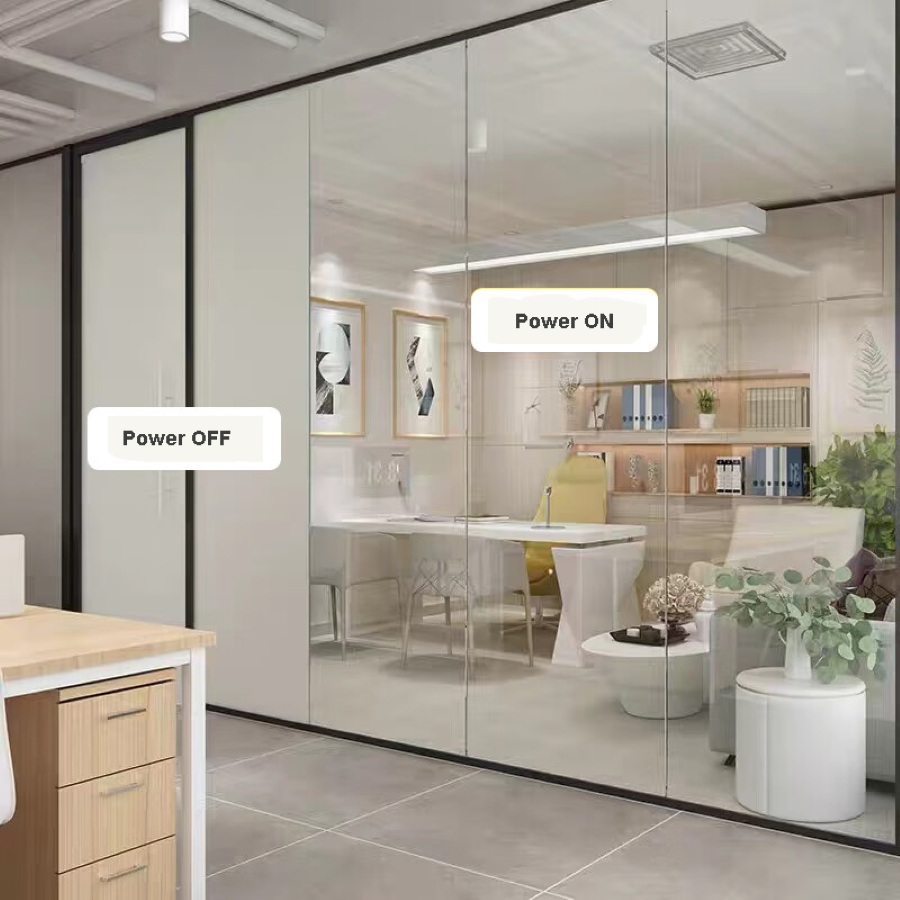
In laminated smart glass, the switchable PDLC film is protected inside the glass build up. E&N's current smart glass specification lists power on transparency up to 90 percent, power off haze above 95 percent, AC 48 to 65 V operation, 4 to 5 W per square metre power consumption and switching in less than 0.2 seconds. Standard glass options include 5 plus 5 mm and 6 plus 6 mm, with custom structures available. These numbers describe optical and electrical performance. They do not, by themselves, certify a finished shower assembly as waterproof.
The practical advantage is separation. Water can contact the outer glass while the functional film remains inside the laminate. The remaining weak points are the glass edge, any cut outs, the sealant interface and the electrical exit. A well specified panel can therefore be used for shower partitions, bathroom dividers and similar wet area applications, but the frame, drainage and wiring still need project specific detailing.
Why smart film needs a more conservative location
Self adhesive PDLC film is designed to upgrade existing glass without replacing the panel. E&N's published values include about 84 percent visible light transmission when on, about 5 percent when off, AC 60 V operation, 0.3 to 0.4 mm thickness and an indoor service life rating above 50,000 hours. The product page presents it as an indoor retrofit solution. That service life figure should not be read as a warranty for direct spray, standing water or an unsealed bathroom edge.
For a bathroom window outside the shower, a glass partition on the dry side or a door that sees humidity but little direct water, smart film can be a practical choice. Inside a shower enclosure, water can reach the film edge repeatedly and cleaning can abrade the exposed surface. Laminated smart glass is usually the lower risk solution for that location.
Seven installation checks before approving a wet area
1. Map the water path: Mark direct spray, condensation, cleaning runoff and possible standing water on the elevation. Do not classify the whole room with one word such as humid.
2. Choose the product by exposure: Use self adhesive smart film for suitable indoor retrofits. Use laminated smart glass where direct splash, regular cleaning or higher public use makes exposed film less practical.
3. Detail every edge: The seal must be continuous around exposed edges, holes, notches and wire exits. Use a manufacturer approved neutral cure sealant only after compatibility has been checked with the laminate, coating, frame and adjacent materials.
4. Keep electrical parts serviceable and dry: Position busbars and cable exits away from drainage paths. Put the transformer and junctions in a dry, ventilated and accessible location. Select enclosures and connectors for the required water exposure.
5. Design drainage, not only sealing: A bottom channel that traps water can defeat a careful seal. Provide a route for water to leave the frame and keep weep paths open during installation.
6. Allow the sealant to cure: A skin on the surface is not a full cure. Follow the sealant data sheet before powering, cleaning or water testing the assembly. E&N's sealant guidance notes that many glass joints need 24 to 48 hours for functional cure, while deeper joints can require longer.
7. Approve a project mockup: Check optical clarity, privacy, switching, edge appearance, wiring, drainage and cleaning access. Record the glass build up, sealant, power supply and test condition so the approved sample can be repeated in production.
Which standards should a buyer ask about?
Water resistance claims become more useful when they are tied to the part being tested. ISO 12543-4:2021 provides durability test methods for laminated glass under high temperature, humidity and radiation. ASTM C1172 covers quality requirements for laminated architectural flat glass and notes that a mockup is useful when optical appearance needs evaluation. For shower doors and enclosures sold in the United States, 16 CFR Part 1201 addresses safety glazing in hazardous architectural locations. Local building rules can add further requirements.
IEC 60529 is often misunderstood in smart glass discussions. Its IP code grades the protection provided by electrical enclosures against solids and water. An IP rating on a power supply box or connector does not automatically become an IP rating for the glass panel, its perimeter seal or the installed wall. Ask which component carries the rating, which test level was used and whether the complete installed system has been assessed.
A factory view: treat moisture resistance as a system
E&N has worked with interlayers and laminated glass materials for more than 20 years and supports PDLC film, finished switchable glass and related processing materials. From a manufacturing perspective, the useful control point is not a waterproof label. It is the approved combination of glass, interlayer, PDLC film, edge treatment, wiring detail, frame and installation method.
For the shower enclosure application shown on the E&N, the design intent is to laminate the PDLC film between two glass layers, operate it on low voltage and separate wet and dry electrical areas. Before quoting a similar project, buyers should provide panel sizes, glass thickness, hole and hinge locations, expected splash zones, cable exit direction, control method and the safety standard required in the destination market. That information is more valuable than asking for a generic waterproof grade.
Early warning signs and maintenance
Inspect wet area smart glass and film during routine cleaning. Warning signs include edge whitening, bubbles near the perimeter, lifting film, new cloudy lines, flickering, dead areas near a busbar, local delamination or corrosion around a connector. These signs do not identify one cause by themselves, but they justify an electrical and edge inspection before the problem spreads.
Use a soft cloth and a cleaner approved for the surface. Avoid abrasive pads, blades and repeated flooding of the perimeter. If water reaches an electrical connection, switch the system off and have the connection, seal and power supply checked before returning it to service. Keep the original drawings and component list so replacement parts match the installed system.
FAQ
Q1. Can smart film be installed inside a shower?
A: It is generally not the preferred option in the active spray zone because its surface, edges and electrical contacts remain more exposed. For a shower door or panel that receives direct water, laminated smart glass is usually the more robust starting point. Smart film can still suit a bathroom window or dry side partition when the edge and wiring details are approved for the location.
Q2. Does silicone make smart film waterproof?
A: A compatible sealant can reduce moisture entry at the edge, but it does not turn every film installation into a waterproof system. Seal continuity, adhesion, cure, cable exits, frame drainage, cleaning and electrical enclosure selection all affect the result.
Q3. Can smart glass be submerged?
A: Do not assume so. Laminated construction protects the PDLC layer better than surface applied film, but a submerged assembly places sustained pressure on edges, seals and electrical penetrations. Use only a system specifically designed, documented and tested for that exposure.
Q4. Can smart glass or smart film be used outdoors?
A: Outdoor use requires more than rain resistance. UV exposure, heat, cold, wind load, sealant movement, drainage and local glazing rules must be considered. Confirm the exact product grade and complete exterior build up with the manufacturer before specification.
Q5. What should I send to a smart glass manufacturer for a wet area quote?
A: Send drawings with finished sizes, glass make up, holes and cut outs, framing, wet and dry zones, cable exit positions, power and control requirements, expected cleaning method and destination standards. Photos of the opening and a marked water exposure diagram can prevent expensive assumptions.
Conclusion
Smart glass and smart film can both serve humid interiors, but they should not be specified with the same water exposure. Use smart film where an indoor retrofit and limited direct water make sense. Use laminated smart glass where the PDLC layer needs stronger physical and moisture protection. In either case, the long term result depends on edge design, electrical separation, drainage, compatible materials and documented testing. For a project review, send E&N your drawings and mark every area that can receive steam, splash, cleaning water or standing water.
Need a project specific recommendation? Contact E&N with your glass size, exposure drawing and wiring requirements.