
How to Test EVA Interlayer Film for Laminated Glass: Methods, Standards, Acceptance Criteria and Supplier Evaluation
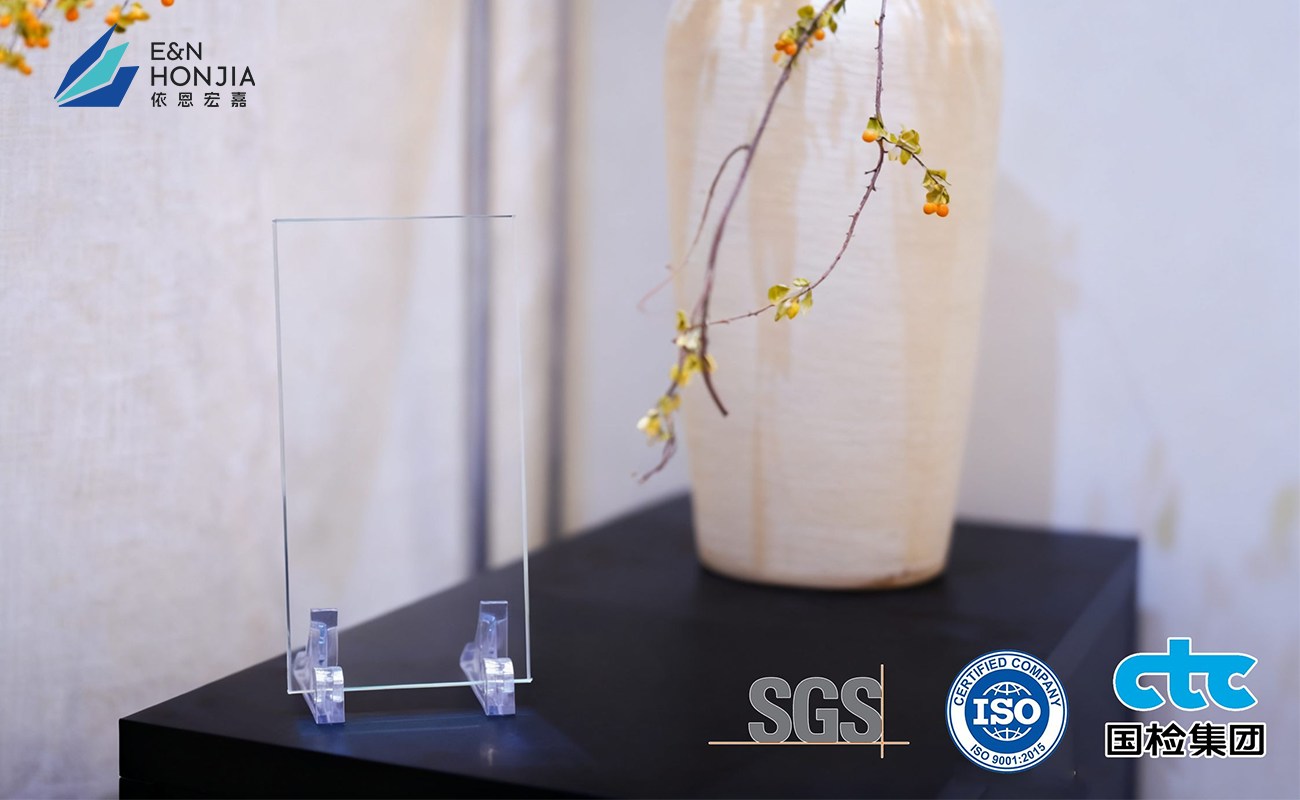
Choosing EVA interlayer film is not only about comparing price, thickness, or a high transparency claim. For a glass processor, the real question is whether the film can produce stable laminated glass on the actual production line and remain clear, bonded, and reliable after installation.
A good evaluation should cover the film before lamination, the finished glass after lamination, and the supplier's ability to provide consistent data and technical support. This matters especially for outdoor glazing, glass railings, skylights, shower enclosures, decorative glass, PDLC smart glass, and structures with fabric, mesh, or printed inserts.
EVA is a cross-linkable interlayer. During the correct heat and vacuum cycle, it bonds the glass layers and forms a stable network structure. However, the final result still depends on the selected EVA grade, glass cleanliness, vacuum performance, heating uniformity, holding time, cooling process, and the complexity of the laminated structure.
Start with the Right Test Plan
Not every application needs the same test package. A simple interior glass partition may focus on clarity, adhesion, and visual appearance. A skylight or exterior curtain wall requires additional checks for UV resistance, humidity, heat, edge durability, and long-term yellowing. Glass with PDLC film, fabric, wire mesh, or printed layers should also be checked for flow behaviour and compatibility.
The most practical approach is to divide testing into three stages:
| Stage | Main checks | Why it matters |
|---|---|---|
| Incoming EVA film | Thickness, appearance, width, storage condition | Confirms batch consistency before production |
| Trial laminated glass | Haze, adhesion, bubbles, gel content, edge appearance | Shows whether the film works with your equipment and glass structure |
| Durability and project tests | UV ageing, humidity, heat, impact, structural performance | Reduces risk before bulk purchasing or project delivery |
This sequence helps buyers avoid a common mistake: approving a film based only on a technical data sheet, without producing a real laminated glass sample.
1. Check Thickness, Appearance and Roll Consistency
Incoming inspection should begin with simple controls. Measure the film thickness at several positions across the roll, check the width, inspect the edges, and look for contamination, folds, visible particles, color variation, or surface damage.
For architectural laminated glass, 0.38 mm and 0.76 mm are common EVA thicknesses, but the correct build-up depends on the glass construction, safety requirements, insert thickness, and final application. A film that appears uniform on the roll may still behave differently during heating if its thickness or formulation varies between batches.
Ask the EVA interlayer film manufacturer to provide a batch-specific certificate of analysis. It should identify the production lot, thickness tolerance, storage guidance, shelf life, and the test conditions behind the listed values.
2. Test Light Transmittance, Haze and Yellowing
Optical quality is one of the first things a customer sees. Light transmittance shows how much visible light passes through the laminated glass. Haze measures light scattering, which can make clear glass look cloudy or dusty. Yellowing is usually assessed after ageing exposure through a yellowness index or color-change value.
For clear architectural glass, buyers often look for visible light transmittance above 90% and very low haze. However, the correct benchmark should be based on the complete glass construction, not the film alone. Glass type, coating, thickness, printed layers, mesh, and PDLC film can all affect the final result.
For example, E&N's HJ-AT high-flow extra-clear EVA lists visible light transmittance above 90.6% and haze below 0.29% under its stated test conditions. These figures are useful for comparison, but they should be treated as product-specific data rather than a universal pass requirement for every EVA application.
Use a haze meter or spectrophotometer on laminated glass samples. Compare unaged and aged specimens. If haze increases after UV or humidity exposure, the issue may relate to the EVA formulation, insufficient lamination, moisture, trapped air, or poor compatibility with an insert material.
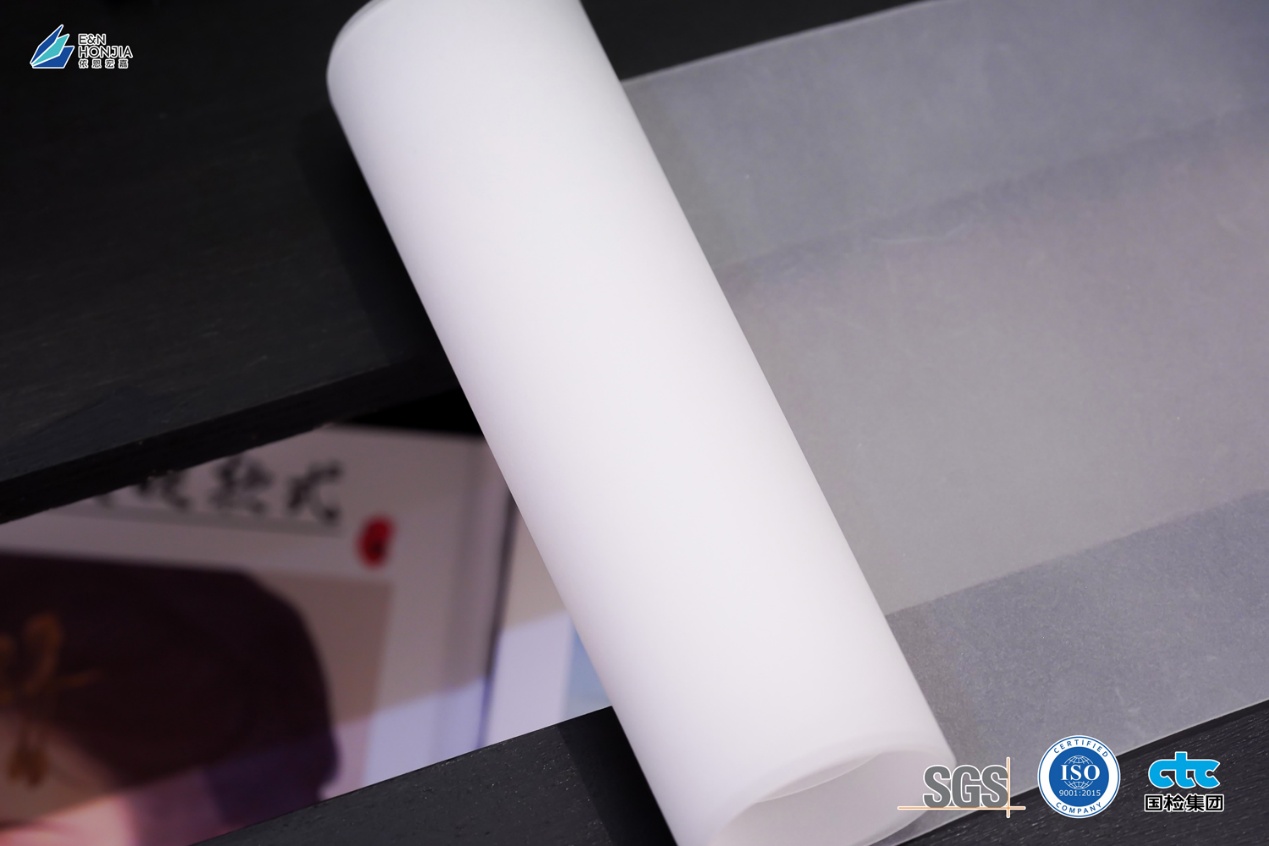
Extra Clear EVA Interlayer(High flow)
3. Confirm Tensile Strength and Elongation
Tensile testing measures how the EVA film stretches and resists breaking. It is useful for comparing film grades and checking whether curing has changed the material behaviour. Tensile strength alone does not prove that laminated glass will meet structural or safety requirements, but it is an important quality-control indicator.
A universal testing machine is normally used to measure tensile strength and elongation at break. The test report should clearly state whether the specimen was raw film or cured film removed after lamination. These two states can produce different results because EVA changes during cross-linking.
4. Measure Adhesion to Glass
Adhesion is central to laminated glass safety. When glass breaks, the interlayer should help retain fragments and reduce the chance of falling shards. Poor adhesion can lead to edge separation, delamination, optical defects, and complaints after installation.
Peel testing or bond-integrity testing can be used to evaluate adhesion between EVA and glass. The sample should be laminated under the same temperature, vacuum, and holding conditions planned for production. Testing a film without reproducing the intended lamination cycle gives limited value.
A high adhesion value is not automatically better in every situation. The aim is a stable, suitable bond for the glass construction and application. For outdoor projects, check adhesion again after humidity, heat, and UV exposure. If the bond changes significantly after ageing, the laminate may not be suitable for the intended environment.
5. Verify Gel Content and Cross-Linking
Gel content is commonly used to assess the degree of cross-linking after lamination. It helps confirm whether the EVA has cured sufficiently during the process. Too little cross-linking can contribute to low heat resistance, creep, weak durability, poor edge stability, or changes in appearance over time.
Cross-linking should be evaluated on the cured EVA, not only on the raw film. E&N's outdoor-grade EVA specifications list cross-linking above 85% for selected products under stated processing conditions. That figure is a useful reference point, but the correct target should follow the selected EVA grade and the supplier’s validated lamination instructions.
Do not assume that increasing temperature or extending holding time will always improve cross-linking. Excess heat can affect optical quality, decorative inserts, coatings, or sensitive smart-film structures. The recommended approach is to run controlled trial laminations and record temperature, vacuum, time, cooling, and final gel-content results.
6. Run Heat, Humidity and UV Ageing Tests
Durability testing is especially important for exterior laminated glass. ISO 12543-4 covers durability test methods for laminated glass exposed to high temperature, humidity, and radiation. ASTM C1914 is also relevant for bake and boil testing of laminated glass, particularly when checking bubble formation and visual stability under controlled heat exposure.
A practical durability programme may include:
- High-temperature exposure
- Boil testing
- High humidity exposure
- UV accelerated ageing
- Thermal cycling
- Visual inspection for bubbles, haze, color change, and delamination
After each exposure, inspect the center area and the edges. Note whether bubbles appear, whether the edges whiten, whether haze increases, and whether the glass-to-interlayer interface changes.
A boil or bake result should not be used as the only quality decision. ASTM C1914 notes that these tests are useful for evaluating bubble formation and laminate stability, but they do not determine impact resistance, shard retention, or edge stability by themselves. That distinction matters when choosing EVA for railings, canopies, and structural glazing.
7. Test Flow and Wet-Out for Complex Laminated Glass
Flow behaviour becomes important when the laminated glass contains fabric, metal mesh, decorative inserts, wire, printed layers, or PDLC smart film. A low-flow EVA may offer better edge control in simple structures. A higher-flow EVA may help wet the glass surface and fill suitable textured or complex areas.
High flow is not automatically the better choice. Too much flow can affect edge control, while too little flow can leave dry areas or trapped air around inserts. The right grade depends on the glass structure, film thickness, furnace, vacuum performance, and heating cycle.
For complex projects, produce a trial panel before placing a bulk order. Review the sample under normal lighting and transmitted light. Check the edges, insert boundaries, air bubbles, and final visual uniformity. E&N offers different EVA grades for clear, decorative, indoor, and outdoor laminated glass applications.
8. Select Tests by Application
| Application | Priority tests |
|---|---|
| Interior partitions and furniture | Haze, adhesion, visual appearance |
| Decorative glass and fabric inserts | Flow, wet-out, bubbles, compatibility |
| PDLC smart glass | Low-temperature compatibility, optical clarity, edge quality |
| Shower enclosures and exposed edges | Humidity, water absorption, edge appearance |
| Skylights and exterior windows | UV, humidity, boil, yellowing, adhesion |
| Railings, façades and canopies | Adhesion, impact, post-breakage behaviour, structural design review |
For projects involving high structural loads, long-term post-breakage support, or demanding wind conditions, compare EVA with SGP or ionoplast interlayers as part of the engineering decision. E&N's application guidance explains where EVA and SGP are typically used in laminated glass projects.
How to Evaluate an EVA Interlayer Film Manufacturer
Before ordering bulk material, request more than a brochure. A reliable supplier should be able to provide:
- Product technical data sheet
- Batch-specific COA
- Storage and shelf-life guidance
- Recommended lamination cycle
- Optical test results
- Adhesion and cross-linking data
- UV, heat, humidity, or boil-test information where relevant
- Sample rolls for local trial lamination
- Technical support for bubbles, delamination, and process adjustment
- Custom thickness, width, color, or flow options when needed
The most useful supplier is not simply the one with the highest stated number. It is the one that can explain what the number means, how it was tested, whether the same performance applies to your glass structure, and what to do if the first sample needs adjustment.
FAQ
Q1. Can raw EVA film testing replace laminated glass testing?
A: No. Raw-film checks are useful for incoming inspection, but adhesion, bubbles, haze, cross-linking, and durability should be assessed on laminated samples.
Q2. What causes bubbles in EVA laminated glass?
A: Common causes include moisture, glass contamination, insufficient vacuum, trapped air, unsuitable heating, and incomplete wet-out around inserts.
Q3. Is a high-flow EVA film always better?
A: No. High-flow EVA can help with complex structures, but lower-flow EVA may provide better control for simpler glass constructions.
Q4. Which test reports should I request before bulk purchasing?
A: Request optical, adhesion, cross-linking, durability, batch traceability, storage, and recommended processing information.
Q5. Should every project use the same acceptance criteria?
A: No. Acceptance criteria should reflect the glass structure, local standards, exposure conditions, and safety requirements.
Conclusion
The best way to evaluate EVA interlayer film is to combine supplier data with a controlled local trial. Use your own glass, equipment, temperature cycle, vacuum process, and intended inserts. Then compare clarity, adhesion, bubbles, edge appearance, and ageing performance before confirming a bulk order.
For help selecting an EVA grade for your glass structure, review E&N's EVA interlayer selection guide or request product samples and technical support.