
How Strong Is Laminated Glass? Breaking Strength, Impact Resistance and Post Breakage Safety Explained
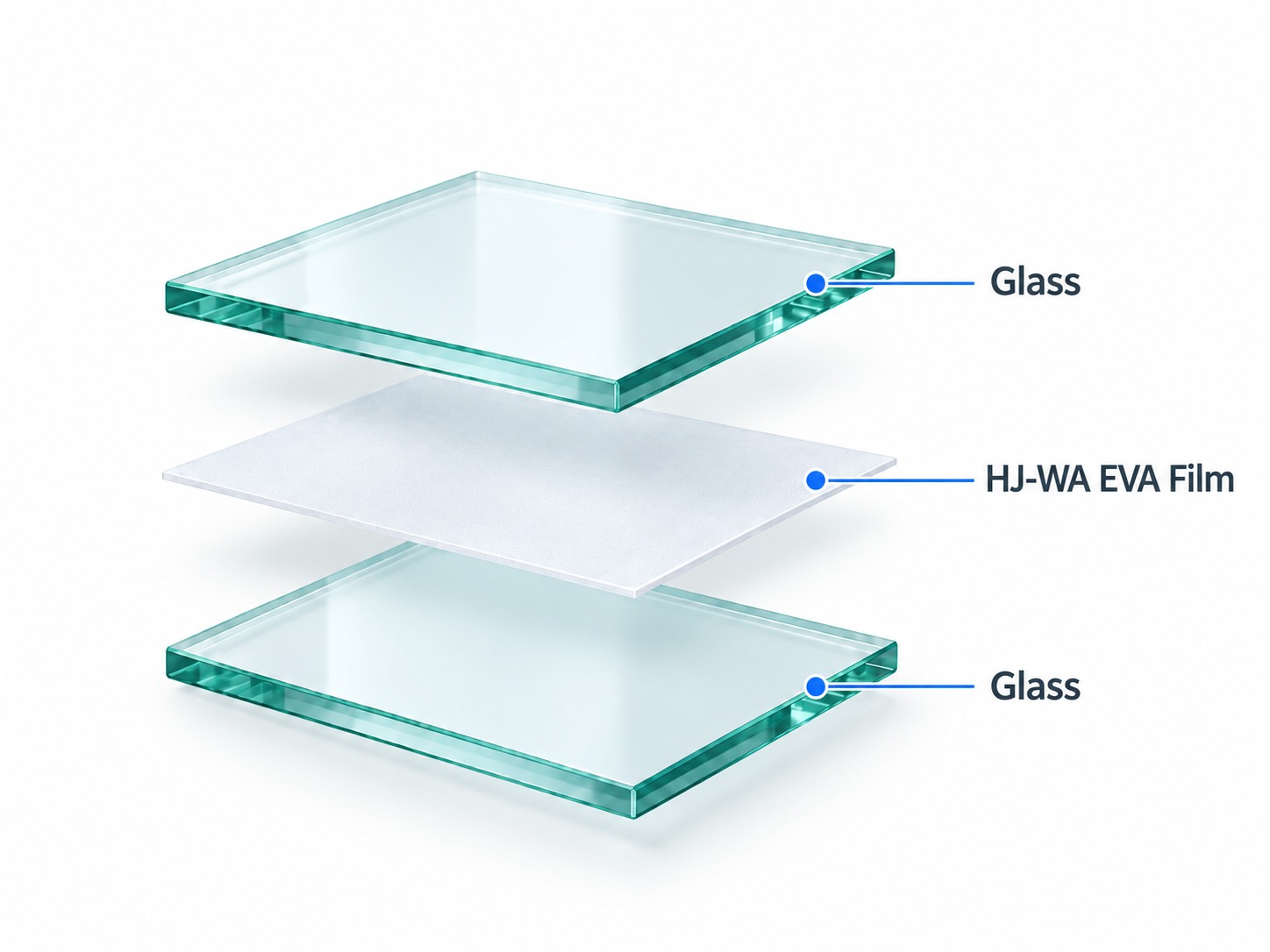
The short answer is that laminated glass is not automatically harder to break than ordinary glass. If two products use glass plies of the same type and thickness, adding an interlayer does not turn annealed glass into tempered glass. Its key advantage appears after a crack begins. The bonded interlayer holds fragments, reduces fallout and makes the opening harder to penetrate.
"Strong" can describe four different properties:
- the load at which a glass ply breaks
- resistance to a person or object striking the panel
- resistance to penetration after the first crack
- the ability to remain in place after one or more plies break
A useful specification considers all four. A claim such as "laminated glass is five times stronger" does not tell a buyer enough to select a safe construction.
What Gives Laminated Glass Its Strength?
Laminated glass uses two or more glass plies bonded by a polymer interlayer. Common choices include PVB, EVA interlayer and a stiffer ionoplast interlayer for structural applications.
The glass carries most of the load before breakage. Its thickness, heat treatment, surface quality and edge condition influence when it cracks. The interlayer bonds the plies, transfers some shear and retains fragments after cracking. The frame and fixings affect whether the broken panel stays in place.
Nominal thickness alone is not a strength rating. Two laminates can behave differently if one uses annealed glass with a flexible interlayer and the other uses heat strengthened glass with ionoplast. Panel size, support, holes, temperature and load duration also affect performance.
Breaking Strength: Will Laminated Glass Crack?
Glass is strong in compression but sensitive to tensile stress at its surface and edges. Scratches, chips, poor drilling and hard contact at the edge create stress concentrations.
Annealed laminated glass should not be treated as several times stronger than annealed monolithic glass of comparable thickness. A structural engineering study found approximately the same failure strength for both at room temperature. At 77°C, the measured strength of laminated specimens fell to about 75 percent of their room temperature value. This shows why exterior designs cannot rely on room temperature claims.
Heat treatment changes the glass. Heat strengthened and fully tempered plies have surface compression that helps them resist higher bending stress before fracture. In the same test program, laminated specimens using heat strengthened and fully tempered plies reached roughly three and five times the strength of the annealed monolithic reference.
These are comparative results, not universal design multipliers. Project calculations still govern the final glass configuration.
How Does Laminated Glass Respond to Impact?
A hard impact may create a spiderweb crack. Energy is absorbed through crack growth, interlayer stretching and adhesion. If the interlayer remains intact and bonded, the fragments stay attached instead of falling freely.
This response reduces laceration and fallout risk, but it does not make every laminate burglary resistant, hurricane resistant or bullet resistant. Those claims require tested systems with defined glass plies, interlayer, panel size, frame and anchorage.
For US architectural safety glazing, 16 CFR Part 1201 includes a Category II impact level of 400 foot pounds, about 542 joules, for products and locations within its scope. ANSI Z97.1 is another commonly specified impact standard.
ASTM C1172 covers quality requirements for laminated architectural flat glass and recognizes uses including safety, security, hurricane, blast and sound reduction glazing. In Europe, EN 12600 classifies pendulum impact performance.
A purchase specification should therefore name the required standard and classification rather than simply request "strong laminated glass."
What Happens After Breakage?
Post breakage behavior is where lamination provides its clearest safety benefit. Fragments can remain attached to the interlayer, forming a cracked sheet that may continue to span between supports. The panel can reduce falling glass and delay access through the opening.
Residual capacity is not guaranteed. It depends on:
- fragment size and crack pattern
- adhesion between the glass and interlayer
- interlayer stiffness
- temperature
- load duration
- edge support and framing
A warm interlayer is generally softer than the same material at room temperature. If an edge pulls out of its frame, fragment retention alone will not preserve the barrier.
Overhead glazing and frameless railings need particular attention because failure can create a fall or falling object hazard. The responsible engineer should check the intact state and a defined broken state.
The project brief should state whether the panel must retain its own weight, how long it must remain stable and what should happen when one or all glass plies break.
Laminated Glass vs Tempered Glass
The better choice depends on the required behavior before and after breakage.
| Buyer question | Laminated annealed glass | Monolithic tempered glass | Tempered laminated glass |
|---|---|---|---|
| Before breakage | Similar ply strength to comparable annealed glass | Commonly about four to five times the bending strength of annealed glass | Higher initial strength from tempered plies |
| Break pattern | Larger fragments held by the interlayer | Small granular fragments leave the opening | Small fragments remain attached, subject to adhesion and support |
| Barrier after breakage | Can remain as a cracked barrier | Usually loses the barrier | Combines higher initial strength with fragment retention |
| Typical reason to choose | Safety, acoustic control, UV control or security layering | Mechanical and thermal stress resistance | Railings, façades and canopies after engineering review |
Tempered glass is usually harder to break. Laminated glass is designed to manage the consequences of breakage. Tempered laminated glass can address both requirements, but the complete assembly still needs to be verified. The glass, interlayer, frame and fixing method must be considered together.
EVA or Ionoplast?
Do not select an interlayer from a single "strongest" claim. Start with exposure, structural demand, appearance and processing requirements.
EVA
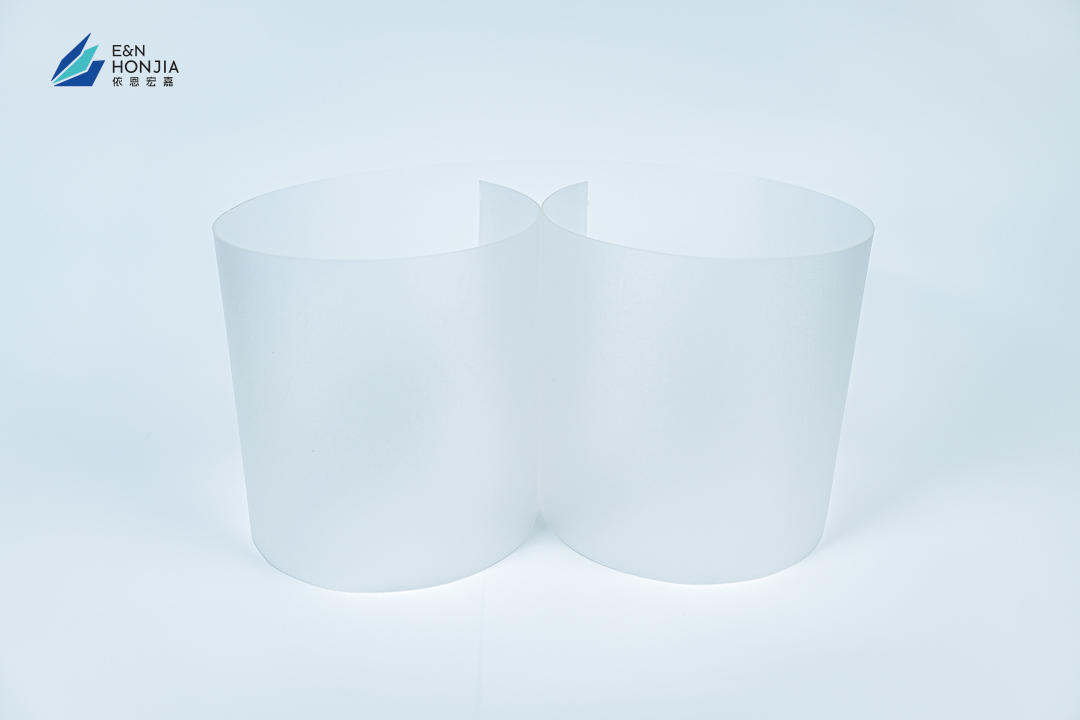
EVA suits architectural, decorative and encapsulation applications. Its processing flexibility helps when laminating fabrics, metal mesh, colored layers and some PDLC constructions.
E&N supplies indoor and outdoor EVA grades. Buyers should match the grade to humidity, UV exposure, edge conditions and processing equipment rather than use one EVA specification for every application.

Ionoplast
Ionoplast is stiffer and can transfer more shear between glass plies under suitable conditions. It is often considered for:
- exposed edge glazing
- large façade panels
- structural glass fins
- frameless railings
- canopies and skylights
- multiple ply structural glass
These applications may require better residual stability after breakage. However, temperature, load duration, glass treatment and support conditions remain part of the design.
A Practical Buying Checklist
Before asking a laminated glass manufacturer for a quotation, provide the following information:
- Application and installation location
- Panel dimensions and support method
- Glass type, thickness and number of plies
- Design wind, line, point or impact loads
- Indoor or outdoor exposure
- Expected service temperature
- Covered or exposed glass edges
- Sealants and other materials contacting the interlayer
- Required safety, security or structural classification
- Optical, color, acoustic, UV or privacy requirements
An indoor decorative partition may prioritize clarity, sound reduction and reliable encapsulation. EVA can be evaluated through a sample lamination. A frameless outdoor balustrade presents a different risk. Its specification should address line load, human impact, edge exposure and residual behavior as part of the complete system. A stiffer ionoplast interlayer may be considered, but its suitability must be confirmed against the panel dimensions, fixings and applicable regulations.
How E&N Supports Laminated Glass Projects
E&N HONJIA supports interlayer trials and finished laminated glass development. Its published production base includes three EVA production lines and one dedicated ionoplast line, with monthly capacities of approximately 400 tons of EVA and 100 tons of ionoplast.
Material and laminated glass evaluation can include:
- light transmittance
- haze
- peel strength
- weather resistance
- impact resistance
- acoustic performance
- bonding and edge inspection
For a buyer, the useful result is not simply a sample that looks clear. The sample should be connected to a recorded film grade, glass configuration and processing condition that can be repeated during production.
This is particularly important when changing glass thickness, interlayer thickness, furnace settings or panel size. A lamination recipe that works for one configuration should not be assumed to work for every project.
FAQ
Q1. Is laminated glass stronger than normal glass?
A: It is safer after breakage, but annealed laminated glass is not automatically much harder to crack than annealed glass of comparable thickness. Higher breaking strength usually comes from heat treated plies, a suitable glass configuration and correct support.
Q2. Can laminated glass stop a break in?
A: It can delay penetration because the interlayer holds cracked glass in the opening. Meaningful forced entry resistance requires a tested multiple layer glazing and framing system. Standard safety laminate should not be sold as security glazing without relevant evidence.
Q3. Does laminated glass stay standing when broken?
A: It can, but not under every condition. The interlayer, crack pattern, temperature, panel size and fixing method control residual stability. Railings and overhead panels need a defined broken state assessment.
Q4. Is tempered laminated glass stronger?
A: Tempered laminated glass normally has higher breaking strength than annealed laminated glass because the glass plies have been heat treated. Lamination then helps retain the tempered fragments after breakage.
Conclusion
Laminated glass is not always harder to crack than glass of the same type and thickness. Its strength lies in safer failure: the interlayer holds broken pieces, reduces fallout and helps the panel remain a barrier. Tempered laminated glass can add higher strength. Need the right build-up? Send E&N your panel size, application, support details and required standard for a recommendation and quote.