What Is the Adhesion Mechanism of EVA on Glass? A Comprehensive Analysis
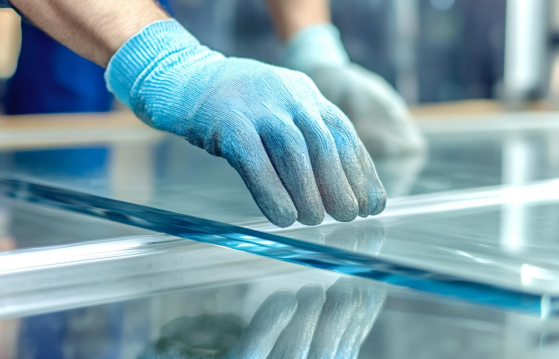
In the realms of modern architecture and high-end interior design, the safety and durability of laminated glass depend almost entirely on the strength of the "bond"—or adhesion—between the thin interlayer film (specifically, the EVA interlayer) and the glass substrates.
If this adhesion performance falls short, the finished glass product will inevitably suffer from a dreaded "trio of defects": blistering, delamination, and edge whitening. These flaws not only ruin the aesthetic appeal of the glass but can also pose serious structural safety risks. Indeed, the ability to achieve flawless adhesion between EVA and glass serves as the critical technical watershed distinguishing high-end interlayers from their lower-quality counterparts.
This article will tackle a core question in materials science head-on: What is the adhesion mechanism of EVA on glass, and how does it impact the performance of laminated glass? We will provide a comprehensive breakdown of this complex physicochemical process—ranging from molecular structure to the intricacies of the lamination process.
The Structural Basis of the EVA Interlayer
To understand adhesion, one must first understand the material itself.
Chemical Composition of EVA
EVA stands for Ethylene Vinyl Acetate copolymer. As the name suggests, it consists of two primary components:
Ethylene: This component provides the material's fundamental structural backbone and crystallinity.
Vinyl Acetate (VA): This is the key component that imparts polarity to the EVA. The specific percentage of VA content directly determines the film's adhesion strength, flexibility, and flow characteristics at elevated temperatures.
EVA Behavior During the Lamination Process
Inside a vacuum-heated lamination furnace (typically operating at 120–150°C), the EVA—initially in a solid state—gradually softens and transitions into a viscous fluid state. At this stage, it begins to flow much like water, actively filling the microscopic pores on the glass surface that are invisible to the naked eye. During this process, it engages in a fascinating "chemical interaction" with the glass surface, ultimately forming an inseparable interfacial bond.
The Core Adhesion Mechanism of EVA on Glass
The adhesion of EVA to glass is not merely a simple matter of "sticking together"; rather, it is a complex "quadruple-layered symphony" of interactions, progressing from the superficial to the profound.
Physical Adhesion
This constitutes the foundational step. When molten EVA comes into contact with the glass surface, the proximity of the molecules generates Van der Waals forces. Although these forces are relatively weak and somewhat reversible, they serve as the prerequisite for establishing initial adhesion.
Mechanical Interlocking
While a glass surface may appear smooth to the naked eye, under a microscope, it reveals a landscape teeming with microscopic roughness and pores. The EVA, while in a viscous flow state, permeates these micropores; upon cooling and re-solidification, it acts like countless tiny anchors wedged tightly into rock crevices, creating a powerful "anchoring effect." This mechanism plays a crucial role in enhancing the physical bond strength.
Chemical Bonding
True, steadfast adhesion stems from bonding at the chemical level. The primary constituent of the glass surface is silicon dioxide, which features an abundance of silanol groups (Si–OH). The polar groups within the EVA molecules—specifically the ester groups found in the vinyl acetate (VA) component—engage in strong interactions with these surface silanol groups, forming hydrogen bonds and other polar interactions. High-quality EVA interlayers incorporate specialized coupling agents into their formulations to reinforce this chemical bonding, thereby ensuring stable, long-term adhesion that endures for decades.
Crosslinking Mechanism
Beyond its bonding with the glass surface, the internal structural integrity of the EVA itself is equally critical. During the high-temperature lamination process, crosslinking agents present in the formulation are activated; these agents catalyze chemical crosslinking reactions among the linear EVA molecules, resulting in the formation of a three-dimensional network structure (thermosetting). This transformation—shifting the material from a "thermoplastic" to a "thermoset" state—significantly boosts its heat resistance and cohesive strength, thereby fundamentally preventing creep and delamination over the course of long-term use.
Key Factors Influencing EVA-on-Glass Adhesion Performance
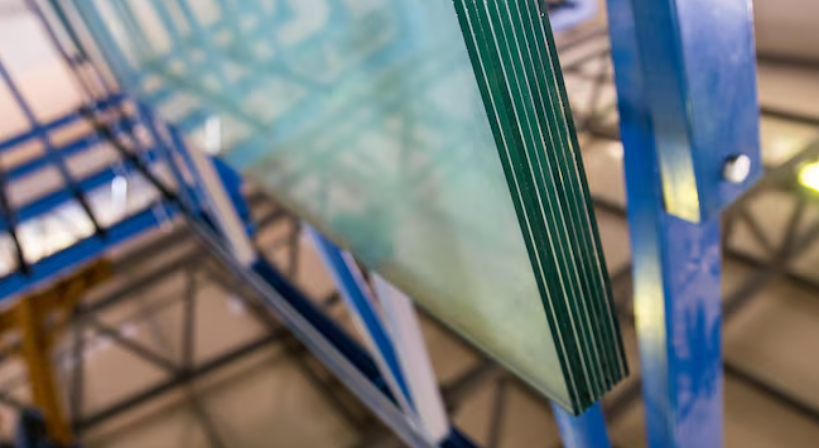
While the theory is compelling, in the reality of production, this "quartet" of bonding mechanisms is often disrupted by the following factors:
Glass Surface Condition
If the glass surface retains uncleaned cutting oils or dust particles, it is akin to placing a layer of sand between the film and the glass; under such conditions, physical adsorption and mechanical interlocking become impossible. Furthermore, if the surface energy of the glass is too low, the molten EVA will be unable to adequately "wet" the glass surface.
EVA Formulation Design
The proportion of VA content, the type and quantity of cross-linking agents, and the selection of stabilizers—each of these elements profoundly influences the final adhesion result. Products offered by different glass film suppliers on the market often feature vastly different formulation designs. Inferior films frequently sacrifice the quality of polar groups or cross-linking agents in an effort to reduce costs.
Lamination Process Parameters
Even the finest film cannot withstand the rigors of a flawed process.
Temperature Profile: If the temperature is too low, the EVA cannot flow sufficiently to fill voids, and the degree of cross-linking remains inadequate; conversely, if the temperature is too high, it may lead to thermal decomposition of the material or the generation of volatile gases.
Vacuum Evacuation: If the vacuum duration is insufficient, air remaining at the interface will not only form bubbles but also obstruct direct contact between the EVA and the glass, resulting in localized "adhesion blind spots."
Environmental Factors
Humidity acts as a silent killer. If the ambient humidity is excessively high during the lamination process, moisture will preferentially occupy the silanol groups on the glass surface; this prevents the EVA from forming hydrogen bonds with the glass, thereby severely compromising the interfacial bonding strength.
The Adhesion Advantages of EVA Interlayers in Laminated Glass
When examining the mainstream interlayers currently available on the market, EVA demonstrates unique competitiveness—particularly when compared against PVB.
Table 1: Adhesion & Performance Comparison: EVA vs. Standard PVB
| Feature | EVA Interlayer (Cross-linked) | Standard PVB Interlayer | Why it Matters for Laminated Glass |
| Moisture Absorption | Very Low (Hydrophobic) | High (Hydrophilic) | EVA prevents edge delamination in wet environments (e.g., bathrooms, outdoor canopies). |
| Adhesion to Inserts | Excellent | Poor | EVA flows better to encapsulate fabrics, metal meshes, or PDLC films without bubbles. |
| Cross-linking | Yes (Thermoset) | No (Thermoplastic) | EVA offers superior long-term thermal stability and resists creeping under continuous load. |
| Processing Sensitivity | Medium | High | EVA is less sensitive to ambient humidity during the lay-up process, making manufacturing more forgiving. |
Precisely because of these advantages, EVA interlayers have become the material of choice for high-end interior decorative glass, photovoltaic glass encapsulation, and various types of custom-laminated glass products.
How to Enhance EVA-on-Glass Adhesion Performance?
Having understood the underlying mechanisms and influencing factors, how can processing facilities improve their adhesion yield rates in day-to-day production? 6.1 Optimize Glass Surface Treatment
Always use pure water (deionized water or RO water) for the final glass cleaning step.
If conditions permit—particularly for specialty coated glass with extremely low surface energy—consider utilizing plasma or corona treatment to activate the surface.
Select High-Quality EVA Interlayers
This is the most critical step. Rather than constantly worrying during production, it is better to eliminate risks at the source. Choose premium films characterized by a stable cross-linking system, a low-volatility formulation, and exceptional transparency.
For instance, the Clear EVA Interlayer offered by E&N (EnevaGlass)—a professional manufacturer of polymer materials — features a formulation validated by tens of thousands of hours of accelerated aging tests. By precisely controlling the VA content and cross-linking system, E&N’s EVA films achieve extremely strong chemical bonding with glass at relatively lower flow temperatures, while simultaneously ensuring a light transmittance rate exceeding 91% and excellent resistance to yellowing.
Control the Lamination Process
Establish a stepped temperature-rise profile, allowing for ample vacuum degassing time during the phase when the film has softened but has not yet begun to cross-link (typically between 60°C and 80°C).
Ensure that sufficient time is allotted during the high-temperature holding phase (typically 130°C to 135°C) to allow the cross-linking reaction to complete thoroughly (achieving a gel content of > 80%).
Partner with a Professional Glass Film Supplier
An outstanding glass film supplier offers more than just materials; they provide a comprehensive solution package. Based on your specific equipment type, local climate conditions, and glass structure, they can provide customized recommendations for processing parameters as well as supporting data from long-term weathering tests.
The Direction of EVA Bonding Technology
The field of materials science is ever-evolving. Looking ahead, EVA bonding technology is undergoing a profound evolution in the following directions:
Enhanced Molecular Polarity Design: Further strengthening chemical bonding capabilities with specialized substrates (such as various Low-E coatings) without compromising transparency.
Nanoscale Interface Optimization: Utilizing nanoscale additives to create a denser transition layer at the glass-film interface, thereby effectively blocking moisture ingress. Enhanced UV Resistance: By incorporating a novel UV absorber system, the goal is to achieve an outdoor service life exceeding 20 years, thereby meeting the demands of higher-security laminated glass applications.
FAQ
Q1: What is the adhesion mechanism of EVA on glass?
Simply put, it is a synergistic interplay of four distinct mechanisms: "physical adsorption," "micro-mechanical interlocking," "chemical hydrogen bonding," and "internal 3D cross-linking reactions."
Q2: Why does EVA bond well to glass?
This is because EVA molecules contain polar Vinyl Acetate (VA) groups. These groups act like keys, fitting precisely into the "locks"—the abundant silanol (Si–OH) groups—present on the glass surface to form stable hydrogen bonds.
Q3: What affects EVA interlayer adhesion?
The three most critical factors are: the cleanliness of the glass surface (specifically the presence of oil stains or moisture), the quality of the EVA formulation itself (specifically the content of polar groups and cross-linking agents), and the lamination process (specifically whether air evacuation is thorough and whether the temperature is sufficient to ensure complete cross-linking).
Q4: Is EVA better than other interlayers?
EVA offers irreplaceable advantages in terms of extremely low moisture absorption (preventing edge whitening), excellent compatibility with decorative materials, and the processing flexibility of not requiring an autoclave.
Table 2: Troubleshooting Common Adhesion Failures
| Defect Observation | Primary Cause | Solution Strategy |
| Micro-bubbles at the edge | Poor vacuum duration / Moisture on glass. | Extend cold vacuum time; ensure glass is completely dry after washing. |
| Large air pockets in center | Heating ramp rate is too fast. | Use a stepped heating profile; allow more time for flow before edges seal. |
| Delamination after months | Low cross-linking degree / Poor quality EVA. | Increase holding time at max temperature; switch to a reliable Glass Film Supplier like E&N. |
Conclusion
The bonding of EVA to glass is by no means a simple physical attachment; rather, it is a perfect symphony of molecular-level adsorption, micro-mechanical interlocking, deep chemical bonding, and the stabilization of internal cross-linked structures.
For any manufacturer aspiring to produce high-quality laminated glass, a profound understanding of this microscopic mechanism—and using it as a basis to optimize pre-treatment processes and strictly control lamination parameters—is the only sure way to avoid post-sales disasters. Furthermore, choosing a professional glass film supplier like E&N—one that strives for excellence in material formulation—serves as the most solid foundation for ensuring your products possess top-tier bonding strength and long-term durability.