What Is Decorative Laminated Glass in 2026
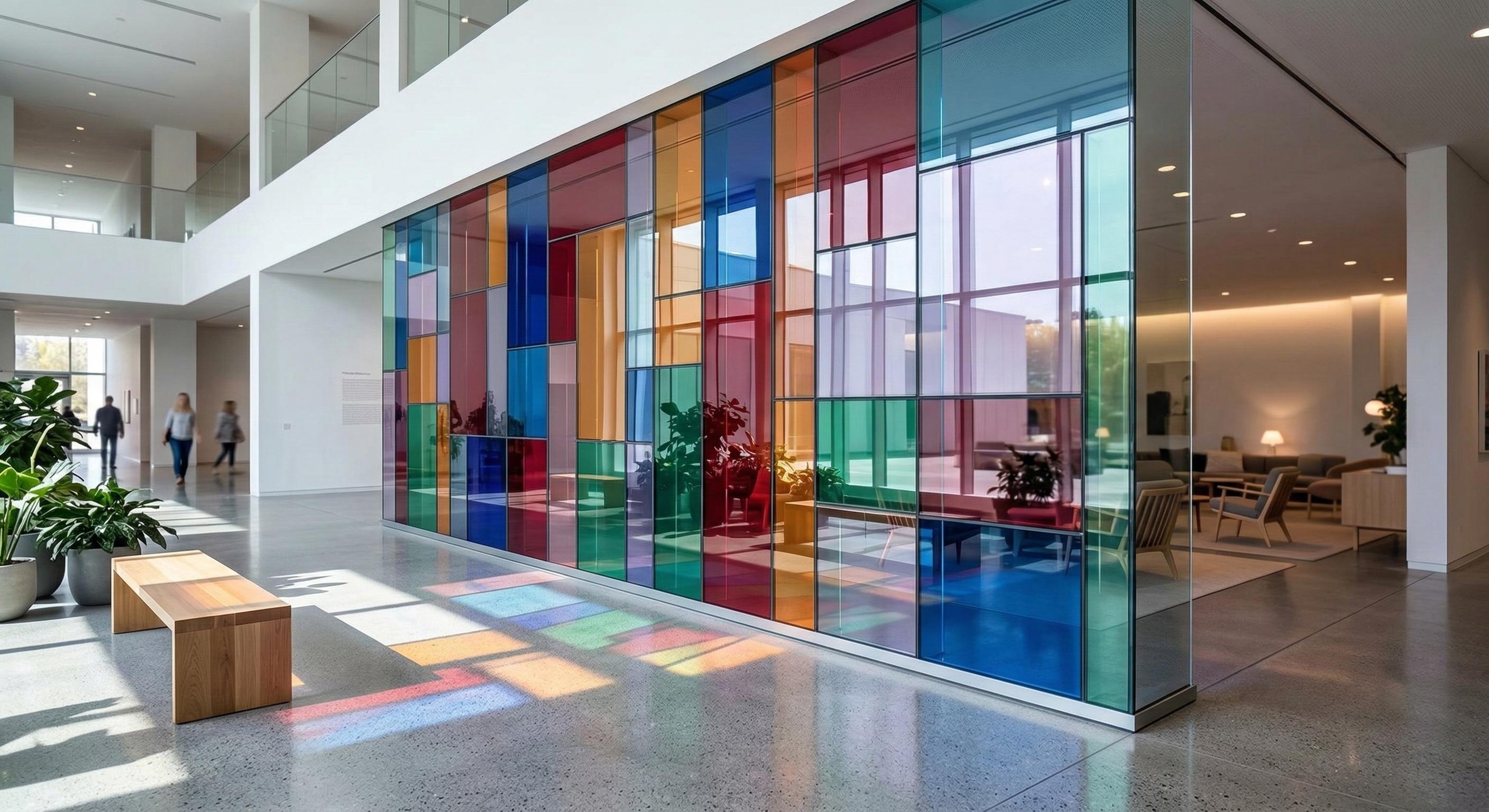
As we step into 2026, the global fields of architecture and interior design are undergoing a profound aesthetic evolution. Designers and property owners are no longer content with mere physical spatial division; instead, they are pursuing the ultimate fusion of "safety + aesthetics." Driven by this trend, decorative laminated glass has emerged—at an unprecedented pace—as one of the fastest-growing segments with the greatest commercial potential within the entire glass industry.
The traditional stereotype of glass as a cold, monotonous, and rigid material is being shattered. Decorative laminated glass not only perfectly inherits the superior safety performance of traditional laminated glass—such as explosion resistance and impact resistance—but also achieves a stunning array of diverse visual effects through its magical internal *interlayer*. From vibrant colors to rustic silks, from metallic textures to dynamic smart privacy features, the glass itself has transformed into an irreplaceable work of art.
This brings us to the core question currently garnering the most attention within the industry: What is decorative laminated glass in 2026, and why is it so widely used?
In this article, we will provide a comprehensive and in-depth analysis of this revolutionary material—which is transforming modern spaces—covering everything from materials science and processing techniques to future application trends.
What Is Decorative Laminated Glass?
Basic Definition
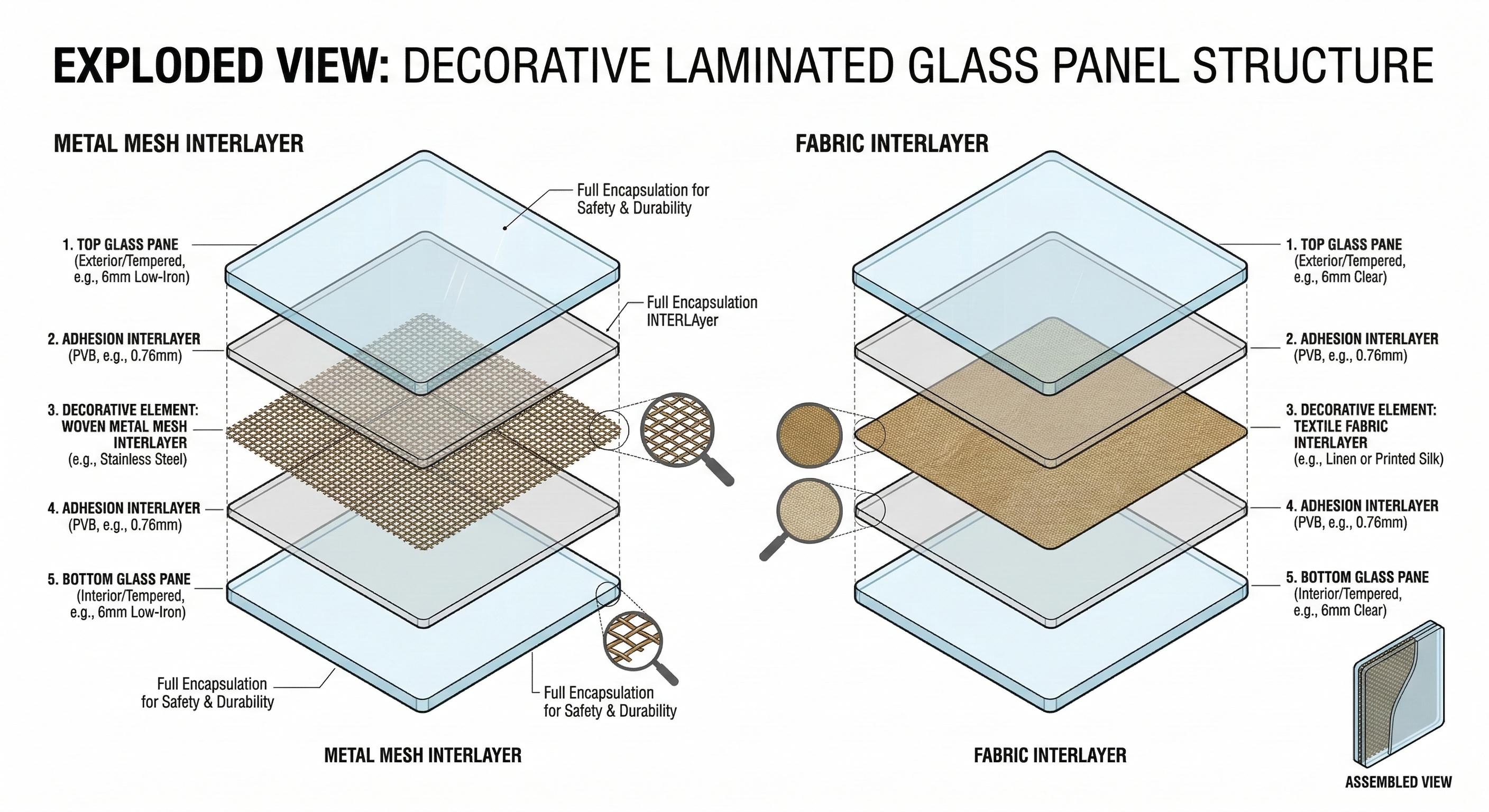
Decorative laminated glass is a highly customizable type of composite safety glass. Structurally, it consists of two or more layers of glass panes with a decorative interlayer—featuring specific colors, textures, or materials—embedded between them. These layers are then fused into a single cohesive architectural material using specialized heating and pressurizing lamination equipment (such as vacuum heating furnaces or autoclaves).
The Difference Between Decorative and Standard Laminated Glass
Although both types share the same fundamental manufacturing principles, their underlying design philosophies are distinctly different. To clearly illustrate the differences between the two, we have compiled the following comparative table:
Table 1: Standard vs. Decorative Laminated Glass
| Feature | Standard Laminated Glass | Decorative Laminated Glass |
| Primary Purpose | Safety, Security, Sound Insulation | Aesthetics, Privacy, Design + Safety |
| Interlayer Type | Clear PVB or Clear SGP | Colored EVA, Fabric, Mesh, PDLC, Printed Films |
| Visual Appearance | Transparent and Neutral | Highly customizable (Colors, Textures, Patterns) |
| Target Application | Exterior Windows, Windshields | Interior Partitions, Shower Doors, Art Facades |
The Core Structure of Decorative Laminated Glass
The Multifaceted Role of the Interlayer
In decorative glass applications, the interlayer serves as far more than a mere bonding agent; it shoulders a "three-in-one" responsibility:
Physical Bonding: It firmly bonds the glass panes to the decorative materials, ensuring that fragments remain adhered rather than scattering in the event of breakage.
Visual Aesthetics: It directly determines the glass's color, light transmittance, and surface texture.
Enhanced Functionality: It provides additional performance benefits, such as blocking 99% of UV radiation, sound insulation, and vibration damping.
Common Interlayer Types
- EVA Interlayer (Ethylene-Vinyl Acetate): This is the undisputed leader in the field of decorative glass. It boasts exceptional transparency and exhibits excellent flow characteristics when molten, allowing it to perfectly encapsulate and embed a wide variety of delicate decorative materials. Glass produced using this film is commonly referred to as "EVA glass."
- PVB Interlayer (Polyvinyl Butyral): This is the most traditional type of structural bonding film. It is well-suited for simple, solid-color decorative applications (e.g., utilizing colored PVB films) but is generally unsuitable for embedding materials such as fabrics or metal meshes, as the high pressure applied during the autoclave process can crush or damage these decorative elements.
- Functional Interlayers: Examples include PDLC smart films, which allow for electrically switchable transparency, or custom-printed films featuring high-resolution patterns.
Main Types of Decorative Laminated Glass
Thanks to advancements in manufacturing processes, the range of decorative glass options available in 2026 is vast, capable of bringing almost any designer's vision to life.
Colored Laminated Glass
By layering single or multiple colored interlayers, it is possible to create glass panels in hundreds of different Pantone shades. This type of glass features uniform coloration that is completely fade-resistant, making it an ideal choice for areas requiring strong visual guidance or focal points.
Fabric/Wire Mesh Laminated Glass
This represents a perfect fusion of Eastern aesthetics and modern manufacturing technology. Natural silks, linen fabrics, or industrial-style stainless steel woven meshes are embedded within the glass structure. Beyond enhancing artistic expression, the inclusion of metal mesh further improves the glass's resistance to impact and vandalism.
Printed Laminated Glass
Utilizing high-precision digital printing technology, patterns, color gradients, and even brand logos are printed onto a special PET film, which is then sandwiched between two layers of glass. This method offers greater durability than traditional glass surface screen printing, as the design is permanently encapsulated within the glass structure, rendering it impervious to scratches.
Smart Decorative Glass
This incorporates a PDLC liquid crystal film as an integral part of the decorative laminate structure. Under normal conditions, it serves as an enigmatic, milky-white decorative wall; however, the moment power is applied, it instantly transforms into a transparent pane of glass. It represents the ultimate fusion of technology and art.
Why is the EVA Interlayer the Preferred Choice for Decorative Glass?
Within the vast glass industry, whenever complex decorative laminates are involved, engineers and processing plants invariably turn to the EVA interlayer. The following are the core physical properties that enable EVA glass to dominate the decorative sector.
Table 2: Why EVA Dominates Decorative Application
| Technical Factor | Performance of EVA Interlayer | Impact on Decorative Glass |
| Processing Pressure | Low (Vacuum Bag Process) | Does not crush delicate inserts like silk or leaves. |
| Melt Flow Index | High (Flows like a thick liquid) | Perfectly fills gaps in wire meshes, preventing bubbles. |
| Moisture Resistance | Extremely High (Hydrophobic) | No edge delamination, ideal for wet areas like showers. |
| Curing Mechanism | Thermoset (Cross-linking) | Long-term stability, resists heat creeping over time. |
Greater Inclusivity and Compatibility
PVB lamination requires the use of an autoclave to apply immense pressure—typically exceeding 10 kg/cm²—which can instantly crush delicate dried leaves or tear fine silk fabrics. In contrast, the EVA interlayer requires only a vacuum furnace; under negative pressure and elevated temperatures, the EVA gently melts and encapsulates materials such as paper, fabric, or metal mesh, thereby perfectly preserving the integrity of the original design vision.
Enhanced Lamination Stability
Decorative materials (such as fabrics) often contain trace amounts of inherent moisture. PVB is highly susceptible to moisture; when exposed to such materials, it frequently results in the formation of dense delamination bubbles. Conversely, cross-linked EVA exhibits extremely low hygroscopicity, enabling it to firmly bond with complex materials and significantly boost the yield rate of finished products.
Superior Transparency
When paired with ultra-clear glass, a high-transparency EVA interlayer maximizes the fidelity of the sandwiched materials' true colors while enhancing the overall visual clarity and transparency of the assembly. Consequently, the market share of EVA glass in high-end interior decorative applications is skyrocketing year after year.
Application Scenarios for Decorative Laminated Glass
Decorative Laminated Glass in Hotel
The reach of decorative laminated glass has now extended into every corner of modern spatial design.
Commercial Interior Design
Office Partitions: Moving away from drab gypsum board, designers are now utilizing laminated glass featuring gradient colors or embedded fine metal mesh. This approach effectively delineates distinct zones while simultaneously ensuring the unimpeded flow of natural light.
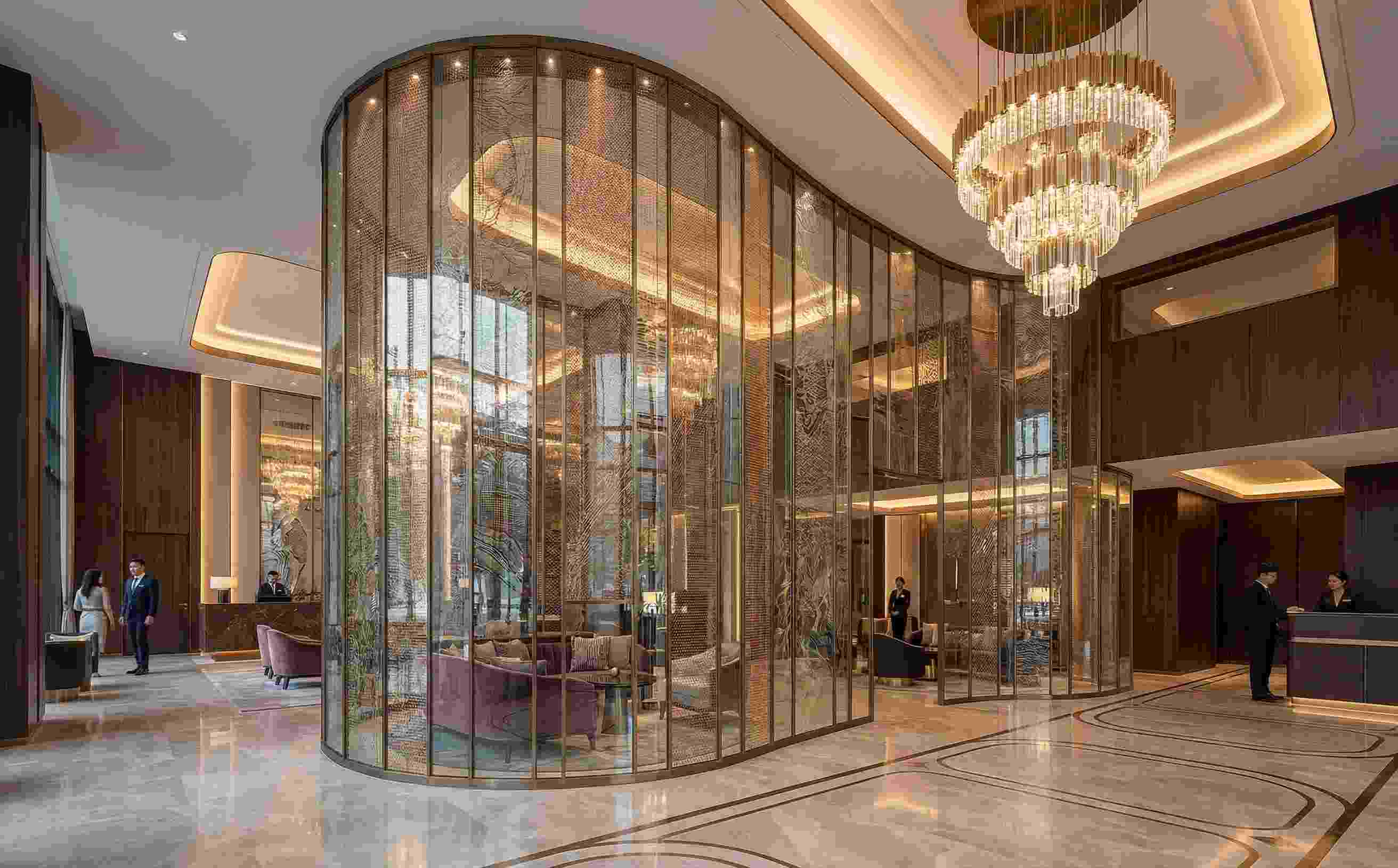
Commercial & Hospitality Spaces: From the signature gradient display windows of luxury retail boutiques to the colossal laminated glass screens—embedded with ink-wash silk imagery—found in five-star hotel lobbies, these examples stand as true masterpieces of decorative laminated glass application.
Residential & Private Applications
Shower Enclosures & Bathrooms: Leveraging the superior water-resistance of EVA interlayers, decorative fabrics can be encapsulated within shower glass panels. This not only provides enhanced safety through shatter-resistance but also imparts a distinct aesthetic of privacy and elegance.
Feature Walls & Cabinetry: Laminated glass featuring printed films that mimic natural marble textures is rapidly displacing heavy natural stone, becoming a standard feature in "light luxury" residential interiors.
Architectural Facades
Artistic Curtain Walls: By embedding colored translucent films or expanded metal meshes within exterior glass panels, the entire building envelope transforms with the shifting angles of the sun. This creates a shimmering, dynamic aesthetic that establishes the structure as a distinctive visual landmark within the cityscape.
Industry Trends for Decorative Laminated Glass in 2026
As we stand at the threshold of 2026, this technology is evolving rapidly in the following four key directions:
- Hyper-Personalized Customization: The industry is shifting from mass production toward high-end, bespoke solutions. Manufacturers are moving beyond merely supplying materials to actively participating in the creative prototyping and design development processes alongside designers.
- Eco-Friendly, Low-VOC Materials: To comply with the world's most stringent indoor air quality standards (such as LEED and WELL certifications), high-performance interlayers—characterized by zero odor and low volatile organic compound (VOC) emissions—are becoming the industry standard.
- Jumbo-Sized Glass Panels: Driven by advancements in raw glass manufacturing technology, seamless artistic laminated glass panels—spanning lengths of over a dozen meters—are now being produced, delivering an unparalleled visual impact.
- Integration with Smart Ecosystems: By encapsulating elements such as LED matrices, transparent photovoltaic panels, and decorative films within the glass structure itself, these architectural materials are endowed with inherent capabilities for information display and interactive communication.
How to Choose the Right Decorative Laminated Glass?
Faced with a complex array of manufacturing processes and material options, how should purchasers and designers make the right choice?
Select the Interlayer Based on Precise Application Requirements
Never rely on a single material to suit every purpose. For colored exterior curtain walls, consider high-weather-resistance specialty PVB; for indoor applications involving fabric lamination or moisture resistance, do not hesitate to choose an EVA interlayer.
Pay Close Attention to EVA Cross-linking Quality
Inferior EVA can yellow within just two years. You must require your supplier to provide a "Cross-linking Degree Test Report" for the film, as well as data regarding its resistance to ultraviolet (UV) aging.
Evaluate the Factory's Processing Expertise
Complex decorative laminated glass places extremely high demands on a factory's mastery of the "temperature-time" curing curve. Excessive temperatures can scorch the embedded fabrics, while temperatures that are too low may result in incomplete cross-linking of the film, creating a risk of delamination later on.
Choose a Specialized Supplier with R&D Capabilities
Within the glass industry, the inherent properties—or "DNA"—of the raw materials ultimately determine the performance ceiling of the finished product. Selecting a primary manufacturer that possesses an independent laboratory and can provide comprehensive technical support—ranging from the interlayer film itself to specific processing parameters—is the most effective strategy for mitigating project risks.
FAQ
Q1: What is decorative laminated glass?
It is a composite glass product that combines shatter-resistant safety features with highly customizable visual aesthetics. It is manufactured by sandwiching films or materials of various colors and textures between two layers of glass.
Q2: What interlayer is best for decorative glass?
When considering a combination of processing flexibility, compatibility with diverse materials, and resistance to moisture and delamination, the EVA interlayer stands out as the best—and most widely adopted—choice in the field of decorative laminated glass today.
Q3: What is EVA glass?
This term specifically refers to laminated glass that utilizes EVA (ethylene-vinyl acetate) as the bonding interlayer material. Due to its exceptional optical clarity and its excellent compatibility with complex decorative materials, it is widely employed in interior artistic installations and high-end custom projects.
Q4: Is decorative laminated glass safe?
It is extremely safe. It possesses the exact same physical safety attributes as standard architectural-grade laminated glass; even if subjected to a heavy impact and shattered, the glass fragments remain firmly adhered to the interlayer film, preventing them from detaching and causing injury.
Conclusion
By 2026, decorative laminated glass has long since transcended its status as a mere ordinary building material; it has evolved into a pivotal bridge connecting the principles of architectural safety with the aesthetics of modern spatial design.
Through the ingenious application of interlayers possessing diverse physical properties—most notably the EVA interlayer, which shines brightest thanks to its unparalleled compatibility—designers can finally realize their ultimate aspirations regarding light, color, and texture, all within a framework of absolute safety.
For glass processing enterprises, as well as builders aspiring to enter the high-end custom market, a deep understanding and mastery of EVA glass and complex decorative lamination techniques represent far more than a simple technological upgrade; they constitute the key to capturing future high-value-added markets and establishing core brand competitiveness. In an era where architecture increasingly converges with art, transparent glass is now ushering in its own vibrant and colorful epoch.