Smart Glass for Privacy, Heat Blocking and Projection
Glass is no longer only a transparent building material. For offices, hotels, hospitals, retail stores and modern homes, it is now expected to do more: protect privacy when needed, keep interiors bright, reduce solar discomfort, support digital projection and still look clean in the design.
That is why Smart Glass, Laminated Glass, PDLC Smart Glass and smart film are becoming practical choices for buyers who want more flexible spaces without adding curtains, blinds or bulky partitions. The main question is not simply "What is smart glass?" A better question is: which smart glass solution fits your project, your glass structure and your long-term use?
This guide explains how PDLC Smart Glass works for privacy, heat blocking and projection, and how to choose between laminated smart glass, PDLC smart film for lamination glass and self-adhesive smart film.
What Is PDLC Smart Glass?
PDLC Smart Glass is a type of switchable privacy glass made with polymer-dispersed liquid crystal technology. In simple terms, the glass changes between two states.
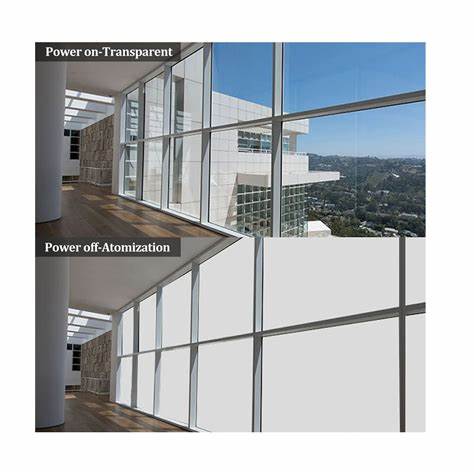
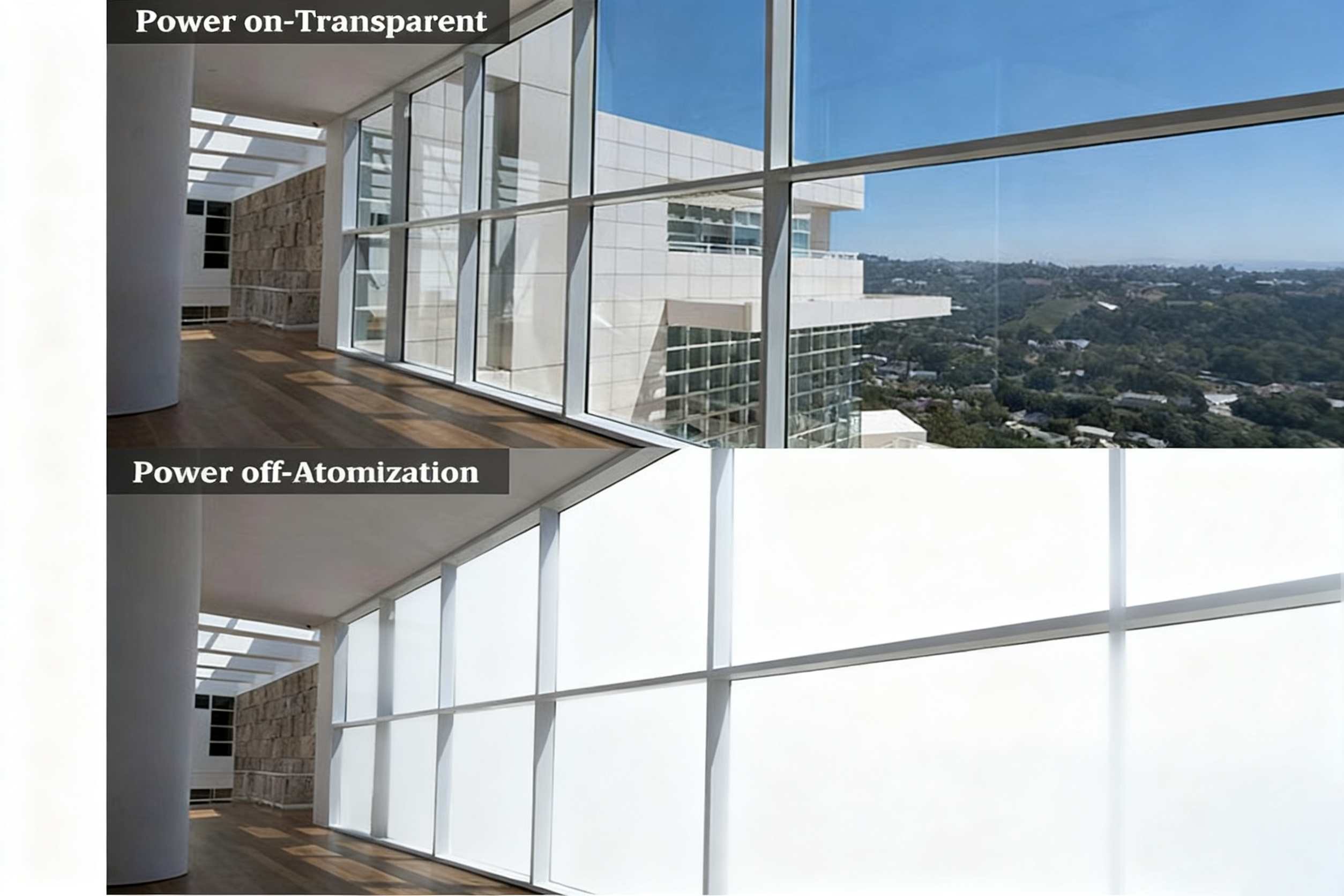
When the power is ON, the liquid crystal molecules align and allow light to pass through. The glass becomes clear and open. When the power is OFF, the molecules scatter light, creating a frosted appearance that blocks direct visibility and provides instant privacy.
For finished smart glass panels, the PDLC film is laminated between two pieces of glass. This structure turns ordinary glass into Laminated Glass with smart privacy control, safety performance and a more integrated architectural appearance.
For existing glass, self-adhesive smart film can be applied directly onto the surface. This makes it a practical retrofit option when the building owner does not want to replace the original glass.
Why Buyers Choose Smart Glass: Privacy First, But Not Privacy Only
Most users start with one pain point: they need privacy without making the room dark. In an office meeting room, people want an open glass wall most of the day, but privacy during confidential discussions. In a hotel bathroom, guests want natural light and a modern look, but they also need instant privacy. In a clinic or hospital, staff need cleanable partitions that can switch quickly between open observation and patient privacy.
PDLC Smart Glass solves this by creating a frosted privacy state while still allowing diffused daylight into the room. Unlike curtains or blinds, it does not collect dust easily, does not block the design line of the space and can be controlled by a wall switch, remote control or smart system.
For E&N HONJIA Smart Glass, the finished PDLC laminated smart glass can reach up to 90% transparency in the power-on state and more than 95% haze in the power-off state. That high OFF-state haze is important because it determines how well the glass hides shapes, movement and details behind it.
Does Smart Glass Block Heat?
Smart glass can help improve indoor comfort, but buyers should understand what "heat blocking" really means. PDLC technology is mainly designed for switchable privacy and light diffusion. However, a good smart glass system can also reduce UV exposure, soften glare and help lower solar discomfort. E&N HONJIA Smart Glass offers UV blocking above 99%, helping protect furniture, flooring, fabrics and interior finishes from UV-related fading.
For larger windows, sun-facing rooms or hot climates, heat control should be discussed together with the full glass structure. The final result depends on the PDLC film, glass thickness, laminated structure, coating options, installation direction and whether the project needs additional energy-saving glass design.
For example, a meeting room partition mainly needs privacy and projection. A west-facing exterior window may need privacy plus stronger solar control. A hotel bathroom may need privacy, safety and moisture resistance. These are different problems, so they should not be solved with one generic product choice.
A useful buying rule is simple: choose PDLC Smart Glass for privacy and visual control; combine it with the right laminated glass structure when thermal comfort is a major project requirement.
Can Smart Glass Be Used for Projection?
Yes. When PDLC Smart Glass or smart film is in the frosted state, it can work as a projection surface. This is one of the most valuable but often misunderstood benefits. For offices, a glass partition can become a presentation screen during meetings. For retail stores, a transparent shopfront can turn into a dynamic advertising screen. For exhibitions, museums and showrooms, switchable glass can support visual storytelling without adding a permanent display wall.
Projection performance depends on several conditions:
- OFF-state haze
- glass size
- projector brightness
- ambient light level
- front or rear projection setup
- viewing angle
- surface uniformity
- installation distance
If projection is important, do not only ask whether the product "can project." Ask for haze data, sample testing and application advice. For projection and privacy, a high OFF-state haze is usually more important than maximum transparency alone.
Laminated PDLC Smart Glass vs Self-Adhesive Smart Film
Many buyers search for Smart Glass and smart film together, but they are not used in exactly the same way.
| Project Need | Better Option | Why |
|---|---|---|
| New office partition | Laminated PDLC Smart Glass | Cleaner look, stronger durability, integrated structure |
| Existing glass upgrade | Self-adhesive smart film | No glass replacement, faster retrofit |
| Hotel bathroom | Laminated Smart Glass | Better safety, edge protection and premium finish |
| Glass processing factory | PDLC Smart Film for Lamination Glass | Designed for producing smart laminated glass |
| Retail projection window | Smart Glass or smart film | Depends on whether glass is new or already installed |
| Long-term commercial project | Laminated PDLC Smart Glass | Better protection of the PDLC layer |
Self-adhesive PDLC film is ideal when the existing glass is already installed and the customer wants a fast upgrade. E&N HONJIA Self-Adhesive PDLC Film has about 84% visible light transmission in the ON state, about 5% in the OFF state, about 90% OFF-state haze and an indoor service life of more than 50,000 hours. It is suitable for office partitions, residential glass, hotel spaces, retail displays and advertising panels.
PDLC Smart Film for Lamination Glass is different. It is a non-adhesive smart film made for laminated glass processing. It is installed inside the laminated glass structure through autoclave or vacuum lamination. E&N HONJIA PDLC film for lamination glass has about 70% light transmission in the ON state, about 5% light transmission in the OFF state, about 92% OFF-state haze, AC 36V operating voltage and around 3 W/m² power consumption.
Laminated PDLC Smart Glass is the finished solution. E&N HONJIA Smart Glass can be customized in 5+5 mm, 6+6 mm or other glass thicknesses, with a maximum size up to 1800 × 3500 mm. It is a better option when the project requires a finished glass panel with safety, privacy, stable switching and clean installation.
Best Applications for Smart Glass Privacy, Heat Blocking and Projection
Office Meeting Rooms: This is one of the strongest applications for PDLC Smart Glass. The glass keeps the office open and bright when transparent, then switches to privacy mode for meetings, video calls or confidential discussions. When frosted, it can also support presentation projection.
Hotels and Luxury Bathrooms: Hotels need glass that feels premium, cleans easily and gives guests control. Curtains in bathrooms can look outdated and are harder to maintain. Smart glass offers privacy on demand while keeping the room visually spacious.
Hospitals, Clinics and Laboratories: In healthcare spaces, privacy and hygiene matter at the same time. Smart glass can replace curtains in some areas, reducing fabric surfaces and making partitions easier to clean. It is useful for treatment rooms, observation areas, laboratories and medical consultation spaces.
Retail Stores and Commercial Displays: Retail users often want glass to do two jobs: show products during the day and become a digital display when needed. PDLC smart film or smart glass can switch from transparent viewing to frosted projection, giving storefronts more flexibility.
Residential Windows and Interior Partitions: For homes, the most common concerns are privacy from neighbors, bathroom privacy, balcony windows and home office backgrounds. Smart film is often practical for existing glass, while laminated smart glass is better for new renovation projects.
What Should You Check Before Buying Smart Glass?
Before requesting a quotation, buyers should prepare more than just glass size. A good smart glass manufacturer will need to understand how the product will be used.
Prepare these details:
- project type: office, hotel, home, hospital, retail or factory processing
- new glass or existing glass
- required size and quantity
- indoor or outdoor-facing application
- need for projection or only privacy
- heat blocking priority
- glass thickness requirement
- wiring position
- control method
- destination country
- sample or bulk order requirement
- expected delivery schedule
This information helps avoid wrong product selection. For example, a customer who needs to laminate smart glass locally should choose PDLC Smart Film for Lamination Glass, not self-adhesive film. A customer renovating an existing office glass wall may not need full glass replacement. A retail customer planning projection should test the product with real lighting before confirming the final design.
Common Mistakes to Avoid
1. Comparing Only Price per Square Meter: Low-cost smart film may look attractive, but buyers should also compare haze, transparency, UV blocking, switching stability, service life, edge performance and manufacturer support.
2. Choosing Self-Adhesive Smart Film for the Wrong Project: For hotels, commercial buildings and long-term architectural projects, laminated glass is usually more stable and more professional in appearance.
3. Ignoring Wiring Before Installation: Smart glass needs power, so the wire exit, transformer location and control system should be planned before production or installation.
4. Expecting Smart Glass to Behave Like Blackout Glass: PDLC glass creates privacy by scattering light. It does not make the room completely dark. This is actually an advantage for many projects because it protects privacy while keeping the space bright.
Why Work with a Custom PDLC Smart Glass Manufacturer?
Every smart glass project is different. A conference room, a hotel bathroom, a retail projection window and a glass factory production line cannot use the same specification blindly.
E&N HONJIA provides a complete product system for PDLC Smart Glass, smart film and Laminated Glass applications, including Self-Adhesive PDLC Film, PDLC Smart Film for Lamination Glass, Smart Glass / Switchable Privacy Glass and laminated glass solutions. For buyers, this means the product can be selected around the real project need instead of forcing one material into every application.
If your project requires instant privacy, heat comfort, UV protection, projection capability or custom laminated smart glass, the best next step is to share your glass size, application scene, installation environment and performance requirements. With the right product structure and technical support, smart glass can become more than a privacy feature. It can become a flexible design surface, a cleaner partition system and a smarter way to use glass in modern buildings.