PDLC Smart Film: What It Is and How Does It Work?
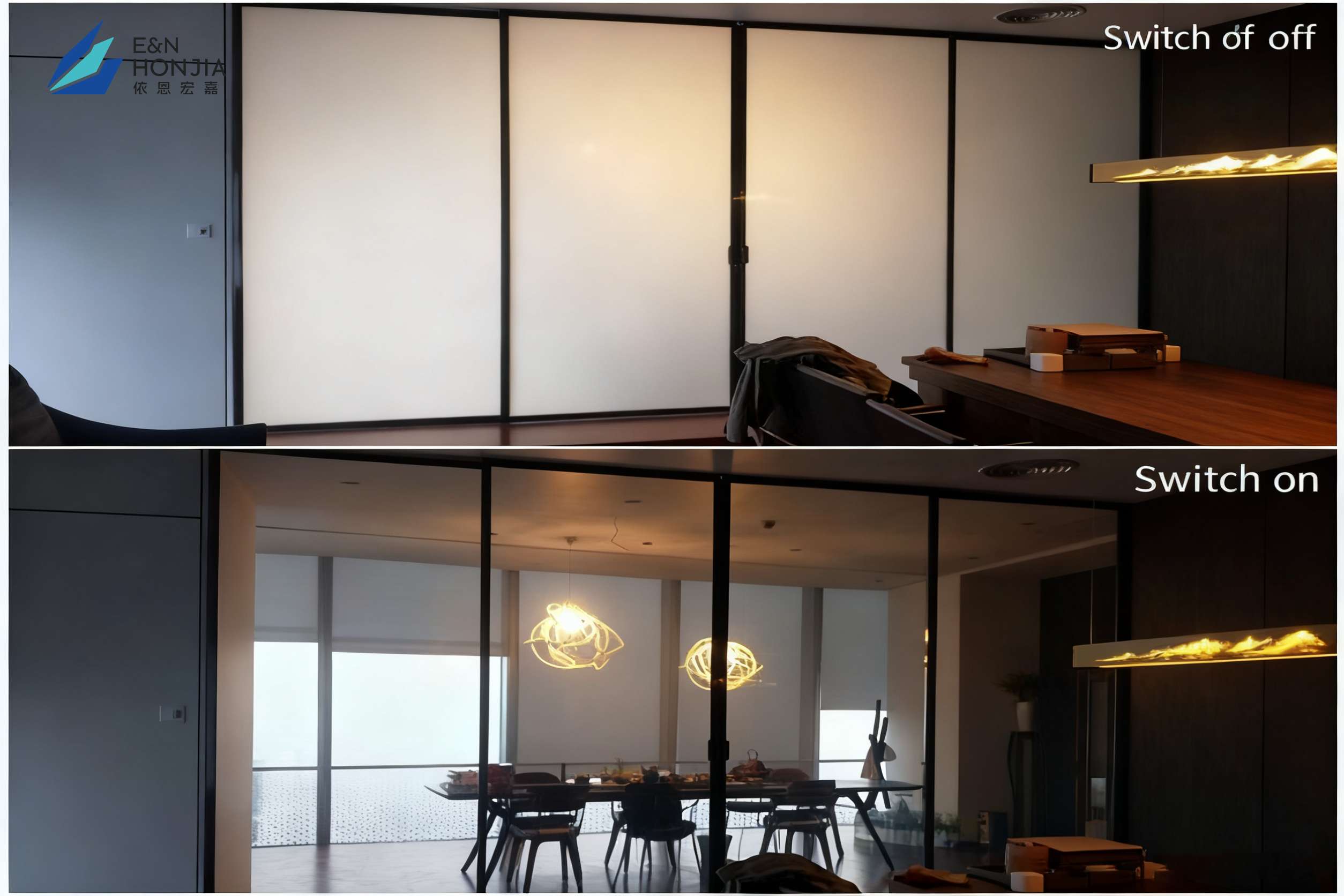
Glass is one of the most important materials in modern architecture. It brings daylight into a space, keeps interiors visually open, and gives offices, hotels, clinics, homes, and retail environments a cleaner, more contemporary look. But glass has one obvious limitation: privacy.
Traditional solutions such as curtains, blinds, roller shades, and frosted glass can solve part of the problem, but they often compromise design, daylight, flexibility, or maintenance. PDLC Smart Film offers a different approach. It allows glass to switch between a transparent state and a frosted privacy state using electrical control.
For architects, contractors, glass processors, interior designers, facility managers, and property owners, PDLC Smart Film is more than a decorative product. It is a functional glazing upgrade that combines privacy control, daylight transmission, modern design, and smart building integration.
What Is PDLC Smart Film?
PDLC Smart Film is a switchable privacy film based on Polymer Dispersed Liquid Crystal technology. It is designed to change its visual appearance when electricity is applied.
In most standard PDLC systems:
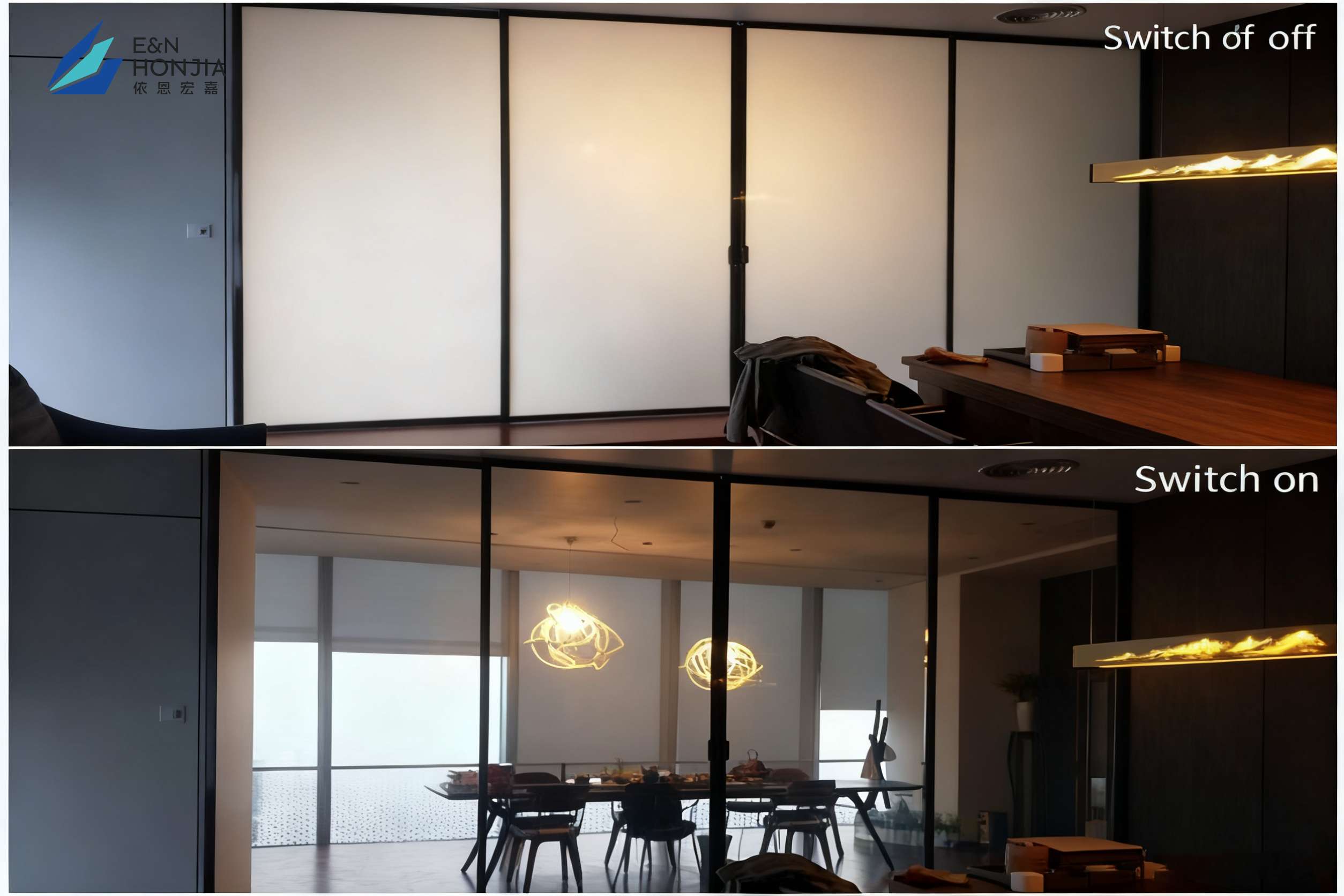
- When the power is off, the film appears frosted, milky, or translucent.
- When the power is on, the film becomes transparent.
This allows a glass panel to provide privacy on demand without curtains, blinds, or permanently etched glass.
PDLC Smart Film is commonly used on existing glass as a retrofit solution. It can also be used inside laminated glass during manufacturing, depending on the project requirements.
Common Alternative Names:
- Switchable privacy film
- Electric smart film
- Smart glass film
- PDLC film
- Privacy smart film
- Switchable glass film
- Intelligent glass film
Although these names are often used interchangeably, the core function is the same: to turn ordinary glass into switchable privacy glass.
How Does PDLC Smart Film Work?
PDLC Smart Film works by controlling the way light travels through a thin liquid crystal layer inside the film. The key is not color change. It is light scattering control.
Inside the film, microscopic liquid crystal droplets are dispersed in a polymer matrix. These droplets respond to an electrical field. When the electrical field is off, the droplets are randomly oriented and scatter light. When the electrical field is on, the droplets align and allow light to pass through more directly.
When the Power Is Off: Privacy Mode
When no voltage is applied, the liquid crystal droplets inside the film are arranged in different directions. Because their orientation is random, light entering the film is scattered instead of traveling straight through. This scattered light makes the glass look frosted, milky, or translucent. In this state, people cannot clearly see through the glass. This is the default privacy state for most PDLC Smart Film products.
What users should know:
- The glass becomes visually private.
- Natural light can still enter the room.
- The film does not become completely black or fully light-blocking.
- Shadows or silhouettes may still be visible in certain lighting conditions.
- Privacy performance depends on distance, background light, room brightness, and viewing angle.
This is an important point for buyers. PDLC Smart Film is designed for visual privacy, not total blackout.
For example, in an office meeting room, the film can prevent people outside from reading body language, documents, or screen content clearly. In a bathroom, it can block direct visibility. But if a person stands very close to the glass under strong backlighting, a faint outline may still be visible.
When the Power Is On: Transparent Mode
When electricity is applied, an electrical field is created across the film. The liquid crystal droplets respond by aligning in a more organized direction.
Once aligned, they scatter much less light. More light can pass through the film in a straight path, so the glass appears transparent. In this state, people can see through the glass again. However, transparent mode does not always mean the glass will look exactly like untreated clear glass. A slight haze is normal for PDLC technology, especially on large glass panels, under strong daylight, or when viewed from an angle.
The final clarity depends on:
- PDLC material formulation
- Film thickness
- Liquid crystal distribution
- Conductive layer quality
- Operating voltage
- Glass surface condition
- Installation quality
- Ambient lighting
- Viewing angle
For premium projects such as luxury retail, hotels, and high-end residential interiors, sample testing is recommended before final approval.
Key Technical Characteristics of PDLC Smart Film
Professional buyers should evaluate PDLC Smart Film using measurable performance indicators, not only visual samples or marketing photos.
| Technical Factor | Why It Matters |
|---|---|
| Visible Light Transmission | Determines how much light passes through the film in transparent and frosted states |
| Haze | Affects how clear the glass looks when the film is powered on |
| Operating Voltage | Determines power supply and transformer requirements |
| Power Consumption | Affects long-term operating cost and electrical design |
| Switching Speed | Affects user experience when changing between clear and frosted states |
| Film Width | Determines whether large glass panels require seams |
| Adhesive Quality | Affects installation performance and long-term bonding |
| UV Resistance | Important for glass exposed to sunlight |
| Temperature Range | Determines whether the product is suitable for the installation environment |
| Service Life | Affected by material quality, power stability, installation, and maintenance |
| Warranty Terms | Shows the supplier's confidence and support policy |
For commercial projects, these specifications should be reviewed together with samples, installation instructions, wiring diagrams, and supplier support capability.
Main Benefits of PDLC Smart Film
PDLC Smart Film is often described as a privacy product, but its value goes beyond simply making glass “clear or frosted.” For commercial projects, hospitality interiors, healthcare spaces, homes, and retail environments, it solves several practical problems at the same time: privacy control, daylight management, space flexibility, design consistency, and user convenience.
1. Privacy on Demand
The most important benefit of PDLC Smart Film is instant privacy. A glass conference room can remain transparent during normal use and become private during a meeting. A hotel bathroom can look open and spacious, then switch to privacy mode when needed. A clinic can maintain a clean glass design while protecting patient privacy. This makes PDLC Smart Film highly useful in spaces where privacy needs change throughout the day.
2. Maintains Natural Light Better Than Curtains or Blinds
One reason many customers choose PDLC Smart Film is that it provides privacy while still allowing light to pass through. When the film is in frosted mode, it diffuses light rather than fully blocking it. This helps the room stay bright and open, even when direct visibility is blocked.
That is especially useful in spaces where daylight matters:
- Interior offices with glass partitions
- Clinics and treatment rooms
- Hotel suites
- Bathrooms with exterior-facing windows
- Conference rooms without much artificial lighting
- Residential rooms where curtains would make the space feel dark
This does not mean PDLC film is a blackout solution. It is not designed to make a room dark. Its advantage is different: it protects privacy while preserving a softer, brighter environment. For buyers, this distinction is important. If the goal is privacy plus daylight, PDLC film is a strong option. If the goal is complete darkness, another shading product may be needed.
3. Supports Clean, Modern Interior Design
Curtains, roller shades, and blinds are useful, but they are not always ideal for modern glass-heavy spaces. They add visual clutter, require hardware, collect dust, and may interrupt the clean lines of an interior design. PDLC Smart Film keeps the glass surface simple.
This is why it is often specified in:
- Minimalist offices
- Luxury hotel rooms
- High-end apartments
- Medical and dental clinics
- Corporate headquarters
- Retail boutiques
- Showrooms
For designers, the benefit is not only privacy. It is the ability to keep the architectural intent intact. Glass can remain glass. The space can stay open, bright, and clean without adding visible window treatments.
4. Makes Existing Glass More Functional
One of the most practical advantages of self-adhesive PDLC Smart Film is that it can be applied to existing glass. This matters because many projects already have installed glass partitions, doors, windows, or meeting room walls. Replacing all of that glass with laminated smart glass may be expensive, disruptive, or unnecessary. PDLC Smart Film can often upgrade the existing glass with less construction work.
This is useful for:
| Project Type | Why PDLC Film Helps |
| Office renovation | Adds privacy without replacing glass partitions |
| Hotel upgrade | Improves guest experience with less room downtime |
| Clinic remodeling | Adds patient privacy while keeping cleanable glass surfaces |
| Residential retrofit | Improves privacy on existing windows or bathroom glass |
| Retail update | Adds switchable display effects to current storefront glass |
For retrofit projects, the biggest benefits are usually lower disruption, shorter installation time, and better budget control compared with full glass replacement. That said, the existing glass must be suitable. It should be flat, smooth, clean, stable, and accessible for wiring. The site should also allow proper installation and electrical planning.
5. Improves Space Flexibility
Modern interiors often need to serve more than one purpose. A room may be open and collaborative most of the day, then private for a meeting. A hotel bathroom may be visually connected to the bedroom for design purposes, then private during use. A showroom may want to reveal products only at certain moments. PDLC Smart Film helps a single glass area perform different functions without physical changes.
Examples:
- A conference room can switch from open visibility to private meeting mode.
- A training room can become a presentation space with a projection surface.
- A hotel suite can move between open design and privacy.
- A retail display can hide products before a launch or reveal.
- A clinic room can balance observation and patient privacy.
- This kind of flexibility is difficult to achieve with fixed glass treatments.
How to Choose the Right PDLC Smart Film
Choosing the right PDLC Smart Film is not only about price. A suitable film should match the glass condition, installation environment, privacy requirement, control method, and long-term use scenario. Below are the key factors buyers should review before making a decision.
1. Start With the Application Scenario
Different projects require different PDLC Smart Film specifications. An office meeting room, a hotel bathroom, a medical clinic, and a retail storefront may all use smart film, but their priorities are not the same. Before comparing products, first define where the film will be used and what problem it needs to solve.
Key points:
- Office spaces usually need stable switching, clean wiring, and simple daily control.
- Hotel bathrooms require stronger privacy, moisture protection, and user-friendly operation.
- Medical spaces focus on privacy, cleanability, and reliable performance.
- Retail storefronts may care more about visual impact, clarity, projection, and branding.
- Residential projects often prioritize privacy, daylight, appearance, and easy control.
2. Choose the Right Film Type
PDLC Smart Film is commonly available as self-adhesive film or non-adhesive film for lamination. The right choice depends on whether the glass is already installed or still in the manufacturing stage.
Key points:
- Self-adhesive PDLC Smart Film is suitable for existing glass and retrofit projects.
- Non-adhesive PDLC film is mainly used for laminated smart glass production.
- For office renovations, homes, clinics, and retail upgrades, self-adhesive film is usually more practical.
- For new construction, luxury projects, and architectural glass processing, laminated smart glass may be a better option.
- The product format should be confirmed before quoting, cutting, and wiring design.
3. Check the Glass Condition
The performance of PDLC Smart Film depends heavily on the glass surface. Even high-quality film may not perform well if the glass is dirty, uneven, coated, damaged, or unsuitable for adhesion.
Key points:
- The glass should be flat, smooth, clean, and structurally stable.
- Dust, oil, silicone residue, scratches, or coating contamination can affect adhesion and appearance.
- Low-E glass, tinted glass, reflective glass, or coated glass may require sample testing.
- Curved or textured glass is more difficult and may not be suitable for standard installation.
- Existing cracks, chips, or unstable glass should be addressed before film installation.
4. Define the Privacy Requirement
PDLC Smart Film provides visual privacy by scattering light. It is not a blackout product, so buyers should understand what level of privacy they actually need before ordering.
Key points:
- In frosted mode, PDLC film blocks clear visibility but still allows light to pass through.
- Shadows or silhouettes may appear if someone stands very close to the glass.
- Strong backlighting can make outlines more visible.
- Office privacy and bathroom privacy may require different evaluation standards.
- If complete darkness or zero visibility is required, PDLC film alone may not be enough.
5. Review Optical Performance
Do not evaluate PDLC Smart Film only by product photos. Real optical performance depends on film quality, lighting conditions, viewing angle, glass size, and installation quality.
Key points:
- Clear-state haze determines how transparent the film looks when powered on.
- Visible light transmission affects room brightness.
- Frosted-state uniformity affects the privacy effect.
- Color tone may vary from neutral white to slightly blue or gray.
- For premium projects, test samples under real lighting conditions before final approval.
6. Confirm Electrical Requirements
PDLC Smart Film is an electrical product, so the power system must be planned early. A correct transformer, wiring route, and control setup are essential for stable performance.
Key points:
- Operating voltage must match the film specification.
- Transformer capacity should be calculated based on total film area.
- Long wiring distances may cause voltage drop or uneven switching.
- Large projects may need multiple zones or separate transformers.
- Electrical planning should be completed before installation, not after the film arrives.
7. Select the Right Control Method
The control method should match the way people use the space. A simple wall switch may be enough for an office, while a hotel or smart home may require integration with a larger control system.
Key points:
- Wall switches are reliable for offices, clinics, hotels, and meeting rooms.
- Remote controls are convenient for homes and small projects.
- App or voice control is suitable for smart home and premium interiors.
- Timer or sensor control can support automatic privacy management.
- Centralized control is useful for large buildings with multiple rooms or zones.
8. Plan Film Size and Seam Placement
PDLC Smart Film has maximum width limits, so large glass panels may require seams. Poor seam planning can affect the final appearance, especially in high-visibility areas.
Key points:
- Confirm glass width, height, and quantity before production.
- Check the maximum available film width.
- Plan seam locations carefully for large glass panels.
- Provide drawings for holes, notches, curves, or irregular shapes.
- Factory cutting is recommended for better accuracy and lower installation risk.
9. Evaluate the Installation Environment
Installation quality has a major impact on the final result. PDLC Smart Film should be installed in a clean, dry, and controlled environment whenever possible.
Key points:
- Avoid installation during painting, sanding, or heavy construction.
- Dust, humidity, wind, and fingerprints can cause visible defects.
- The glass must be cleaned thoroughly before application.
- Bathrooms, spas, and wet areas require extra edge protection.
- Professional installation is strongly recommended for large or commercial projects.
Conclusion
PDLC Smart Film is a modern privacy solution for glass-heavy spaces. It switches between frosted privacy and transparent visibility with electrical control, helping offices, hotels, clinics, homes, and retail environments maintain privacy without sacrificing daylight or clean design. The article explains how PDLC Smart Film works, its main benefits, and the key factors buyers should consider before choosing and installing it.
FAQ
Q1. Is PDLC Smart Film completely blackout?
A: No. PDLC Smart Film is designed for visual privacy, not complete blackout. In frosted mode, it blocks clear visibility while still allowing natural light to pass through. However, shadows or silhouettes may still be visible if someone stands very close to the glass or if there is strong backlighting.
Q2. Is the film transparent or frosted when the power is off?
A: Most standard PDLC Smart Film is frosted when the power is off and transparent when the power is on. This makes it especially useful for meeting rooms, bathrooms, clinics, and other spaces where privacy should be the default condition.
Q3. Will the glass look as clear as regular glass when powered on?
A: Not exactly. Even in transparent mode, PDLC Smart Film usually has a slight haze. This is normal for PDLC technology. The final clarity depends on the film quality, glass condition, installation quality, lighting, and viewing angle.
Q4. Can PDLC Smart Film be installed on existing glass?
A: Yes. Self-adhesive PDLC Smart Film can be applied to existing glass, making it a good choice for office renovations, hotel upgrades, clinics, residential windows, and retail storefronts. The glass must be flat, smooth, clean, stable, and accessible for wiring.