PDLC Smart Film vs Laminated Smart Glass: How to Choose for Your Project
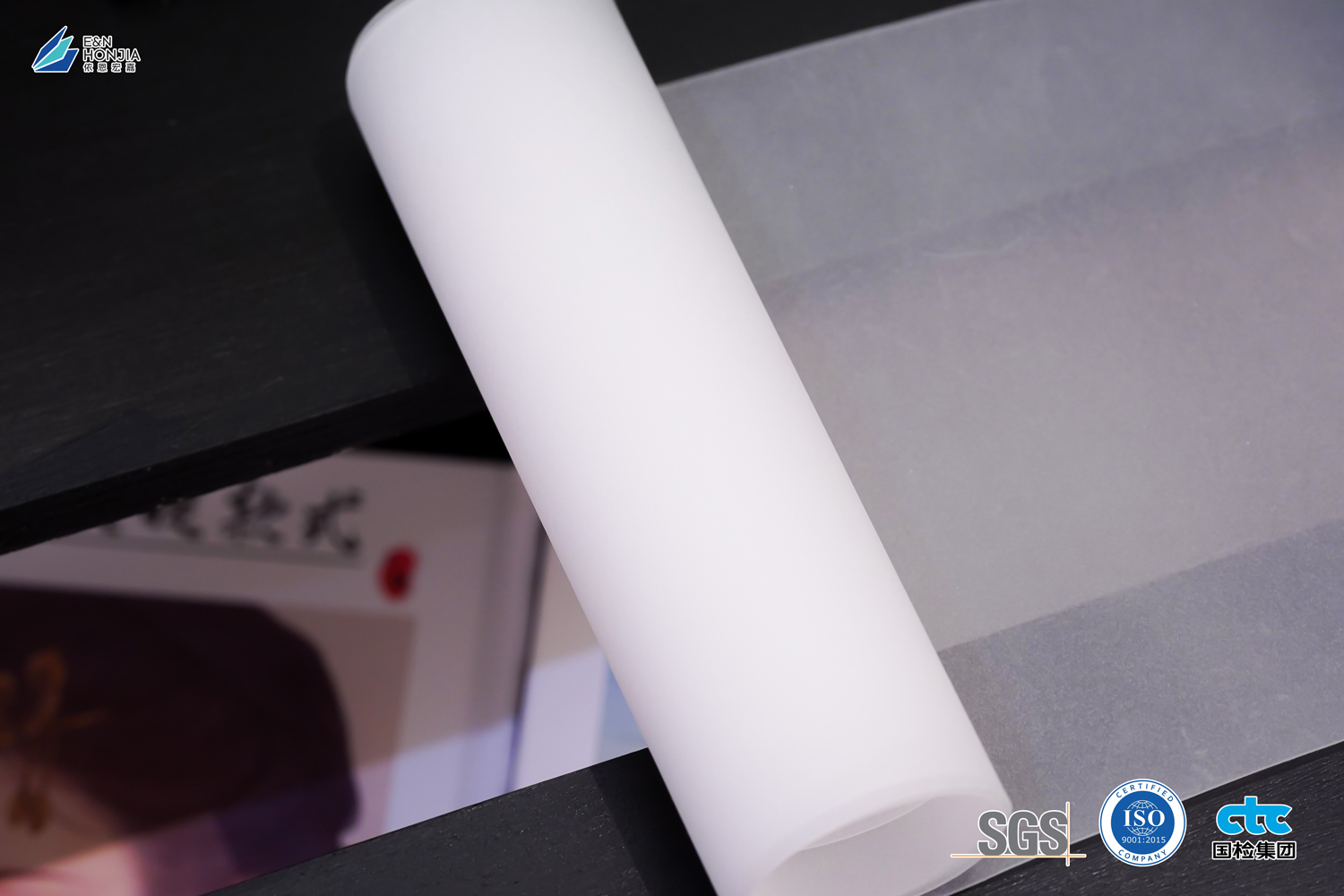
Self-adhesive PDLC smart film and laminated smart glass can both provide instant switchable privacy, but they solve different project problems. The right choice depends less on the switching effect and more on the glass you already have, the environment around it, how the surface will be cleaned, and how long the installation must remain protected.
QUICK ANSWER: Choose self-adhesive PDLC smart film when you want to upgrade sound existing glass in a dry, controlled interior without replacing the panel. Choose laminated smart glass when the project is new, the glass is already being replaced, or the active film needs stronger protection from humidity, cleaning, impact and frequent use.
What Is the Difference Between PDLC Smart Film and Laminated Smart Glass?
Both products use polymer-dispersed liquid crystal (PDLC) technology. In a standard normally private system, the liquid crystal droplets scatter light when the power is off, so the panel looks frosted or translucent. When the correct electrical field is applied, the droplets align and the panel becomes transparent. The important difference is how the PDLC layer is incorporated into the glazing.
Self-Adhesive PDLC Smart Film
Self-adhesive smart film is made for retrofit installation. A release liner protects its adhesive surface before the film is applied directly to an existing glass panel. The glass does not need to be removed if it is flat, sound, clean and compatible. After the film is installed, the busbars, lead wires and exposed edges must be protected, and the system is connected to a matched controller and transformer.
This format can reduce demolition and downtime, but it does not turn the old glass into laminated safety glass. The outer film surface also remains more exposed to abrasion, cleaning chemicals, moisture and accidental impact than a film sealed inside a laminated unit.
Lamination-Grade PDLC Film and Laminated Smart Glass
Laminated smart glass is made by placing a lamination-grade PDLC film within a compatible glass-and-interlayer build-up, then processing it into one finished panel. The active layer sits between the glass lites instead of on the room-facing surface. A glass processor controls the glass preparation, film positioning, busbar route, lamination cycle and edge quality before the panel reaches the site.
Lamination-grade film and self-adhesive retrofit film are not automatically interchangeable. The film type, interlayer, lamination process and electrical components must be specified as one compatible system.
PDLC Smart Film vs Laminated Smart Glass: Side-by-Side Comparison
|
Decision factor |
Self-adhesive PDLC smart film |
Laminated smart glass |
|
Primary role |
Retrofit an existing glass surface. |
Create a new, factory-laminated switchable glazing unit. |
|
Project stage |
Best when the glass is already installed and suitable for reuse. |
Best for new construction or renovation where glass will be replaced. |
|
PDLC protection |
One side bonds to glass; the outer film surface and edges remain installation-sensitive. |
The PDLC layer is protected between glass and compatible interlayers. |
|
Cleaning |
Requires the film maker’s approved method; exposed film can be scratched or chemically damaged. |
The user cleans a glass surface, subject to the glass and sealant manufacturer’s instructions. |
|
Moisture exposure |
Edge sealing and busbar protection are critical; wet areas demand extra caution. |
Generally better suited to humid, frequently cleaned or high-use areas when the complete assembly is correctly designed. |
|
Impact and abrasion |
The exposed surface is more vulnerable to tools, furniture, cleaning equipment and misuse. |
The active layer is physically protected; the finished glass build-up still needs project-specific safety design. |
|
Glass replacement |
Usually not required if the existing glass is flat, sound and compatible. |
Required; the new panel must fit the frame, hardware and loading conditions. |
|
Thickness and weight |
Adds little thickness and avoids a second glass lite. |
Adds the thickness and weight of a laminated glass assembly; hardware and support must be checked. |
|
Size and seams |
Limited by film width, handling and site conditions; large areas may need a planned seam. |
Limited by film, glass processing, lamination and transport capabilities; custom panels may avoid a field seam. |
|
Repair strategy |
A damaged film may be replaced without replacing the glass, but removal and reinstallation require care. |
Damage to the active layer normally means replacing the fabricated glass unit. |
|
Cost pattern |
Often lower for a simple interior retrofit, but access, surface preparation and wiring can change the total. |
Usually carries higher fabrication and replacement cost, but can reduce exposure-related maintenance risk. |
|
Typical fit |
Dry interior retrofit, controlled access and moderate cleaning. |
New-build, premium finish, wet or high-touch spaces, doors and long-service applications. |
E&N HONJIA Published Product Data at a Glance
The table below uses typical figures currently published on E&N HONJIA's three product pages for self-adhesive PDLC film, PDLC film for lamination and finished laminated smart glass. They support preliminary selection but are not a warranty; the latest TDS, approved sample, order specification and wiring diagram should govern the final project.
|
Published metric |
Self-adhesive PDLC film |
PDLC film for lamination |
Finished laminated smart glass |
|
ON-state optical figure |
~84% visible light transmission |
~70% light transmission |
Up to 90% transparency |
|
OFF-state privacy figure |
~5% transmission; ~90% haze |
~5% transmission; ~92% haze |
>95% haze |
|
Operating voltage |
AC 60V |
AC 36V |
AC 48–65V |
|
Switching time |
OFF→ON ~10ms; ON→OFF ~50ms |
OFF→ON ~10ms; ON→OFF ~100ms |
<0.2 seconds |
|
Format and published size |
0.3–0.4mm; 1.2/1.5/1.8m × 30–50m rolls |
~0.30mm; 1.2m × 30m or 50m rolls |
5+5mm, 6+6mm or custom; up to 1800 × 3500mm |
|
Published indoor-life reference |
>50,000 hours |
>5 years |
Confirm by build-up, TDS and warranty |
Hose for a New Project or a Glass Renovation
Start with the condition of the glazing and the amount of construction work the project can accept. The switching effect may look similar in a sample, but the installation route, long-term exposure and service plan are very different.
1. Keep the existing glass: Choose self-adhesive film when the installed glass is in good condition, the site is a dry interior, the surface is accessible for professional installation, and a discreet wiring route is available.
2. Replace the glass anyway: Choose laminated smart glass when the current panel is damaged, badly sized, textured, curved, heavily coated, visually distorted, or incompatible with the film. If replacement is already in the scope, factory integration usually produces the cleaner long-term result.
3. Design a new building or fit-out: Treat laminated smart glass as the default option for permanent premium glazing, especially doors, wet zones, high-touch spaces and panels that will be cleaned frequently. Retrofit film can still be used for phased interior projects or cost-controlled areas.
4. Avoid major disruption: Self-adhesive film is attractive when removing frames, doors or full-height partitions would interrupt operations. The site must still allow clean installation, edge sealing, electrical work and functional testing.
5. Plan for future replacement: Consider what will happen if one zone is scratched or electrically damaged. Film can often be replaced while keeping the glass; a laminated unit is more protected but is normally replaced as a complete panel if the active layer fails.
Do Not Compare Product Price Alone
The useful comparison is total installed cost, not only the price per square metre. Include glass removal and disposal, film or glass fabrication, access equipment, framing changes, wiring, transformers, controls, edge sealing, testing, room downtime, future cleaning and the replacement strategy. A simple office retrofit may favour film, while a complex high-use installation may justify the higher initial cost of laminated smart glass.
Moisture, Cleaning, Impact and Edge-Sealing Risks
Many PDLC problems begin at the perimeter rather than in the centre of the panel. Moisture can reach exposed film edges or electrical connections; incompatible sealants can attack materials; aggressive cleaners can haze or scratch the surface; and unprotected busbars can be damaged during cleaning or normal use.
- Keep installation surfaces clean and dry, and follow the film supplier's approved installation method. Do not assume that a conventional wet window-film process is acceptable.
- Seal exposed edges with the exact sealant or edge system approved for that film. "Neutral cure" alone is not a complete compatibility test; confirm chemistry, VOC limits, curing conditions and warranty requirements.
- Protect busbars and lead-wire exits with non-conductive trim or another approved detail. A visually neat edge that leaves the electrical connection exposed is not a finished installation.
- Switch the system off before cleaning, avoid excess liquid near edges and connections, and do not energise the film until it is fully dry. Use only the cleaning products and cloths permitted by the supplier.
- Do not treat a scratch-resistant coating as scratch-proof. High-traffic corridors, hospitals, doors, children's areas and hospitality spaces need a realistic abrasion and impact assessment.
- For exterior glass, shower areas, spas or other humid locations, use only a product and complete glazing assembly specifically approved for that exposure. A standard interior film should not be promoted as an exterior solution without supporting data.
Which Option Usually Handles Harsh Use Better?
Laminated smart glass generally has the advantage because the PDLC layer is protected behind glass. The exposed surfaces can be treated more like normal glazing, subject to the glass, coating, sealant and electrical-system instructions. Self-adhesive film can perform well in the right interior setting, but its long-term result depends heavily on edge protection, surface care and installer discipline.
What Determines Service Life?
A credible supplier should not give one universal service-life number for every PDLC project. E&N HONJIA's current product pages list an indoor-life reference of more than 50,000 hours for self-adhesive PDLC film and more than five years for PDLC film for lamination. These are product-page reference figures, not a universal project warranty. The finished build-up, duty cycle, environment, installation quality and written warranty still govern expected service life.
- UV and solar exposure: Direct sun and heat load can accelerate ageing unless the film and glazing build-up are rated for the exposure.
- Temperature and humidity: Repeated high temperature, condensation or moisture at the edge can shorten service life.
- Electrical loading: The film must receive the specified AC output from a correctly sized transformer and controller. Excess voltage, unstable output or an undersized power supply can cause uneven performance or damage.
- Duty cycle: Confirm whether the product may remain energised continuously and whether the supplier recommends regular off periods.
- Installation quality: Dust, creases, trapped contamination, poor adhesion, damaged electrodes and incomplete sealing can create early defects.
- Cleaning and physical contact: Abrasion, solvents, excess water and impact are more significant for exposed retrofit film.
- Material compatibility: Glass coatings, interlayers, sealants, tapes, gaskets and cleaning agents must be checked as a system.
Evidence to Request Before Approving a Product
- Current TDS showing on-state transmission, on-state haze, off-state haze, operating voltage, power consumption and temperature range.
- Maximum film or glass size, allowable cutting method, seam guidance and busbar options.
- Accelerated ageing, high-temperature/high-humidity, UV or switching-cycle evidence relevant to the application.
- Installation, edge-sealing, cleaning, wiring and troubleshooting instructions.
- Warranty duration, exclusions, approved installers and the process for handling a failed panel or zone.
Glass Size, Film Width, Seams and Fabrication Details
Large glass does not automatically mean that one piece of smart film or one laminated panel can be supplied. E&N HONJIA currently lists self-adhesive rolls in 1.2m, 1.5m and 1.8m widths with 30–50m lengths; lamination-grade film in 1.2m × 30m or 1.2m × 50m rolls; and finished switchable glass up to 1800 × 3500mm in 5+5mm, 6+6mm or custom thicknesses. These website-listed formats still require project confirmation because cutting, busbars, glass processing, transport, lifting and structural requirements can reduce the workable size.
- Provide finished glass width and height, quantity, orientation and a dimensioned drawing. Do not quote from approximate opening dimensions.
- Mark the visible area, framed edge, busbar side, lead-wire exit and any required clear border.
- Show holes, notches, cut-outs, curves, logos and irregular shapes before production. Tempered glass cannot be drilled or trimmed after tempering.
- If the glass is wider than the available film, decide whether a seam is acceptable and where it will be least visible. Ask for a representative seam sample before approval.
- Check panel weight, frame bite, hinge or sliding hardware capacity, edge clearance and transport route when choosing laminated smart glass.
- For multiple panels, define switching zones and cable routes before glass fabrication so that the wires do not remain visible or interfere with moving hardware.
Voltage, Transformer and Control Requirements
PDLC film is an electrical product, and E&N HONJIA's current product pages show why one transformer cannot be assumed for every format: self-adhesive film is listed at AC 60V, lamination-grade film at AC 36V, and finished laminated smart glass at AC 48–65V. Each product must use the manufacturer-specified AC output from a matched transformer or controller. Confirm voltage, frequency, power density and connected area on the current TDS and wiring diagram; never connect the film directly to building mains unless the certified system is explicitly designed for it.
- Power sizing: Calculate controller and transformer capacity from the connected film area and the supplier's electrical specification, with the required design margin.
- Zones: Use separate channels or transformers where rooms, doors or panels must operate independently. A large single circuit may be inconvenient to service.
- Controls: A wall switch is the simplest option. Compatible systems may also use remote control, app control, timers, relays, occupancy sensors, door contacts, access control, smart-home platforms or a building management system.
- Dimming: Only use dimming when the PDLC film and controller are designed for variable output. A generic lighting dimmer is not a substitute.
- Power-loss behaviour: Most normally private PDLC systems return to the frosted state when power is lost. Confirm whether that fail state is appropriate for observation windows, doors and emergency operations.
- Installation responsibility: A qualified electrician should complete and test the fixed electrical connection in accordance with the supplier's wiring diagram and local requirements.
Which Format Fits Hotels, Offices, Hospitals and Homes?
Hotels
Laminated smart glass is usually the stronger choice for bathroom partitions, shower-adjacent glazing and premium room dividers because the active layer is protected and the surface is easier to maintain. Self-adhesive film can suit dry meeting rooms, back-of-house offices and retrofits where room downtime must be limited. For guest rooms, use simple controls and confirm privacy performance under strong bathroom backlighting.
Offices
Both formats are practical. Self-adhesive smart film is well suited to upgrading existing conference rooms and partitions. Laminated smart glass suits new doors, operable walls, reception areas and long-term corporate fit-outs where edge detail and daily cleaning matter. Plan switching zones around room scheduling, access control and emergency egress.
Hospitals and clinics
Laminated smart glass is generally preferred for patient rooms, observation windows and treatment spaces because the exposed surfaces are glass rather than film. Confirm compatibility with the facility's disinfectants, cleaning frequency and infection-control procedures; do not make antibacterial or infection-prevention claims without specific evidence. Privacy mode must also support clinical observation and emergency requirements.
Residential projects
Self-adhesive film is useful for dry interior renovations, home offices and existing partitions. Laminated smart glass is usually better for new bathroom glazing, doors, high-contact areas and permanent premium installations. A wall switch should remain available even when app or voice control is added, and the homeowner should understand the normal frosted state during a power outage.
A Practical PDLC Procurement Checklist
- Confirm whether the glass is existing, new or due for replacement.
- State the location: indoor, outdoor, bathroom, shower-adjacent, façade, door or partition.
- Provide the glass specification, coating information, finished dimensions, quantity and drawings.
- Define the required privacy effect and assess silhouettes under the real lighting condition.
- Compare on-state haze and transmission using a full-size or representative sample, not only a small desk sample.
- Confirm film grade: self-adhesive retrofit or non-adhesive lamination grade.
- Approve the edge seal, busbar cover, cable exit, frame detail and cleaning method.
- Confirm operating voltage, frequency, power consumption, transformer capacity and switching zones.
- Verify the relevant safety glazing, electrical, structural, exterior and local code requirements for the complete installation.
- Agree on installer responsibility, commissioning tests, warranty exclusions, spare components and the replacement process.
Conclusion
Self-adhesive PDLC smart film is the practical retrofit choice. It can add switchable privacy to suitable existing glass with less demolition, less weight and usually less disruption. Its trade-off is exposure: cleaning, moisture, abrasion, edge sealing and electrical protection need disciplined control.
Laminated smart glass is the more integrated glazing choice. It requires new glass, more coordination and typically a higher initial investment, but it protects the PDLC layer and is generally better suited to permanent, premium, humid, high-touch or frequently cleaned installations.
For a reliable decision, send the supplier the panel schedule, glass specification, application environment, control logic and drawings before requesting a final quotation. The best option is the one that fits the complete project, not simply the product with the lowest price per square metre.
FAQ
Q1. Can PDLC smart film be installed on existing glass?
A: Yes. Self-adhesive PDLC smart film is designed for suitable existing glass. The panel should be flat, smooth, sound, clean and accessible for professional installation and wiring. Coated, textured, curved, damaged or heavily contaminated glass may need a compatibility test or replacement.
Q2. Which is more durable: smart film or laminated smart glass?
A: Laminated smart glass is generally more durable because the PDLC layer is protected between glass lites. Self-adhesive film can perform well in a controlled interior, but its exposed surface, edges and electrical connections require more careful sealing, cleaning and protection.
Q3. Is PDLC smart glass completely opaque in privacy mode?
A: No. Standard PDLC is translucent rather than blackout. It scatters light to obscure detail while allowing daylight through. Silhouettes may remain visible under strong backlighting or when a person stands close to the glass, so a project sample should be checked under realistic conditions.
Q4. Can PDLC smart film or smart glass be used outdoors?
A: Only when the product and the complete glazing assembly are specifically rated for exterior exposure. Confirm UV, temperature, humidity, edge-seal, insulating-glass, framing and warranty requirements. Do not use a standard interior retrofit film outdoors based only on a general "smart film" description.
Q5. What voltage does PDLC smart film use?
A: There is no single voltage that applies to every product. E&N HONJIA currently lists AC 60V for self-adhesive PDLC film, AC 36V for PDLC film for lamination and AC 48–65V for finished switchable privacy glass. Use only the transformer or controller matched to the selected product, and confirm frequency, power consumption, design margin and maximum connected area on the latest TDS and wiring diagram.
Q6. What happens when the power fails?
A: Most standard normally private PDLC products return to the frosted or translucent state when power is removed. This provides default privacy, but the project team must confirm that the fail state is suitable for observation, safety, access and emergency procedures.