Laminated PDLC Smart Glass vs Self-Adhesive Smart Film: Performance, Installation and Cost
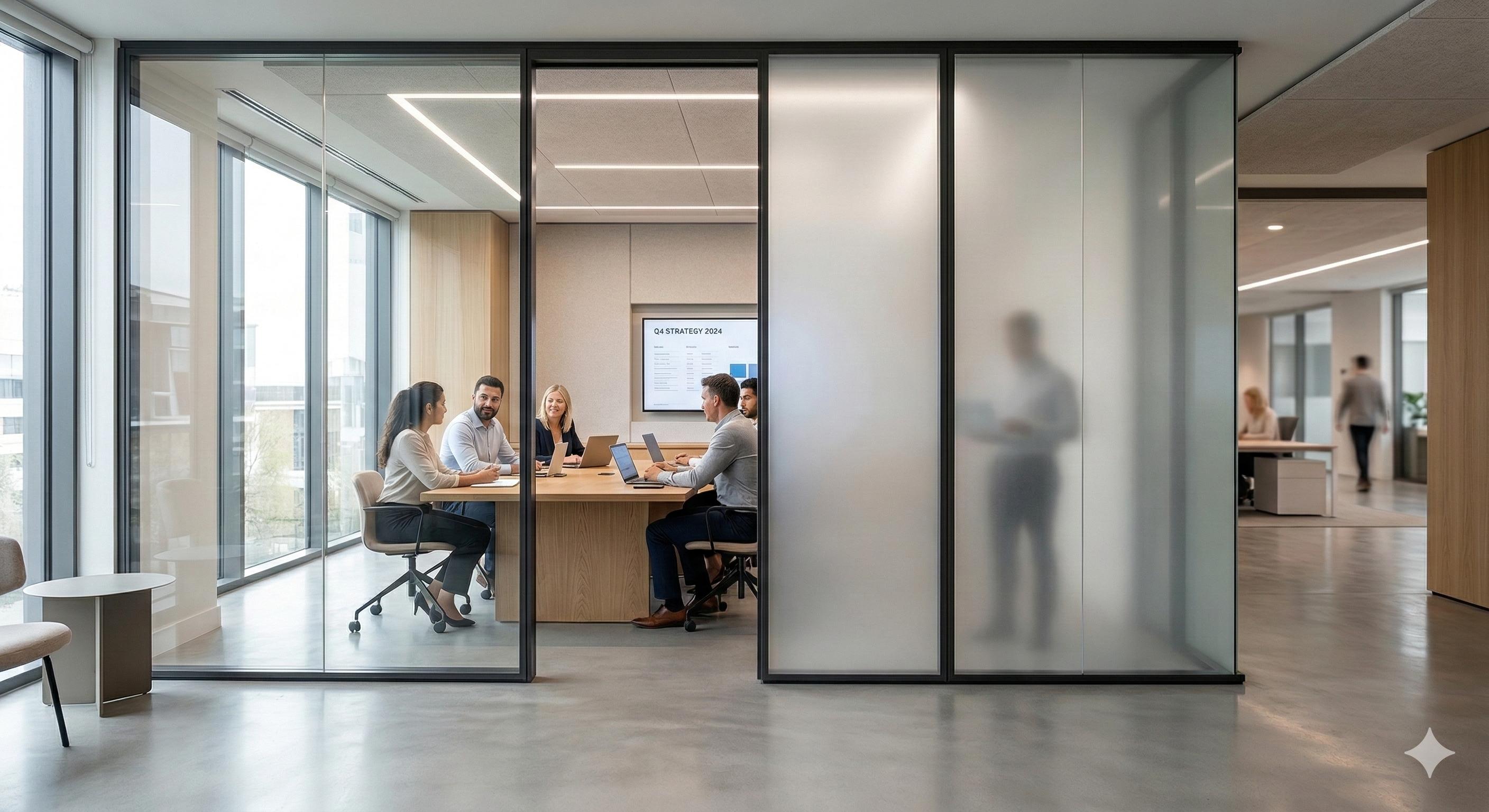
Choosing between laminated PDLC smart glass and self-adhesive smart film is not only a technical decision. For most buyers, it is a project decision: Can the existing glass be replaced? Is the area exposed to moisture? How important is the final appearance? How long should the privacy system last? And how much installation disruption is acceptable?
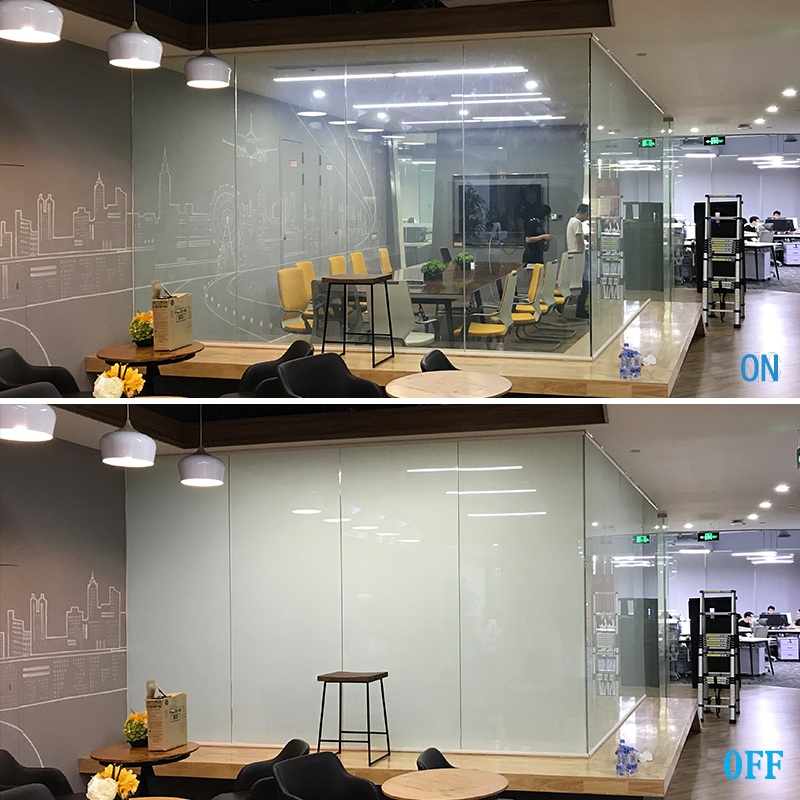
Both products use PDLC technology to switch glass from transparent to frosted. When powered on, the liquid crystal molecules align and allow light to pass through. When powered off, the molecules scatter light and create privacy. The difference is how the PDLC layer is built into the glass system.
Laminated PDLC smart glass is a finished glass panel with PDLC film sealed between two pieces of glass.
Self-adhesive PDLC smart film is applied onto the surface of existing flat glass.
If you are working on a new construction project, hotel bathroom, medical privacy partition, luxury home, or long-term commercial space, laminated PDLC smart glass is usually the better choice. If you need to upgrade existing office glass quickly without replacing panels, self-adhesive smart film can be a practical retrofit solution.
Quick Decision Guide
| Your Project Situation | Better Choice | Why |
|---|---|---|
| New glass partition or full renovation | Laminated PDLC Smart Glass | Cleaner finish, stronger structure, longer-term performance |
| Existing glass cannot be removed | Self-Adhesive PDLC Film | Installs directly on current glass |
| Bathroom, hotel, spa or humid area | Laminated PDLC Smart Glass | PDLC layer is sealed inside glass |
| Premium office or frameless partition | Laminated PDLC Smart Glass | Better edge appearance and integrated design |
| Short renovation schedule | Self-Adhesive PDLC Film | Faster retrofit process |
| High-traffic commercial space | Laminated PDLC Smart Glass | Better resistance to touch, cleaning and wear |
| Temporary or budget-controlled project | Self-Adhesive PDLC Film | Lower disruption and easier upgrade |
What Is Laminated PDLC Smart Glass?
Laminated PDLC smart glass is manufactured by placing PDLC smart film between two glass panels during the lamination process. The smart film becomes part of the finished glass structure. The user touches and cleans the glass surface, not the PDLC film itself.
This structure gives laminated smart glass an important advantage: the switchable layer is protected from scratches, dust, moisture and daily contact. That is why it is commonly used in permanent architectural projects such as office partitions, hotel bathrooms, hospitals, clinics, luxury villas, meeting rooms and retail spaces.
E&N HONJIA smart glass is designed as laminated switchable privacy glass. Typical specifications include up to 90% transparency in power-on mode, more than 95% haze in power-off mode, AC 48–65V operating voltage, 4–5W/m² power consumption, glass thickness options such as 5+5mm and 6+6mm, switching time below 0.2 seconds, and more than 99% UV blocking.
For buyers, these specifications matter because they affect real use: how clear the glass looks, how private it becomes, how quickly it switches, how much power it uses, and whether it protects interiors from UV exposure.
What Is Self-Adhesive PDLC Smart Film?
Self-adhesive PDLC smart film is designed for retrofit installation. It has an adhesive side and can be applied directly to existing smooth glass. This means ordinary glass can be upgraded into switchable privacy glass without factory lamination or complete glass replacement.
It is especially useful for existing office meeting rooms, glass partitions, interior windows, residential doors, retail displays and advertising panels. If the glass is already installed and still in good condition, self-adhesive film can save time and reduce construction disruption.
According to E&N product information, self-adhesive PDLC film can provide around 80% parallel light transmittance when powered on and about 5% transmittance when powered off. It operates at AC 60V with approximately 6W/m² power consumption and is designed for more than 50,000 hours of service life under suitable conditions.
However, because the film is installed on the glass surface, its final performance depends heavily on the condition of the existing glass and the quality of installation.
Performance Comparison
1. Privacy and Transparency
Both products provide instant privacy switching. In power-on mode, they allow light through and keep the space visually open. In power-off mode, they create a frosted effect for privacy.
The difference is consistency. Laminated PDLC smart glass is manufactured under controlled conditions, so the optical result is more predictable. Self-adhesive film can perform well, but the final result may be affected by dust, bubbles, uneven glass, edge handling or wiring placement.
For a private office or small meeting room, self-adhesive film may be enough. For a luxury suite, medical privacy wall or frameless glass partition, laminated smart glass usually delivers a cleaner and more professional result.
2. Durability
Durability is one of the biggest differences. In laminated PDLC smart glass, the PDLC film is protected inside the glass. This reduces the risk of surface scratches, peeling, dust contamination and moisture damage. It is easier to clean and better suited for long-term use.
Self-adhesive smart film remains exposed on the glass surface. It can be durable when installed correctly, but it needs more careful cleaning and edge protection. In busy commercial areas, film can face more wear from touching, wiping or accidental impact.
A simple way to think about it:
- Laminated smart glass is a permanent glass product.
- Self-adhesive smart film is an upgrade layer added to existing glass.
3. Moisture Resistance
Bathrooms, hotel suites, spas, hospitals and humid regions require extra caution. Moisture can be difficult for any exposed film edge. If water, cleaning liquid or vapor reaches the film edge over time, performance and appearance may be affected.
For wet or high-cleaning areas, laminated PDLC smart glass is usually the safer choice because the smart film is sealed inside the glass panel. The surface can be cleaned like normal glass, which is important for hospitality, healthcare and residential bathroom projects.
4. Appearance and Edge Finish
Appearance matters most in high-end interiors. Frameless glass walls, hotel bathrooms, executive meeting rooms and retail display areas often require clean edges and hidden wiring.
Laminated PDLC smart glass offers better integration because the PDLC layer is built into the panel. Wiring positions can be planned before production. Glass size, thickness and edge design can also be customized.
Self-adhesive film can look good on existing glass, especially when installed by experienced professionals. But users should consider whether the busbar, wire exit, film edge or glass frame will be visible after installation.
Installation Comparison
Laminated PDLC Smart Glass Installation
Laminated smart glass requires planning before production. The buyer or contractor should confirm:
- Glass size
- Glass thickness
- Application area
- Wiring direction
- Control method
- Frame system
- Installation environment
- Quantity and delivery requirements
After the glass is manufactured, it is installed by professionals like other architectural glass panels. Then the power supply and control system are connected.
This process takes more coordination than applying film, but it gives better control over appearance, electrical layout and long-term performance.
Self-Adhesive PDLC Film Installation
Self-adhesive smart film is installed on site. The process usually includes:
1. Inspecting the existing glass
2. Cleaning the glass surface carefully
3. Measuring and aligning the film
4. Applying the film without dust or bubbles
5. Handling the busbar and wire exit
6. Protecting the edges
7. Connecting the power supply
8. Testing clear and frosted modes
The biggest advantage is speed. The biggest risk is site quality. Dust, fingerprints, uneven glass or poor alignment can affect the final look. For best results, installation should be done in a clean environment by trained installers.
Cost Considerations Without Focusing on Price
Instead of comparing only product price, buyers should compare total project value. A low initial cost is helpful, but it should not be the only decision factor.
Ask these questions before choosing:
- Will the existing glass stay or be replaced?
- Is the space dry or humid?
- Will the glass be touched or cleaned often?
- Is the project temporary or long-term?
- Does the design require a frameless premium look?
- Are visible wires acceptable?
- Is future maintenance easy?
- Is the glass part of a high-value commercial or hospitality space?
For a fast office retrofit, self-adhesive smart film may be the most efficient solution. For a permanent architectural project, laminated PDLC smart glass can provide stronger long-term value because it reduces surface exposure and maintenance risk.
Best Applications
Offices and Meeting Rooms: If the office already has glass partitions and the renovation schedule is tight, self-adhesive PDLC film is practical. If the project is a new office fit-out or premium executive space, laminated PDLC smart glass is better for a cleaner appearance.
Hotels and Bathrooms: Laminated PDLC smart glass is recommended. These spaces need privacy, moisture resistance, easy cleaning and a refined guest experience.
Hospitals and Clinics: Laminated smart glass is better for treatment rooms, ICU partitions and medical privacy areas where cleaning, hygiene and reliability are important.
Residential Spaces: Self-adhesive film can work for existing windows, doors or interior partitions. Laminated smart glass is more suitable for bathrooms, villas, large glass walls and long-term residential design.
Retail and Commercial Displays: Self-adhesive film is useful for upgrading existing storefront glass. Laminated smart glass is better when the display area needs a premium finish and long service life.
Common Mistakes to Avoid
1. Choosing Only by Initial Cost: A product that looks cheaper at first may not be the best choice if it creates installation problems, visible defects or higher maintenance later.
2. Using Film in the Wrong Environment: Self-adhesive film is excellent for retrofit projects, but wet areas and high-touch surfaces need careful evaluation.
3. Ignoring Wiring Design: The power supply, busbar and wire exit should be planned before installation. Poor wiring can make even a good product look unprofessional.
4. Treating All PDLC Products as the Same: PDLC quality, glass lamination quality, power system design and installation support all affect the final result.
How E&N HONJIA Supports Project Selection
E&N HONJIA provides self-adhesive PDLC film, PDLC film for laminated glass processing, laminated smart glass and matching accessories. This product range allows buyers to choose based on the project condition instead of forcing one solution into every application.
For retrofit projects, self-adhesive PDLC film can help upgrade existing glass. For new construction, high-end interiors, humid areas or long-term commercial applications, laminated PDLC smart glass is usually the stronger option.
The best next step is to prepare the glass size, quantity, application photos or drawings, installation environment and control requirements. With these details, the right product structure and wiring solution can be recommended more accurately.
Final Recommendation
Laminated PDLC smart glass and self-adhesive smart film are both useful privacy solutions, but they are designed for different project needs.
Choose self-adhesive PDLC smart film when you need a fast retrofit for existing glass and want to avoid glass replacement.
Choose laminated PDLC smart glass when the project requires better durability, cleaner appearance, moisture protection, easier maintenance and long-term architectural value.
For most permanent projects: especially hotels, hospitals, luxury homes, bathrooms, premium offices and high-traffic commercial spaces, laminated PDLC smart glass is the more reliable choice.