
Is Laminated Glass Suitable for Hurricane-Prone Areas?
Laminated glass can be a suitable glazing material for hurricane-prone areas, especially where buildings must reduce glass fragment hazards and maintain a safer barrier after debris impact. Its performance, however, should be evaluated against the actual project conditions, including impact resistance, wind pressure, exposure level, and local building-code requirements.
For buyers, this means laminated glass should not be treated as automatically “hurricane-proof.” Hurricane performance depends on the full glazing system, including the glass makeup, interlayer type, frame, sealant, anchorage, glass size, design pressure, code requirements, and installation quality.
When these factors are properly specified, laminated glass can be used in hurricane-resistant windows, doors, curtain walls, skylights, storefronts, coastal villas, hotels, and commercial buildings. It helps reduce the risk of flying glass fragments, improves post-breakage safety, and supports the integrity of the building envelope after impact from windborne debris.
What Makes Laminated Glass Different?
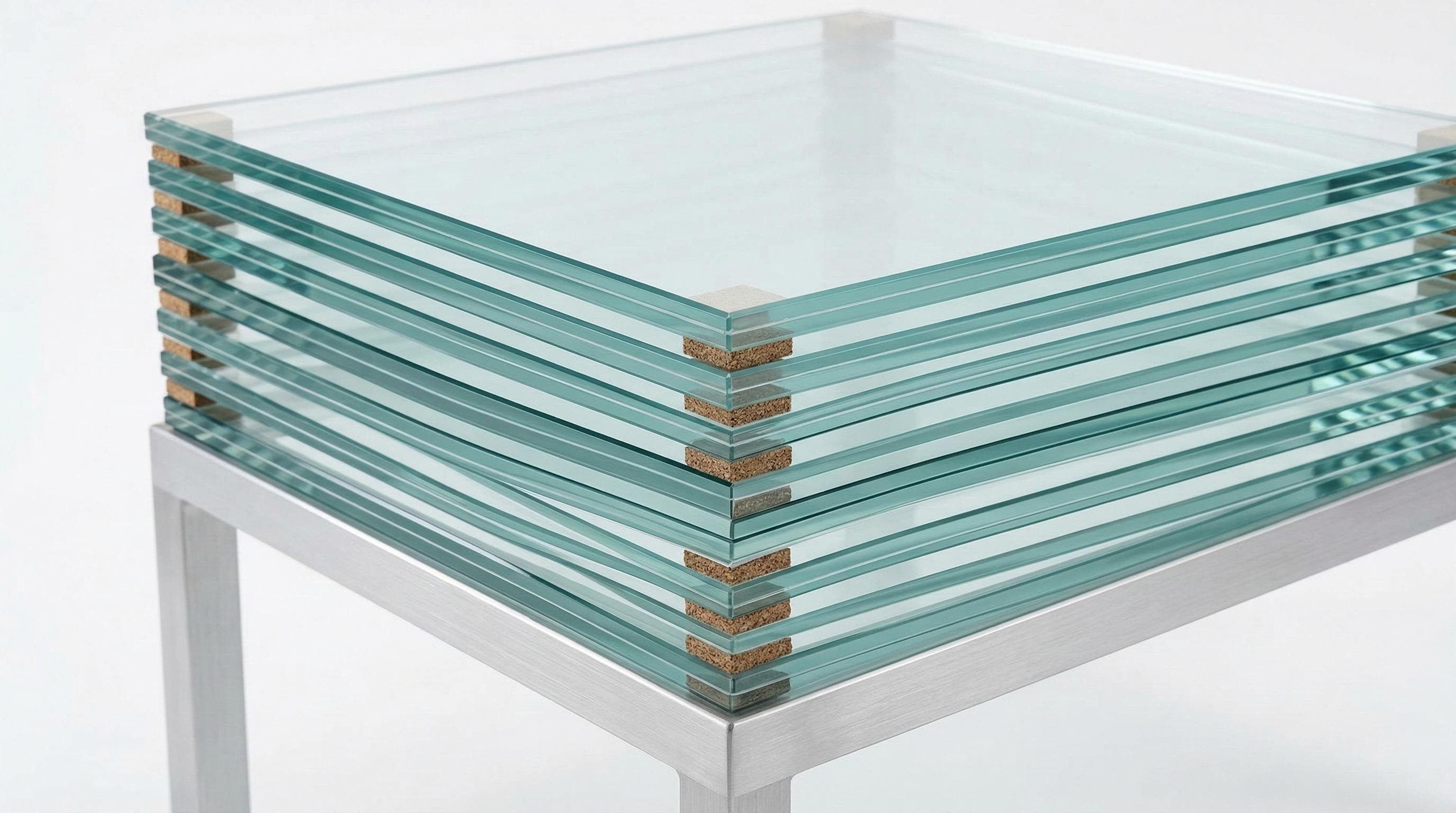
Laminated glass is made by bonding two or more glass layers with one or more polymer interlayers. Common interlayers include PVB, EVA, and SGP / ionoplast. During production, heat and pressure are used to bond the glass and interlayer into one integrated safety glass panel.
When ordinary monolithic glass breaks, it may fall away from the frame or create dangerous sharp fragments. Laminated glass behaves differently. The glass may still crack under strong impact, but many fragments remain attached to the interlayer. This gives laminated glass several advantages for storm-prone areas:
- It helps reduce flying glass fragments.
- It can continue acting as a barrier after breakage.
- It improves safety for occupants.
- It can help limit wind and rain penetration.
- It can be combined with heat-strengthened or tempered glass.
- It can be made into insulated glass units for energy performance.
- It can support acoustic control, UV control, and security requirements.
However, laminated glass is not one single product. A simple indoor laminated glass panel and a high-performance SGP laminated glass panel for a coastal curtain wall are very different. The right choice depends on the project.
What Determines Laminated Glass Performance in Hurricane-Prone Areas?
Laminated glass can be used in hurricane-prone areas, but its performance should be judged by project conditions rather than by the product name alone. For exterior glazing, the key question is not only whether the glass is laminated, but whether its structure is suitable for impact, wind pressure, panel size, and local code requirements.
Several factors directly affect how laminated glass performs during severe storms:
- Glass makeup: thickness, number of glass layers, and whether the glass is tempered or heat-strengthened
- Interlayer type: EVA, or SGP, depending on safety, strength, humidity, and design requirements
- Interlayer thickness: thicker or higher-performance interlayers may improve impact resistance and post-breakage stability
- Panel size: larger glass panels usually require more careful engineering
- Application area: windows, doors, curtain walls, skylights, storefronts, and railings have different risk levels
- Design pressure: the glass must match the wind-load requirement of the building
- Testing and approval: hurricane-prone projects may require specific impact and cyclic pressure test documentation
This is especially important for buyers. A standard laminated glass panel may help hold broken glass fragments together, but that does not automatically make it suitable for every hurricane-zone project. Coastal buildings, high-rise facades, large sliding doors, and overhead glazing often need a more specific laminated glass structure.
EVA laminated glass is often preferred for decorative glass, humid environments, and special insert designs. SGP laminated glass is usually a stronger choice for large panels, exposed edges, skylights, curtain walls, and projects where post-breakage stability is more critical.
Laminated Glass vs Tempered Glass in Hurricane Areas
Tempered glass is stronger than ordinary annealed glass, but it is not the same as laminated glass. When tempered glass breaks, it shatters into small particles. This reduces the risk of large sharp shards, but the glass opening may be lost after breakage.
Laminated glass is different because the interlayer holds broken glass fragments together. That post-breakage behavior is why laminated glass is commonly used in impact-resistant applications.
| Comparison Item | Laminated Glass | Tempered Glass |
|---|---|---|
| Breakage behavior | Cracks but fragments remain bonded to the interlayer | Breaks into many small particles |
| Post-breakage barrier | Better | Poorer |
| Flying shard reduction | Good | Good, but opening may be lost |
| Hurricane-prone application | Suitable when properly specified and system-tested | Usually not enough alone |
| Security performance | Better after breakage | Lower after breakage |
| Best use | Impact windows, doors, facades, skylights, railings | General safety glazing, interior applications, some laminated structures |
EVA, or SGP: Which Interlayer Is Better?
The interlayer is the “working layer” inside laminated glass. It strongly affects safety, stiffness, clarity, durability, edge stability, and post-breakage performance.
E&N Honjia supplies laminated glass solutions and interlayer materials including EVA and SGP. Based on project requirements, different interlayers can be selected for different performance priorities.
EVA Laminated Glass
EVA laminated glass is made with ethylene vinyl acetate interlayer. Enevaglass offers EVA laminated glass with strong adhesion, high transparency, and good resistance to moisture and environmental conditions. It is especially useful for architectural glass, interior decoration, decorative laminated glass, and applications where special materials such as fabrics, metal mesh, or decorative films are embedded inside the glass.
EVA can be a strong choice for humid environments and decorative projects, but buyers should be careful when using it for high-performance hurricane applications. Unless the specific EVA laminated glass structure has been tested for the required impact standard, it should not be treated as a substitute for a certified hurricane glazing system.
Best for:
- Decorative laminated glass
- Interior partitions
- Humid environments
- Glass with embedded materials
- Hotels, retail spaces, offices, and design projects
- Applications requiring visual customization
SGP Laminated Glass
SGP laminated glass uses an ionoplast interlayer. Enevaglass positions SGP laminated glass as a high-performance safety glass with higher strength, stiffness, and durability compared with conventional laminated glass solutions.
For hurricane-prone projects, SGP is often considered when the project requires higher structural performance, larger panel sizes, better post-breakage stability, or exposed-edge applications. It is commonly used in facades, skylights, railings, canopies, coastal architecture, and other safety-critical glass structures.
Best for:
- High-wind areas
- Coastal buildings
- Curtain walls
- Large glass panels
- Skylights and canopies
- Glass railings
- Exposed-edge glass
- High-end safety glazing
- Projects requiring stronger post-breakage integrity
What Standards Should Buyers Know?
For hurricane-prone regions, buyers will often encounter standards such as ASTM E1886, ASTM E1996, Miami-Dade TAS 201, TAS 202, and TAS 203.
You do not need to be a testing engineer to buy laminated glass, but you should understand what these terms mean.
ASTM E1886
ASTM E1886 is a test method for exterior windows, curtain walls, doors, and impact protective systems. It evaluates performance after missile impact and cyclic pressure loading. This is important because real hurricane damage often involves both debris impact and repeated wind pressure after impact.
ASTM E1996
ASTM E1996 provides performance specifications for exterior windows, curtain walls, doors, and impact protective systems used in hurricane-prone regions. It includes large missile and small missile impact requirements.
Miami-Dade TAS 201, TAS 202, TAS 203
These standards are commonly associated with High-Velocity Hurricane Zone requirements.
- TAS 201: impact test procedure
- TAS 202: uniform static air pressure test
- TAS 203: cyclic wind pressure loading
If your project is in Florida, the Caribbean, the Gulf Coast, or another strict coastal market, ask your customer, consultant, or local authority which standard and approval path is required.
Common Mistakes Buyers Should Avoid
1. Assuming All Laminated Glass Is Hurricane-Resistant
Laminated glass improves safety, but it is not automatically hurricane-rated. The glass must match the required system and test standard.
2. Looking Only at Glass Thickness
Thicker glass may help, but thickness alone does not determine performance. Interlayer type, interlayer thickness, frame design, panel size, edge support, and installation all matter.
3. Ignoring the Frame System
A strong laminated glass panel installed in a weak frame is not a reliable hurricane solution. The glass, frame, sealant, and anchorage must work together.
4. Using Decorative Glass for Structural Performance
Decorative EVA laminated glass can be excellent for design projects, but decorative glass should not be used as hurricane impact glass unless the specific system has been tested for that purpose.
5. Ordering Before Confirming Local Code
Different countries, states, islands, and coastal zones may use different requirements. Always confirm the required standard before finalizing the glass structure.
6. Forgetting Maximum Tested Size
A test report for a smaller unit does not automatically approve a larger panel. Oversized glass needs careful engineering and documentation.
How E&N Honjia Can Support Laminated Glass Buyers
E&N Honjia is not only a finished laminated glass supplier. The company also has deep experience in EVA films, SGP interlayers, laminated glass technology, glass consumables, and customized glass solutions.
For buyers working on hurricane-prone or coastal projects, this material-level knowledge is useful because the interlayer choice strongly affects the final glass performance.
E&N Honjia can support projects involving:
- SGP laminated glass
- EVA laminated glass
- Decorative laminated glass
- Safety laminated glass
- Laminated glass for facades and curtain walls
- Laminated glass for skylights and sunrooms
- Laminated glass for railings and balustrades
- Custom sizes, thicknesses, and structures
- Samples for evaluation
- Technical consultation before ordering
- Export packing and logistics support
For demanding projects, buyers can send drawings, glass schedules, required standards, glass sizes, and application details. E&N Honjia can then help recommend a more suitable laminated glass direction.
Conclusion
Laminated glass can be suitable for hurricane-prone areas when it is designed as part of a tested impact-resistant glazing system. The right solution depends on glass thickness, interlayer type, frame strength, sealant, anchorage, panel size, design pressure, and local code requirements. It helps hold broken glass fragments in place, reduces flying-shard hazards, and supports a safer barrier after windborne debris impact, but it should never be marketed as automatically hurricane-proof.
FAQ
Q1: Is laminated glass hurricane proof?
A: Laminated glass is not automatically hurricane proof. It can be used for hurricane-resistant glazing only when the glass, interlayer, frame, sealant, anchorage, size, and design pressure are properly engineered and tested.
Q2: Is laminated glass good for hurricane windows?
A: Yes, laminated glass is commonly used in hurricane windows because the interlayer helps hold broken glass together after impact. However, buyers should confirm the required impact rating, wind-load rating, and local code approval before ordering.
Q3: Is laminated glass better than tempered glass for hurricanes?
A: For hurricane-prone areas, laminated glass usually offers better post-breakage protection than tempered glass alone. Tempered glass breaks into small particles, while laminated glass can remain bonded to the interlayer and help keep the opening covered.
Q4: What type of laminated glass is best for coastal buildings?
A: Coastal buildings often require laminated glass with stronger interlayers, suitable glass thickness, corrosion-resistant framing, and verified system testing. SGP laminated glass is often preferred for larger panels, exposed edges, skylights, curtain walls, and demanding safety applications.
Q5: Does laminated glass need Miami-Dade approval?
A: In strict hurricane zones such as parts of Florida, buyers may need Miami-Dade, Florida Product Approval, or other local certification. The required approval depends on the project location, building type, design pressure, and applicable code.
Q6: Can laminated glass stop windborne debris?
A: Tested impact-resistant laminated glass systems are designed to resist specific debris impact levels. Standard laminated glass may reduce fragment hazards, but it should not be assumed to meet hurricane debris-impact requirements without valid test documentation.