
How Long Does Silicone Sealant Take to Cure on Glass?
When silicone sealant is applied to glass, the surface may look finished within a short time. The bead becomes smooth, the joint looks sealed, and in some cases it may no longer feel sticky after less than an hour. But for glass processing, installation, and glazing projects, surface drying is only the first stage.
The real performance of a silicone sealant depends on whether it has fully cured through the joint. If the sealed glass is cleaned, moved, packed, exposed to water, or installed too early, the joint may lose adhesion, trap moisture, form bubbles, or fail before it reaches its expected service life.
This is especially important for applications such as laminated glass edge sealing, glass-to-aluminum frames, shower glass, window systems, smart glass installation, and architectural glazing. In these projects, the waiting time is not just a small detail in the installation process. It affects waterproofing, bonding strength, appearance, durability, and long-term reliability.
So, how long does silicone sealant take to cure on glass? The answer depends on the sealant type, bead thickness, temperature, humidity, ventilation, and the actual glass application. A thin bead may be ready much sooner than a deep joint. A neutral cure silicone used for laminated glass or exterior glazing may need more careful curing time than a simple glass repair.
Silicone Sealant Curing Time on Glass
Silicone sealant cures in stages, not all at once. On glass, the surface may stop feeling sticky quite quickly, but the inside of the bead still needs time to cure through. This is why “touch-dry” should not be treated as “ready for use.”
For most glass applications, silicone sealant reaches functional strength in 24 to 48 hours. A deeper full cure may take 3 to 7 days, especially if the bead is thick, the joint is narrow, the temperature is low, or the air is dry.
| Stage | Typical Time on Glass | Practical Meaning |
|---|---|---|
| Tack-free / skin-over | About 10–30 minutes | The surface forms a thin skin. Finish tooling before this stage. |
| Surface-dry | 30 minutes–2 hours | The bead may not feel sticky, but it is not fully cured. |
| Functional cure | 24–48 hours | Suitable for many light-duty glass sealing applications. |
| Deeper full cure | 3–7 days or longer | Needed for thick beads, deep joints, laminated glass edge sealing, or higher-stress applications. |
Glass is non-porous, so silicone often looks dry on the surface before the deeper material has finished curing. For simple glass sealing, 24 hours may be enough. For laminated glass edge sealing, glass-to-aluminum joints, shower glass, exterior window systems, or smart glass installation, it is safer to allow a longer curing window before cleaning, moving, packaging, water exposure, or installation stress.
The three factors that matter most are humidity, temperature, and bead thickness. Silicone needs moisture from the air to cure, so very dry conditions slow the process. Warmer conditions usually help curing, while cold environments extend it. Thick beads cure more slowly because the reaction moves from the surface inward.
Main Factors That Affect Silicone Sealant Curing Time on Glass
1. Sealant Type
Different silicone sealants cure at different speeds. The most common types for glass applications are acetoxy cure silicone and neutral cure silicone.
Acetoxy silicone often cures faster and bonds well to glass and ceramic. It has a vinegar-like smell during curing. It may not be suitable for some metals, mirrors, stone, concrete, or sensitive materials.
Neutral silicone sealant is usually a better choice for glass systems that also involve aluminum frames, laminated glass, construction materials, or architectural glazing. It has lower odor and better compatibility with many building materials.
For laminated glass edge sealing, glass partitions, window and door systems, and smart glass installations, neutral silicone sealant is usually the safer option.
2. Temperature
Silicone sealant cures more reliably within the temperature range recommended by the manufacturer.
Cold temperatures slow curing. In winter job sites or unheated workshops, a sealant that normally cures in 24 hours may still feel soft after one day.
High temperatures may speed up skin formation, but that is not always an advantage. If the skin forms too quickly, workers have less time for tooling, and the finish may become uneven.
For glass factories and contractors, it is better to create a stable curing area rather than relying on “fast drying” claims alone.
3. Humidity
Most one-component silicone sealants need moisture in the air to cure. Very dry conditions can slow curing, especially in deep joints.
This is one reason why a bead may cure faster in a warm, moderately humid environment than in a dry, air-conditioned room.
However, adding water directly onto fresh silicone is not a good solution. Too much water before proper curing may disturb the surface, weaken adhesion, or create defects.
4. Air Circulation
Good air access helps moisture reach the sealant. Poor ventilation slows the process.
Curing may take longer in:
- Deep grooves
- Closed glass assemblies
- Narrow frame gaps
- Stacked glass panels
- Sealed packaging
- Areas with little air movement
For glass processing factories, avoid packing freshly sealed glass too soon. If the silicone is covered before it has cured enough, the deeper part of the bead may stay soft longer than expected.
Acetoxy vs Neutral Silicone Sealant for Glass
Many users choose silicone based only on price or curing speed. That can be risky for glass projects involving more than one material.
| Item | Acetoxy Silicone | Neutral Silicone Sealant |
| Cure smell | Vinegar-like odor | Lower odor |
| Typical cure behavior | Often faster skin formation | Stable cure, often slightly slower |
| Best use | Simple glass, ceramic, tile | Glass, aluminum, laminated glass, construction materials |
| Metal compatibility | May corrode some metals | Better compatibility |
| Use around mirrors or sensitive substrates | Not recommended unless approved | Usually safer, still test first |
| Architectural glazing | Limited use | More suitable |
| Laminated glass projects | Not ideal for many edge systems | Better choice |
For simple glass-only sealing, acetoxy silicone may work well. But for glass combined with aluminum, stainless steel, laminated glass, smart glass, or building façade materials, neutral silicone sealant is usually a more reliable choice.
How to Apply Silicone Sealant on Glass for Better Curing
Good curing starts before the sealant is applied. A high-quality sealant can still fail if the glass surface is dirty, wet, oily, or poorly prepared.
1. Clean the Glass Surface
Remove dust, oil, old sealant, fingerprints, polishing residue, and cleaning chemical residue.
For production use, especially laminated glass or architectural glass, do not rely only on visual inspection. A surface can look clean but still have invisible contamination.
Use a cleaning method recommended by the sealant supplier or project specification. Let the glass dry completely before applying silicone.
2. Remove Old Silicone Completely
New silicone does not bond well to old cured silicone. If you are resealing glass, remove old sealant first.
Do not apply fresh silicone over a loose, dirty, moldy, or cracked joint. It may look fine for a short time, but adhesion failure is likely.
3. Control Joint Depth
More silicone does not always mean a stronger seal.
If the joint is too deep, the center cures slowly and may remain soft. Use a suitable backer rod or joint design to control sealant depth and prevent three-sided adhesion where movement is expected.
4. Apply a Continuous Bead
A broken bead can create water paths. Apply the sealant steadily and keep the nozzle angle consistent.
Watch for:
- Gaps
- Air bubbles
- Uneven bead size
- Skipped areas
- Poor contact with joint sides
For clear glass applications, workmanship matters because defects are easy to see.
5. Tool Before Skin Formation
Tooling should be done before the sealant forms a skin. Once the skin forms, forcing the surface can create wrinkles, poor finish, or weak contact at the joint edge.
Use suitable tooling tools rather than over-wetting the joint. Too much water, detergent, or solvent during tooling can affect surface quality and adhesion.
6. Protect the Joint During Curing
After application, protect the joint from water, dust, pressure, vibration, and movement.
For glass factories, this may mean setting aside a curing area before packaging. For on-site installation, it may mean avoiding cleaning, rain exposure, or mechanical stress until the sealant has cured enough.
How to Tell If Silicone Sealant Has Fully Cured on Glass
There is no perfect visual test, but these signs can help.
Signs the sealant is not ready
- Strong curing odor remains
- Surface feels soft or sticky
- Bead deforms easily when lightly pressed
- Inner section looks wet if cut or exposed
- Edges lift from the glass
- Sealant surface wrinkles when touched
Signs the sealant is closer to ready
- Surface is tack-free
- Bead keeps its shape
- Edges are well bonded
- No visible gaps or wet areas
- Recommended curing time has passed
- Environment was within recommended temperature and humidity range
For factory production, the best method is to create a standard internal curing rule based on bead size, sealant type, workshop conditions, and packaging requirements.
For example, if laminated glass edge sealing is done in a cool, dry workshop with a thick bead, 24 hours may not be enough before stacking or shipment.
Buying Silicone Sealant for Glass Projects: What to Check
When buying silicone sealant for glass projects, do not choose only by price, color, or curing time. The right product should match the glass type, surrounding materials, installation environment, and the level of movement or water exposure the joint will face.
For simple glass sealing, a general glass silicone may be enough. But for laminated glass, smart glass, aluminum-framed windows, shower glass, exterior glazing, or edge sealing before shipment, the sealant needs better compatibility and long-term stability.
Before placing an order, check these points:
| What to Check | Why It Matters |
|---|---|
| Cure type | Neutral cure silicone is usually safer for glass with aluminum, metal frames, coated surfaces, mirrors, laminated glass, and building materials. |
| Glass application | A sealant for bathroom glass is not always suitable for laminated glass edge sealing or exterior window systems. |
| Adhesion to substrates | Confirm adhesion to glass, aluminum, coated profiles, wood, ceramic, or other project materials. |
| Compatibility | The sealant should not corrode metal, damage mirror backing, stain surrounding materials, or affect laminated glass edges. |
| Weather and UV resistance | Important for windows, doors, curtain wall edges, outdoor glass, and architectural glazing. |
| Movement capability | Glass joints may expand, shrink, or move with temperature changes. The sealant must stay flexible. |
| Curing information | Check tack-free time, full cure time, recommended temperature, humidity, and bead thickness limits. |
| Technical documents | Ask for TDS, SDS, storage conditions, shelf life, and application guidance before bulk purchase. |
| Packaging and supply | For factories and distributors, confirm cartridge size, sausage pack options, OEM packaging, MOQ, lead time, and batch stability. |
A useful buying rule is: select silicone sealant by the glass system, not by the word “glass” on the label. A product that works for a small glass repair may not be the best choice for laminated glass production or glass-to-aluminum installation.
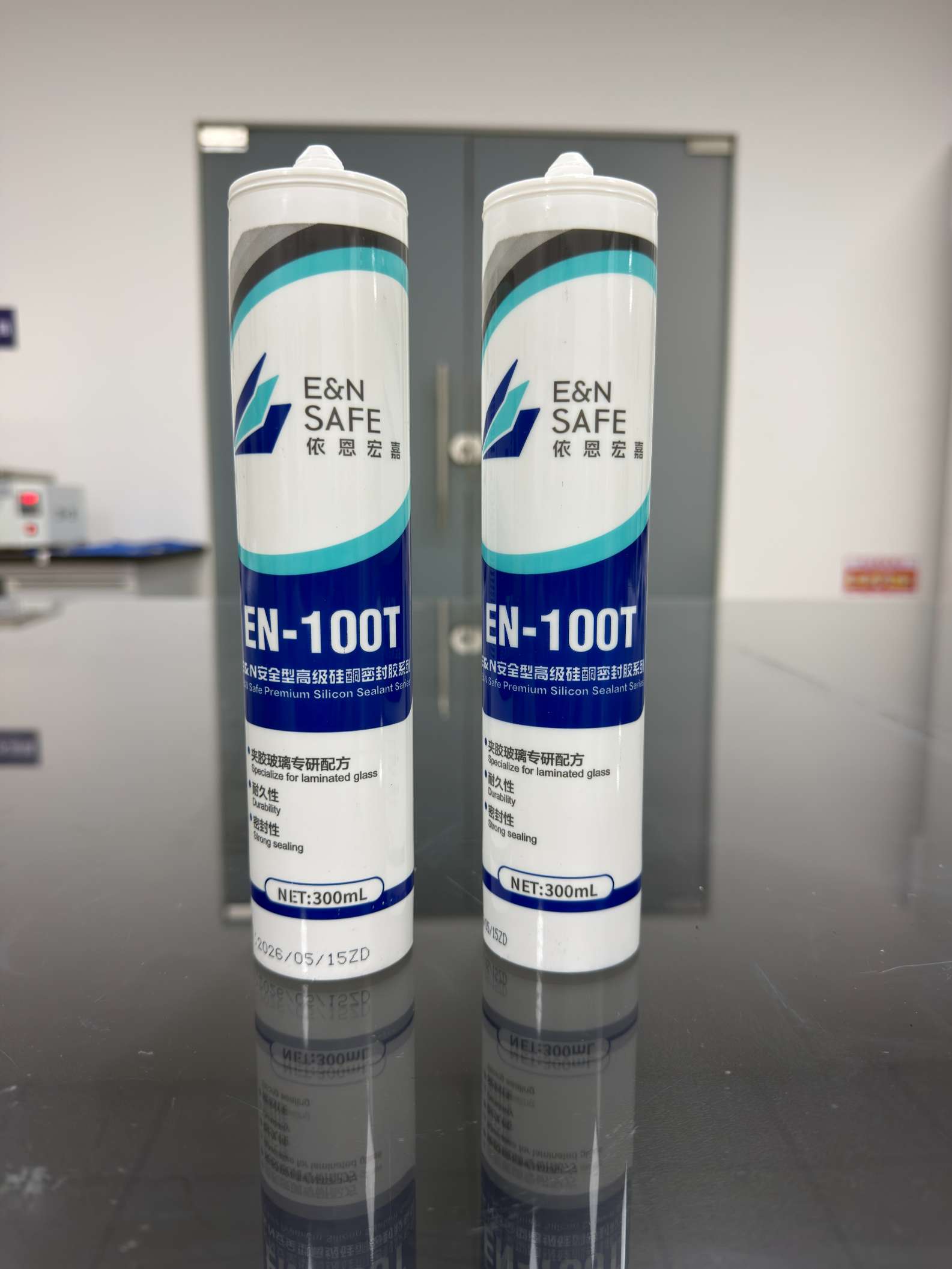
E&N HONJIA Neutral Silicone Sealant for Glass Applications
E&N HONJIA provides neutral silicone sealant for laminated glass processing, installation, and architectural glazing applications.
It is designed for projects where glass sealing needs more than a quick surface cure. The sealant helps provide adhesion, waterproof performance, weather resistance, and long-term flexibility for different glass systems.
Typical applications include:
- EVA laminated glass
- SGP laminated glass
- Architectural laminated glass
- Decorative laminated glass
- Smart glass systems
- Glass partitions
- Shower enclosure glass
- Glass window and door systems
- Glass-to-aluminum sealing
- Laminated glass edge protection
Compared with ordinary acid cure sealants, neutral silicone sealant is less corrosive to metal and offers better compatibility with glass and aluminum. This makes it more suitable for laminated glass, architectural glazing, and high-end glass installation projects.
Conclusion
Silicone sealant on glass usually becomes tack-free within 10–30 minutes and surface-dry within 30 minutes to 2 hours, but full performance takes longer. Most glass joints reach functional strength in 24–48 hours, while thick beads, laminated glass edge sealing, glass-to-aluminum frames, shower glass, or exterior glazing may need 3–7 days. For safer results, judge curing time by sealant type, bead depth, humidity, temperature, ventilation, and project risk, not just by whether the surface feels dry.
FAQ
Q1. How long should silicone sealant cure on glass before use?
A: For most glass sealing applications, wait 24–48 hours before normal use. For thick joints, laminated glass edge sealing, or exterior glazing, allow 3–7 days for deeper curing.
Q2. Can silicone sealant on glass get wet after 24 hours?
A: Light moisture may be acceptable for some products after 24 hours, but shower glass, window systems, and outdoor glazing should be given more time, especially if the bead is thick.
Q3. Why is the silicone still soft after one day?
A: The most common reasons are low temperature, dry air, poor ventilation, expired sealant, or a bead that is too thick. Silicone cures from the surface inward, so the center may still be soft.
Q4. Is neutral silicone better for glass projects?
A: Neutral silicone is usually better for laminated glass, aluminum frames, mirrors, smart glass, and architectural glazing because it has better compatibility with metals and sensitive materials.
Q5. Can sealed glass be packed immediately after the surface dries?
A: No. Surface dryness does not mean full cure. For glass factories, freshly sealed panels should not be packed, stacked, or shipped until the sealant has developed enough internal strength.