
High-Flow vs Low-Flow EVA Interlayer: Choosing the Right Grade for Glass Lamination
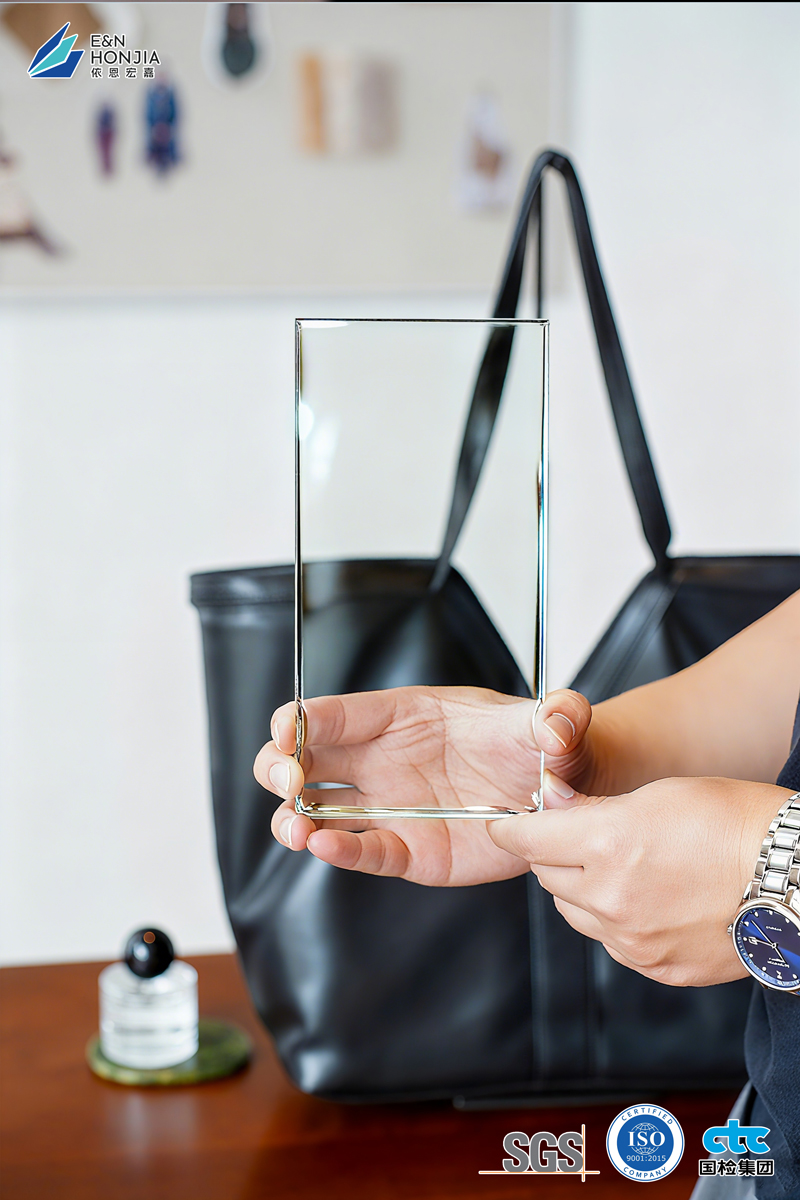
Choosing an EVA interlayer is not simply a matter of selecting clear film, outdoor film, or a certain thickness. For many glass processors, the more important question is how the film should behave during lamination.
Should it move easily around a metal mesh or PDLC film? Or should it stay controlled near the glass edge to reduce cleanup and keep a precise finished appearance?
That is the practical difference between high-flow and low-flow EVA interlayer. The right choice depends on the glass build-up, insert thickness, panel geometry, edge requirements, equipment, and the problem you are trying to prevent.
A high-flow EVA interlayer can improve wet-out and fill small gaps in complex laminates. A low-flow EVA interlayer can give better control where clean edges, stable alignment, and dimensional accuracy are priorities. Neither is a universal upgrade. The better grade is the one that matches the job.
Quick Answer: Which EVA Flow Grade Should You Choose?
| Your glass structure or production concern | Practical starting point | Why it may fit | Confirm before production |
|---|---|---|---|
| Fabric, metal mesh, woven wire, rice paper, or textured inserts | High-flow EVA | Helps the EVA reach small gaps around uneven decorative materials | Insert thickness, moisture level, EVA thickness, and bubble inspection |
| Patterned, curved, or slightly uneven glass | High-flow EVA | More movement can improve wet-out across local gaps | Glass flatness, edge flow, furnace temperature, and vacuum performance |
| Flat clear laminated glass with visible polished edges | Low-flow or controlled-flow EVA | Supports cleaner edge finishing and more stable material movement | Full glass wet-out, corner bonding, and post-lamination edge appearance |
| Excessive EVA squeeze-out or difficult edge cleanup | Low-flow or controlled-flow EVA | May reduce unnecessary material movement at the perimeter | Current heating cycle, EVA allowance, dwell time, and vacuum-release timing |
| PDLC smart film, printed PET film, or functional inserts | Dedicated EVA grade for the insert | Optical clarity, temperature tolerance, shrinkage, and compatibility are critical | Film supplier requirements, busbar position, alignment, and electrical performance |
| Outdoor, humid, or exposed-edge glass | Outdoor-grade EVA first, then select flow level | Weather resistance and crosslinking performance should be checked before flow behavior | UV aging, wet-heat data, sealant compatibility, and finished-glass testing |
| Railings, skylights, canopies, or other safety-critical glass | Project-specific interlayer assessment | Flow level alone does not determine structural or post-breakage performance | Local standards, glass build-up, support system, engineering review, and required testing |
High-flow EVA is usually selected when the laminate needs more wet-out and gap filling. Low-flow EVA is usually selected when cleaner edges and controlled material movement matter more. The final choice should be confirmed with the actual glass build-up and lamination process.
What "Flow" Means in EVA Glass Lamination
During vacuum lamination, EVA softens before it crosslinks into the final bonded layer. In that softened stage, the film must spread across the glass surface, push air toward the vacuum path, and contact every part of the assembly.
A high-flow formulation moves more readily during this stage. This can help it wrap around an insert, enter a textured surface, or compensate for small local gaps between glass layers.
A low-flow formulation still softens and bonds, but it moves in a more controlled way. This can be useful when the processor wants the film to remain stable between flat sheets of glass and avoid collecting at the perimeter.
Flow should not be judged by a supplier label alone. Melt flow rate is measured under specified temperature and load conditions, and real lamination performance also changes with film thickness, glass thickness, furnace heating pattern, vacuum level, dwell time, and crosslinking behavior. ISO 1133-1 covers melt mass-flow and melt volume-flow testing, but it should be treated as one selection input rather than a complete prediction of production results.
When High-Flow EVA Makes Sense
High-flow EVA is usually worth considering when the laminate needs more than simple glass-to-glass bonding.
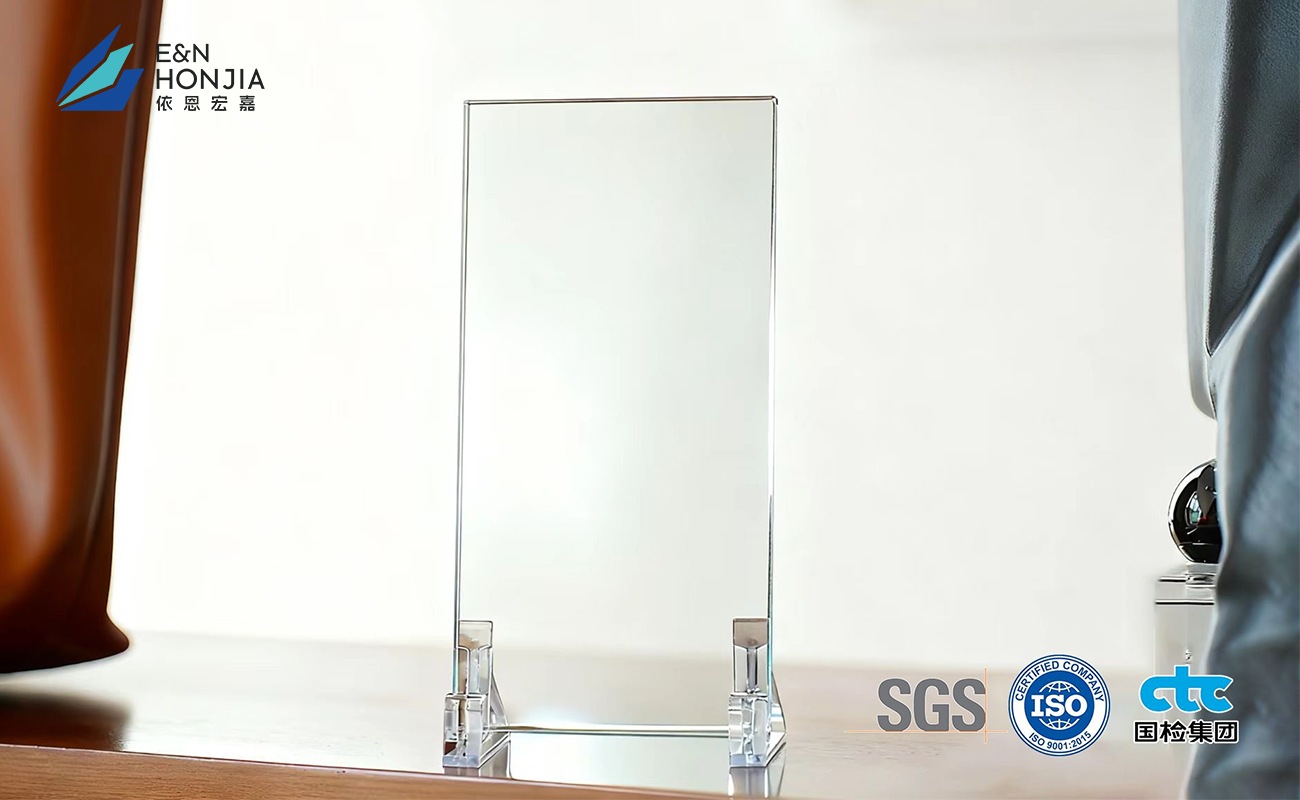
Extra Clear EVA Interlayer(High flow)
Decorative glass with fabric or metal mesh
Fabric, woven wire, stainless steel mesh, rice paper, printed films, and similar inserts create small channels and uneven surfaces. If the interlayer does not move sufficiently, air may remain around the material. After crosslinking, those trapped areas can become visible bubbles or dry-looking spots.
High-flow EVA can improve penetration around these materials. It is particularly useful when the decorative layer has texture rather than a perfectly flat surface.
However, the flow level must still match the insert. A very open mesh may need more flow and sufficient EVA thickness. A delicate printed layer may need enough flow for wetting but not so much movement that alignment shifts during heating.
E&N's high-flow EVA is designed for situations where processors need greater movement, better wet-out, and deeper penetration during lamination. The current HJ-AT specification is available in 0.38 mm and 0.76 mm thicknesses and lists visible light transmittance above 90.6%, haze below 0.29%, and a crosslinking rate above 85%.
Patterned, curved, or slightly uneven glass
Heat-treated glass can have local waviness. Patterned or curved glass can also create areas where the interlayer needs to travel farther before complete contact is achieved.
In these applications, more flow can help the EVA fill small variations between the glass surfaces. It does not correct poor glass quality or major shape mismatch, but it can make the lamination process more forgiving where the irregularity is minor.
Production lines focused on wet-out efficiency
Some processors prioritize reducing bubble-related rework in complex structures. High-flow EVA may help the film spread more quickly during the melting stage. This can support efficient processing, provided the vacuum path, temperature ramp, and cure cycle are adjusted for the actual glass structure.
More flow does not mean higher furnace temperature is automatically the answer. Excessive heat can increase edge squeeze-out, create optical problems, or begin crosslinking before remaining air has been removed.
When Low-Flow EVA Is the Better Starting Point
Low-flow EVA is not designed to eliminate movement. It is designed to keep movement more controlled.
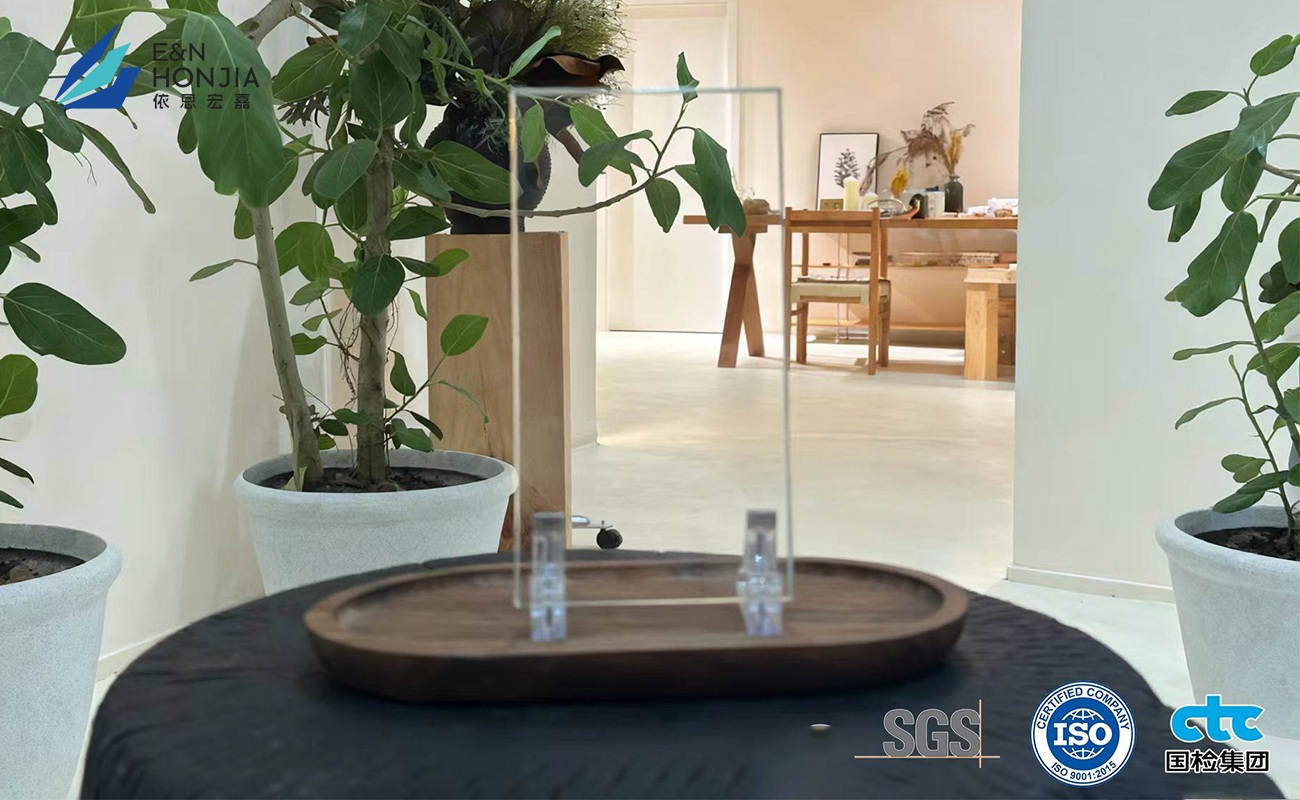
Extra Clear EVA Interlayer(Less flow)
Clear architectural glass with clean visible edges
For large flat panels, façade glazing, interior partitions, or other glass where the edge remains visible, excessive EVA flow can create extra cleanup work. Melted film may extend beyond the glass perimeter, collect around corners, or make final edge finishing less consistent.
A controlled-flow EVA can reduce this issue while still giving the film enough movement to bond correctly.
E&N's HJ-WH low-flow outdoor EVA is positioned for projects where reduced edge seepage and precise lamination control are important. Its published specifications list 0.38 mm and 0.76 mm options, visible light transmittance above 90%, haze below 0.3%, glass adhesion above 80 N/cm, water absorption at or below 0.1%, and crosslinking above 80%.
Jobs with tight dimensions and repeatable finishing
When a production team spends too much time trimming overflow or cleaning finished edges, the issue may not be caused by the EVA grade alone. Temperature, heating time, EVA thickness, glass dimensions, and pressure conditions should all be checked.
Still, when the process is otherwise stable and the problem is excessive material movement, low-flow EVA can be a sensible option.
For flat architectural panels, the goal is not to stop the EVA from flowing completely. The film still needs to wet the glass surface. The goal is to create a balanced process where the EVA bonds consistently without excessive perimeter movement.
Bare-edge and humid applications
Outdoor suitability should be evaluated separately from flow behavior. A low-flow film is not automatically more suitable for exposed edges, and a high-flow film is not automatically less suitable.
For outdoor or humid applications, check the specific grade's crosslinking, water absorption, UV-aging data, wet-heat performance, glass adhesion, sealant compatibility, and finished-glass test results.
PDLC Smart Glass Exception
PDLC smart glass is one area where "high-flow versus low-flow" can be too simple.
A PDLC laminate includes glass, EVA, PDLC film, EVA, and glass. The EVA must bond to the film, protect the optical appearance, avoid damaging electrical components, and remain stable around busbars and wiring.
For this type of laminate, select a dedicated smart-glass EVA grade based on optical clarity, processing temperature, shrinkage control, compatibility with the PDLC film, and the recommended lamination cycle. General high-flow or low-flow EVA should not be substituted without a representative trial.
E&N's ultra-clear EVA range is designed for PDLC smart-glass lamination and can be evaluated as part of the complete glass and electrical assembly.
Common Problems and What to Check First
| Problem | Possible cause | First action |
|---|---|---|
| Bubbles around mesh or fabric | Insufficient flow, moisture, poor vacuum, too little EVA | Check insert dryness, vacuum path, EVA thickness, and wet-out |
| EVA flowing past glass edges | High flow, excess heat, long dwell time, excess film allowance | Review process settings before changing grade |
| Haze after lamination | Incomplete cure, unsuitable cooling, contamination, wrong cycle | Check actual glass-core temperature and cooling procedure |
| Edge whitening or delamination | Unsuitable grade, moisture exposure, sealant incompatibility, poor edge finishing | Review outdoor-grade data and test the full assembly |
| Film or insert shifts during lamination | Excess movement, poor lay-up control, unsuitable grade | Improve positioning and test a more controlled-flow option |
A change in EVA grade should be tested using the real glass thickness, panel size, insert material, and production equipment. A small sample made with different conditions can look good while a full-size panel behaves differently.
What Buyers Should Request Before Ordering
Before placing a regular order, ask for more than price, thickness, and roll width.
Request:
- Product technical data sheet for the exact EVA grade
- Flow or rheology information with stated test conditions
- Glass adhesion, haze, light transmittance, crosslinking, and water-absorption data
- UV, boiling-water, and wet-heat test information where relevant
- Recommended starting process for your glass structure
- Storage and shelf-life requirements
- Compatibility guidance for mesh, fabric, printed films, PDLC, coatings, and sealants
- Trial samples from the same intended product grade
- Batch identification and quality documentation for volume orders
For reference, E&N's extra-clear controlled-flow HJ-HT grade lists wet-heat testing at 85°C and 85% relative humidity for 1,000 hours, together with 100°C boiling-water testing. The relevant data should still be checked against the exact grade, laminate structure, and target market requirements before specification.
Choose the Grade After You Define the Glass Structure
The most useful starting point is not "Which EVA is better?" It is "What does this laminate need the EVA to do?"
If your film needs to fill texture, wrap an insert, or compensate for small gaps, begin with a high-flow evaluation. If your priority is a clean visible edge, stable dimensions, and controlled processing on flat glass, begin with a low-flow evaluation.
Share your glass build-up, panel dimensions, EVA thickness, insert material, equipment type, current processing issue, and intended application with E&N. That information makes it possible to recommend a trial grade and a practical starting process before full-scale production.